
Guardsman Air Duct Cleaning in Lake Highlands: A Homeowner’s Guide
Franchise cleaning brands don’t own the trucks in your driveway. Independent operators do, and those operators set their own equipment standards, training depth, and upsell practices under a name you recognize. That’s the part most homeowners never hear, and it’s the whole ballgame when you’re trying to figure out whether the “Guardsman air duct cleaning” you were quoted will actually improve the air in your Lake Highlands home or just move some dust around. This guide decodes what the Guardsman name does and doesn’t guarantee.
What Does “Guardsman” Actually Mean for Your Ducts?
Guardsman is a brand name that gets licensed into local markets through a franchise arrangement, and the practical result is that the brand controls the label, the general service menu, and the marketing, while the local operator controls almost everything that touches your house: which vacuum they run, how much training the technician has, whether sanitizing is done properly, and how aggressively they upsell add-ons once they’re inside. Two Guardsman-affiliated jobs in Lake Highlands can look nothing alike because the real variable was never the brand. It was the person and the equipment.
This matters more in a place like Lake Highlands than in a lot of markets. The housing stock here runs from 1950s ranch homes to newer builds, and the older ones have duct systems that were laid out for a different era of HVAC. Original sheet metal, flexible duct that’s been swapped in piecemeal, and junctions that were never sealed all behave differently from a modern tight system. A brand name tells you nothing about whether the technician will spot that your return duct is pulling air from a dusty attic chase. A trained one will, regardless of whose logo is on the van.
Our advice is simple: treat the brand as a starting point for a conversation, not the end of one. The credentials, the equipment, and the process are what determine the outcome. If you’d rather have a specialist walk you through it than sort through franchise fine print, call (833) 509-5459.
What Equipment Should a Guardsman-Affiliated Tech Bring?
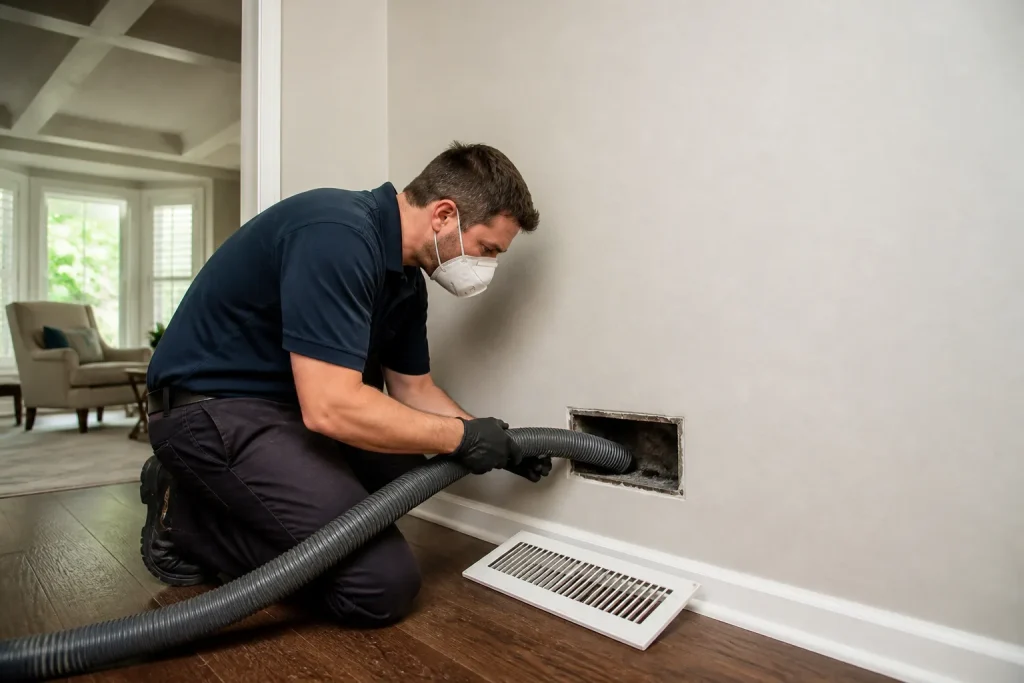
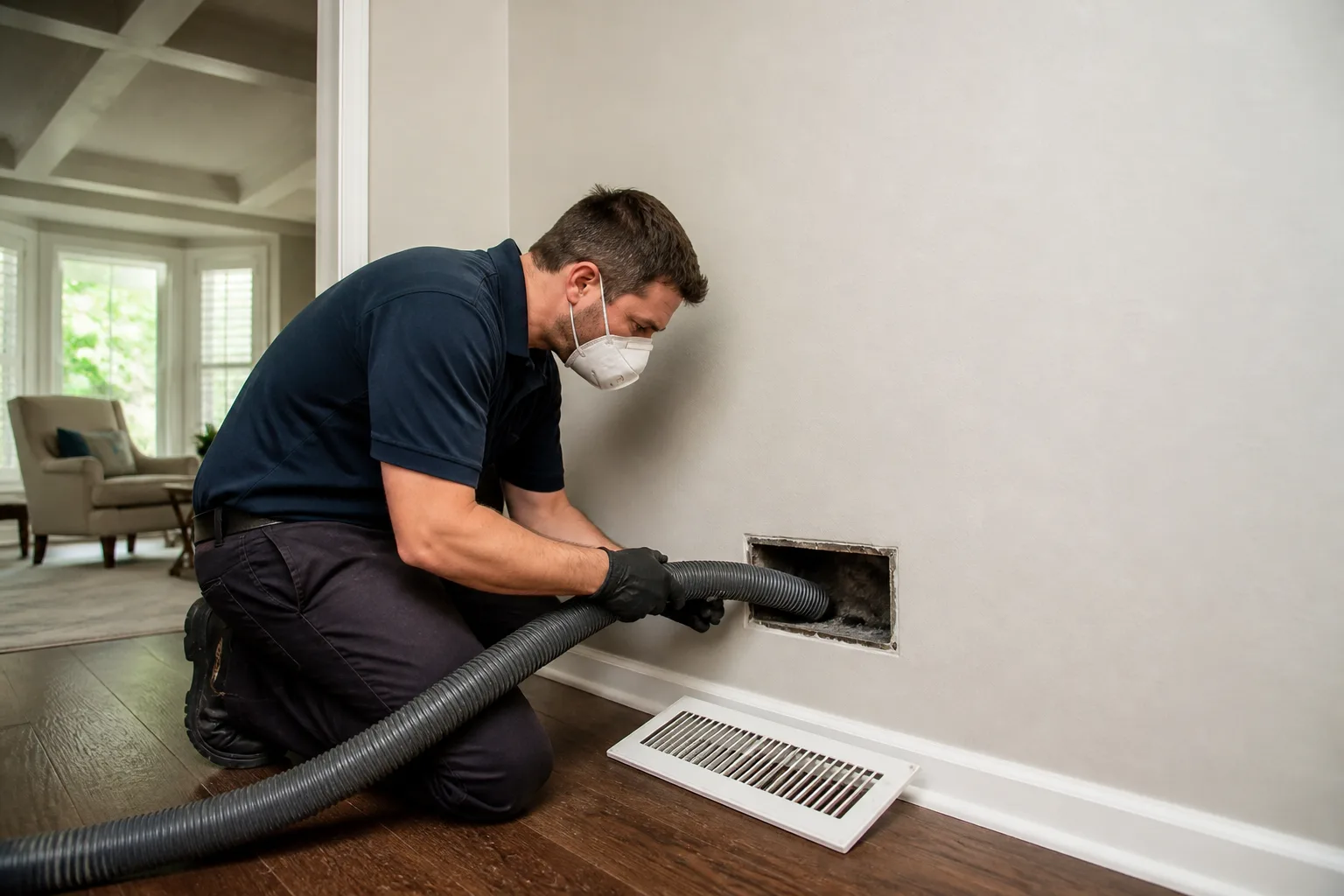
Professional air duct cleaning requires a truck-mounted or high-capacity negative pressure vacuum with enough CFM (cubic feet per minute of airflow) to put your entire duct system under vacuum, plus a mechanical agitation tool to break debris loose from the duct walls. If the technician rolls in with a consumer-grade shop vac and a long hose, that’s not duct cleaning; that’s a surface wipe of the visible registers. Ask directly what equipment is coming in.
Commercial-grade systems like a Rotobrush or a Nikro setup use rotating brushes and whips matched to your duct material, feeding into a negative pressure collection unit so the debris leaves your home instead of settling into the living room. For jobs involving heavier contamination, the bar rises again: dedicated air filtration units like those from Abatement Technologies create negative-air containment, the same approach certified remediation professionals use to keep particles from spreading. That’s a real difference in how much dust ends up in your Lake Highlands air versus in the machine.
Here’s what to ask before anyone starts:
- CFM rating of the vacuum. A professional truck-mounted unit runs in the thousands; ask for the number, not a vague “commercial grade.”
- Brush type. Rotating brush or whip matched to the duct material, not a generic attachment that can damage flex duct.
- Sanitizer. What product, and is it applied after mechanical cleaning is complete?
- Containment. For heavy jobs, are they using negative-air equipment, or just a vacuum at one end?
When we handle Air Duct Cleaning Lake Highlands, the mechanical cleaning with Rotobrush and Nikro equipment comes first, and sanitizing comes after, because a sanitizer sprayed onto debris is wasted money. That sequence is worth confirming with any provider.
Does the Technician’s Certification Matter More Than the Brand?
Yes, and by a wide margin. The brand on the van tells you who licensed a name. The technician’s certification tells you what they actually know about the system in your walls. The two credential sets homeowners hear about most are NADCA (the National Air Duct Cleaners Association) certification and EPA Section 608, which governs refrigerant handling in HVAC work. Both signal that someone was trained and tested on the technical side, not just the sales side.
Why it matters in Lake Highlands specifically: many homes here have duct systems that connect to HVAC equipment in the attic or a closet, and a technician who doesn’t understand airflow, static pressure, or how to clean a system without disturbing the coil can create problems while solving others. A certified technician knows to protect the equipment, confirm the system is under negative pressure before agitating, and check that sealing is intact afterward. A brand alone doesn’t confirm any of that.
Ask two direct questions: “Are your technicians NADCA-certified or EPA 608 certified?” and “Who will actually be in my home?” If the person on the phone can’t answer both, that’s your answer. Our own technicians have up to 8 years of experience, and we’re glad to talk certifications openly because it’s the part homeowners can verify.
How Do You Compare a Franchise Quote Against an Independent Specialist?
Line by line, ignoring package language entirely. Franchise quotes often come bundled as “Basic,” “Deluxe,” or “Whole-Home” tiers, which makes them hard to compare against a specialist’s itemized quote. Unbundle them. Ask for a written breakdown of every line: number of supply and return vents, whether the trunk lines are included or extra, whether the HVAC unit and coil get cleaned, what sanitizer is used, whether dryer vent cleaning is bundled or a separate add-on, and whether duct repair or sealing is included. A whole-system job is priced per system as one flat number agreed before work starts, not per vent, which is exactly why comparing tiers side by side falls apart.
This is also where the bait-and-switch reputation in this industry comes from. A low teaser price that grows once the technician is on site is a red flag, not a bargain. Insist on a written estimate before anyone starts, and ask for before-and-after photos of your own ducts when the job is done. That’s how you know the work was actually performed, not just described.
A few more line items worth checking:
- Is duct repair and sealing offered, or is it a referral? Cleaning alone can’t fix leaks at junctions and boots.
- Are air quality components like Aprilaire or Honeywell filters and purifiers discussed, or is the pitch just cleaning?
- Is dryer vent cleaning treated as a fire-safety service with its own dedicated process, or a cheap add-on?
- Is HVAC cleaning included in the system price, or quietly extra?
What Questions Should You Ask Before Any Duct Cleaning Starts?
Ask at the quote stage, before the appointment is booked. A provider who’s comfortable answering technical questions is a good sign; one who deflects with “we’re the best in the area” is not. The questions below separate a legitimate operation from a sales presentation, and any provider worth hiring will welcome them.
- “What CFM vacuum are you bringing, and is it negative pressure?”
- “What brush or agitation system, and how does it match my duct material?”
- “What sanitizer, and is it applied after cleaning or before?”
- “Will you seal leaks you find, or refer that out?”
- “Can I see before-and-after photos of my own system?”
- “Is the price per system or per vent, and is it written down before work starts?”
In our experience across Lake Highlands, the CFM and the sanitizing sequence come up least often, and they matter most. A vacuum that can’t pull the whole system under negative pressure leaves debris behind, and a sanitizer sprayed over debris is a marketing step, not a cleaning one. We use Guardsman-grade treatment products as part of our sanitizing protocols, but the mechanical cleaning comes first, always. That order is what any provider should be able to explain clearly.
When Should a Lake Highlands Homeowner Call a Pro?
If you’re seeing dust blow out of a register when the HVAC kicks on, smelling a musty odor from the vents, hearing the system short-cycle, or noticing the dryer taking longer than it used to, those are signals to get an inspection. Persistent allergy symptoms in the house point the same direction, though a doctor is the right person to advise on health, not us. In a mild-winter climate like this, ducts stay in service year-round and build up debris quietly, so a periodic look at the whole system is worth scheduling rather than waiting for a problem.
If you’d rather not climb into the attic to DIY a diagnosis, call (833) 509-5459 for a free estimate. Our technicians have up to 8 years of experience, and the written estimate sets the final price.
Related services in Lake Highlands: air duct cleaning and dryer vent safety checks are the two most requested starting points.
The Bottom Line
The Guardsman name is a brand license, not a quality standard. What separates a good duct cleaning from a bad one is the equipment brought into your home (professional-grade, negative pressure, mechanically agitating), the training behind the technician (NADCA or EPA 608 certification), and whether the provider can repair and seal duct problems rather than just clean around them. Ask for the CFM, the brush type, the sanitizer, and a written per-system price. Then check the before-and-after photos.
If you’re in Lake Highlands and need help, Air Duct Cleaning Lake Highlands offers free estimates. We answer 24/7, and fast dispatch runs from 7am to 7pm, Sunday through Friday; we’re closed Saturday. Call (833) 509-5459 and we’ll walk you through what a full-system cleaning involves for your home.
Frequently Asked Questions
Guardsman-affiliated providers set their own local pricing, so there’s no single number for the brand. A typical whole-system cleaning for a Lake Highlands home usually falls within a mid-range estimate, and the written estimate before work starts is what sets the final price. Call (833) 509-5459 for a free estimate tailored to your system.
Not necessarily. What matters is the technician’s certification, the equipment they bring, and whether they offer repair and sealing alongside cleaning. A brand name doesn’t confirm any of those. Compare line items, not logos.
A high-CFM negative pressure vacuum, a mechanical agitation tool like a Rotobrush or Nikro brush matched to your duct material, and for heavier jobs, negative-air containment equipment. If they show up with a shop vac, ask why.
They’re separate services. Dryer vent cleaning is a fire-safety job and worth scheduling on its own, even if your ducts are clean. Ask whether the provider treats it as a dedicated service or an upsell.
Written by the team at Air Duct Cleaning Lake Highlands.
Need Air Duct Cleaning Help?
Call Air Duct Cleaning Lake Highlands - the local pro we connect you with is licensed and insured, with free written estimates in Lake Highlands.
(833) 509-5459