
Last updated November 23, 2026
 Whole-home duct cleaning
 Dryer vent cleaning
 Camera inspection
 Sanitizing & deodorizing
Whole-system duct and dryer vent check with before-and-after photos - you see exactly what came out of your vents
That "$99 whole-house special" is a bait ad - the real number appears once they are in your hallway, or the "clean" is a shop-vac at the register. We photograph the inside of your ducts before and after instead.
The Complete Guide to Air Duct Cleaning in Lake Highlands
Most people assume a duct cleaning is either done or not done. In practice, there’s a wide middle ground, and that’s where the trouble lives. A standard Lake Highlands home has somewhere between 30 and 50 duct connections running through walls, ceilings, and attic space, and many so-called professional cleanings only touch 4 to 6 of them before the crew packs up. The rest keep circulating whatever was already there. This guide walks through what actually happens inside a Lake Highlands duct system before, during, and after a real cleaning, so you can tell the difference between genuine source removal and a vacuum-and-leave job.
Quick Answer
Air duct cleaning in Lake Highlands means removing built-up dust, pollen, and debris from every branch of your duct system under negative pressure, then checking the system for leaks and sealing what cleaning exposes. A complete service reaches all 30 to 50 connections in a typical home, not just the handful near the main trunk, and it ends with before-and-after evidence you can review. Anything short of that is surface work.
Styles & brands we work with
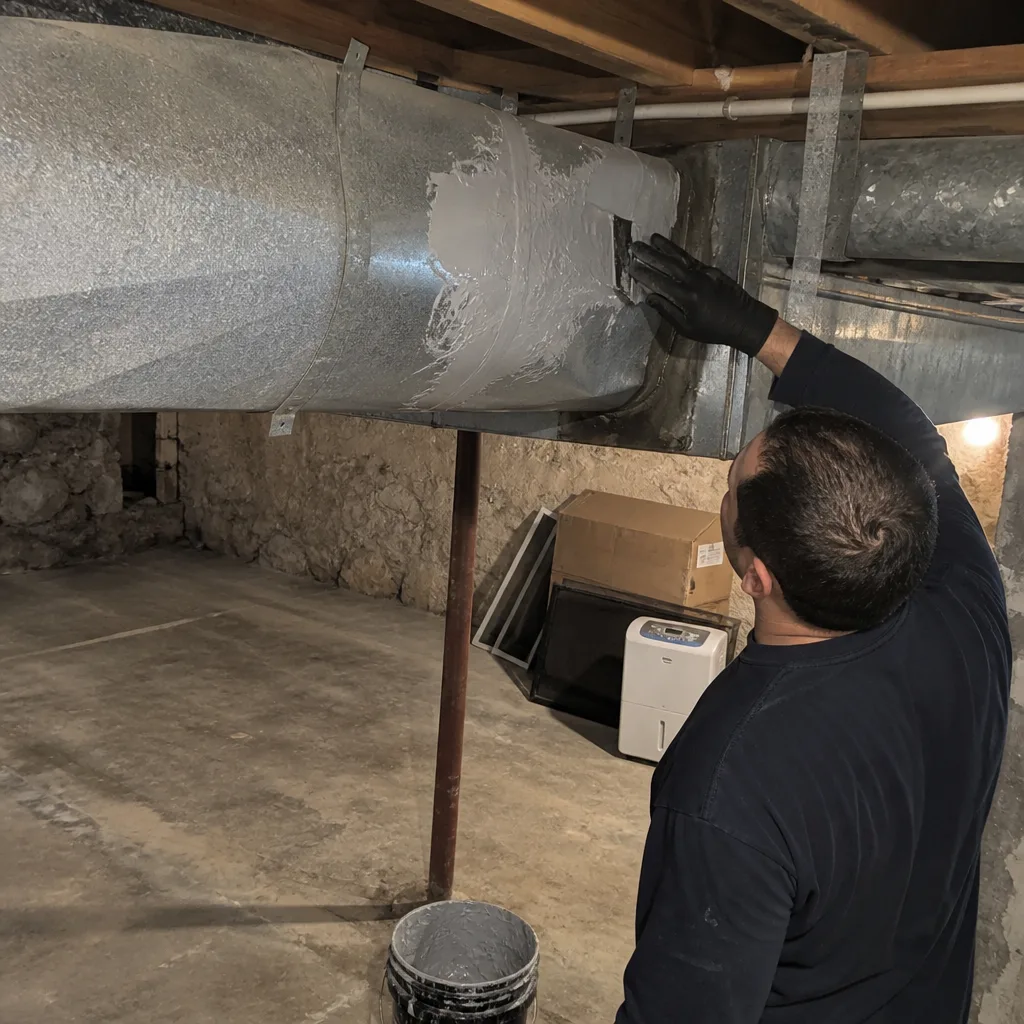
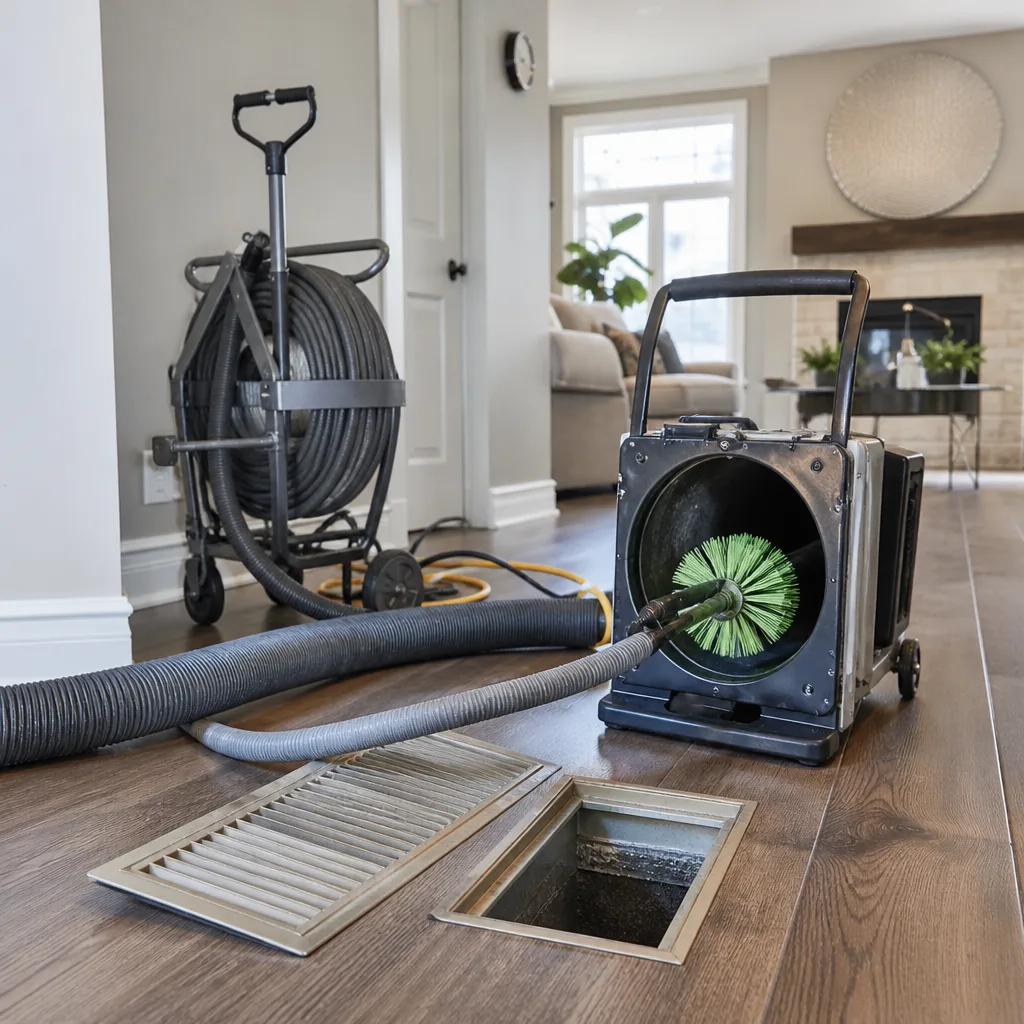
- Whole-home duct cleaning
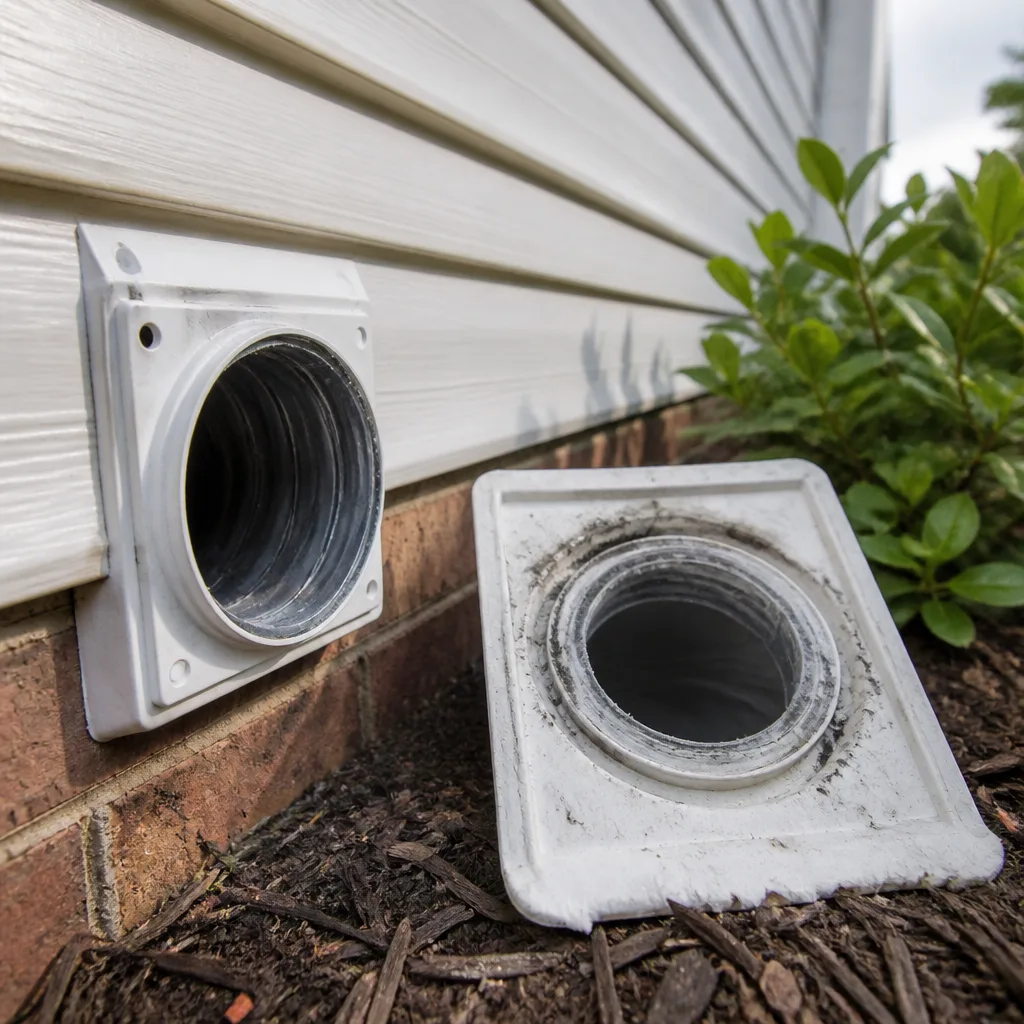
- Dryer vent cleaning
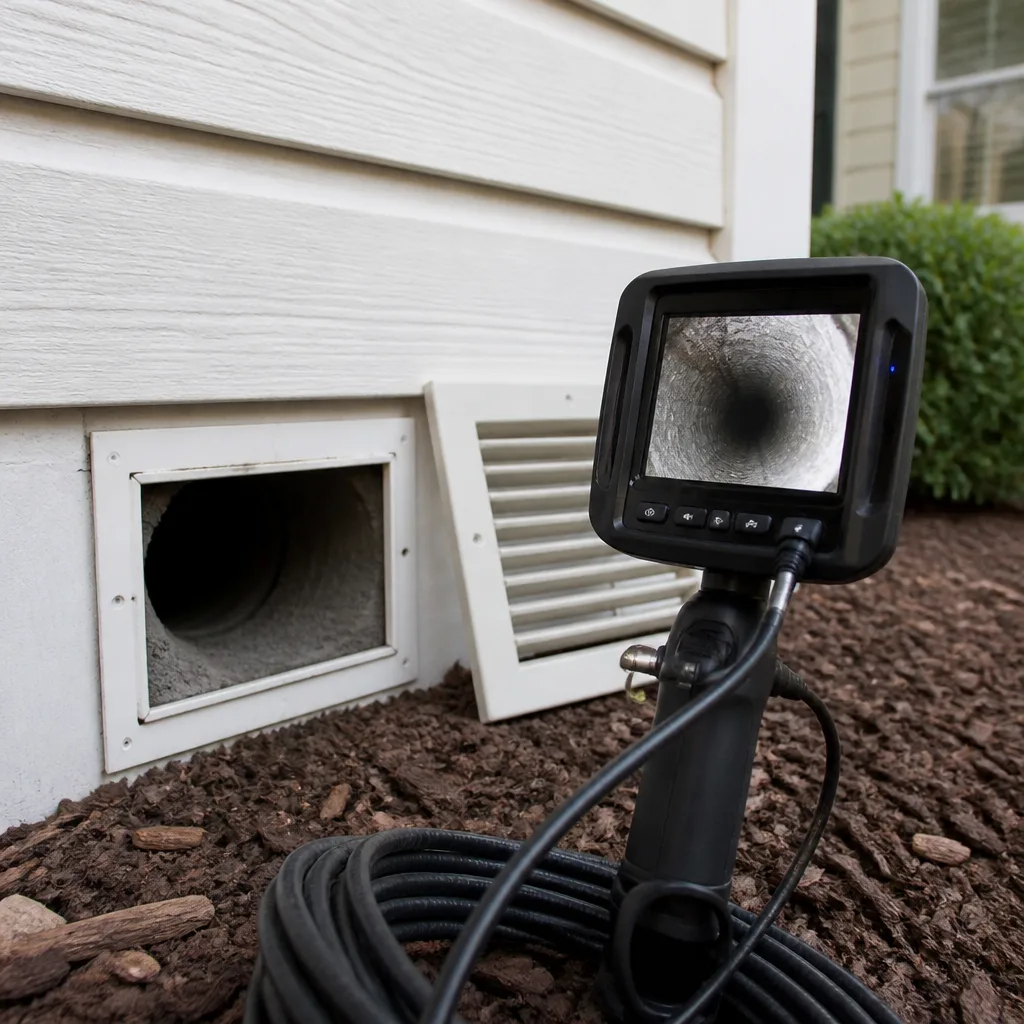
- Camera inspection
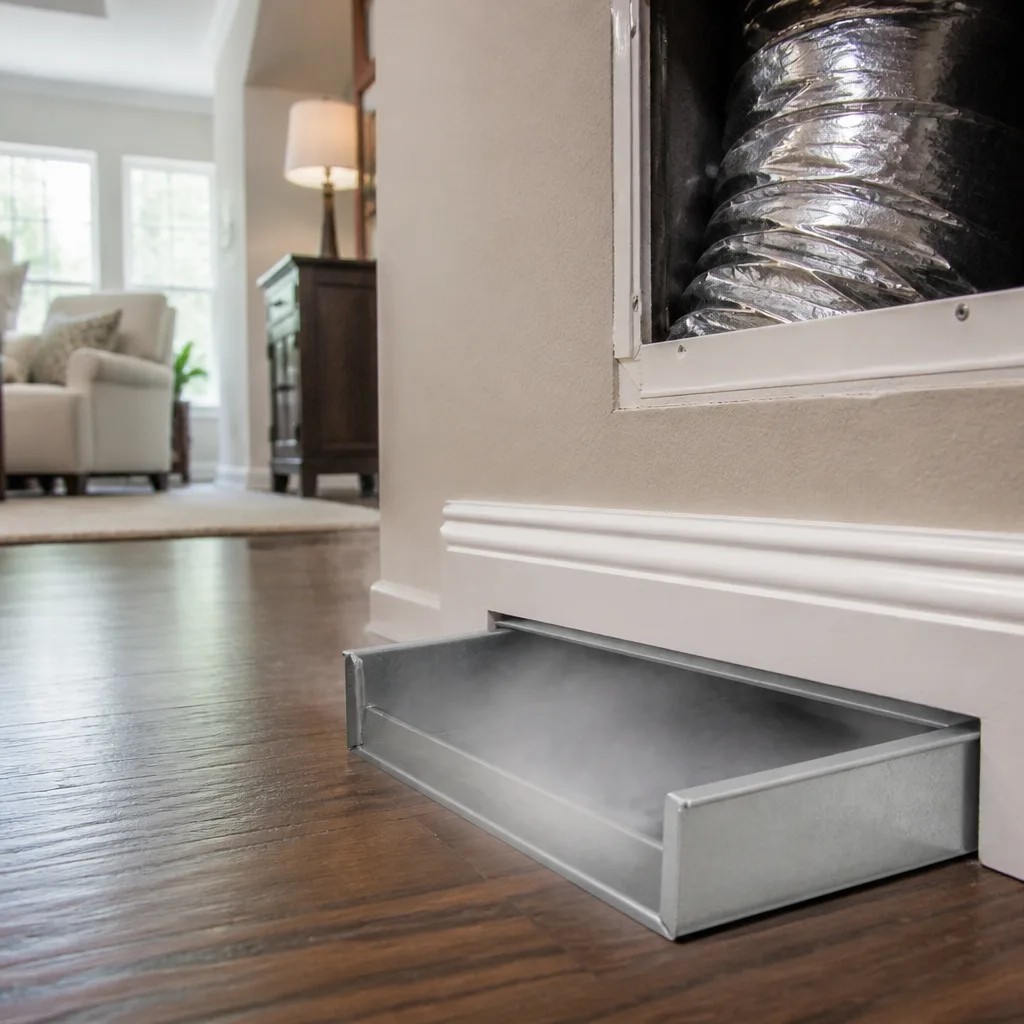
- Sanitizing & deodorizing
Table of Contents
- Why Lake Highlands Ducts Collect What They Do
- Source Removal vs. Blow-and-Collect: How to Tell the Difference
- What Professional-Grade Equipment Actually Looks Like
- The Post-Service Integrity Check Most Cleanings Skip
- What Air Duct Cleaning Costs in Lake Highlands
- How to Read a Before-and-After Report
- Dryer Vents: The Safety Side of the Same Job
- How Often Your Ducts Really Need Cleaning
Why Lake Highlands Ducts Collect What They Do
Lake Highlands sits on the same North Texas clay that underlies most of Dallas, and that clay does something specific to homes here: it swells when wet and shrinks when dry, shifting slowly under foundations and putting just enough stress on duct runs to open small gaps at joints and seams. Those gaps don’t announce themselves. They pull in attic air, soil dust, and whatever else sits in the space around the duct. Over a few seasons, the inside of the system starts to look less like clean sheet metal and more like a dust-trapping surface.
On top of the soil movement, this part of North Texas has one of the longer and heavier pollen seasons in the country. Oak, cedar elm, and ragweed push fine particulate through the air for months at a time. Your return ducts pull that air in by design. Most of it gets caught by the filter, but a percentage of it settles on duct walls, especially in the runs serving bedrooms and living spaces where air moves slower.
What that produces is a contamination profile that looks a little different from what you’d find in, say, a humid coastal city or a cold northern climate:
- Fine clay and soil dust that settles in low spots and return plenums
- Pollen particulate that clings to duct walls and builds up in layers over a season
- Construction and remodeling debris from the steady turnover and renovation happening across Lake Highlands neighborhoods
- Pet dander and hair in homes with animals, concentrated in the returns
- Musty microbial growth in any run that picks up condensation from an oversized or short-cycling system
The point isn’t that Lake Highlands ducts are worse than anywhere else. It’s that the specific mix here leans fine, dry, and airborne, which means the contamination travels further into the system than heavier debris would. A cleaning that only reaches the trunk line misses most of it.
Source Removal vs. Blow-and-Collect: How to Tell the Difference
There are two broad approaches to duct cleaning, and they produce very different results. Source removal means the debris is physically dislodged from duct surfaces under continuous negative pressure, captured at the source, and removed from the home. Blow-and-collect means air is pushed through the system while a vacuum pulls at one end, and whatever gets loose is collected on the way out. The second method sounds reasonable and mostly isn’t. It stirs contamination into the air your family breathes and leaves a large share of it behind.
Here’s how to tell which one you’re being sold, before anyone opens a truck:
- Ask what negative pressure means in their setup. A real source-removal job uses a high-volume negative-air unit connected to the main trunk or a dedicated access point, so the entire system stays under suction during cleaning. If the answer is vague, that’s your first clue.
- Ask whether they use mechanical contact cleaning inside the ducts. Rotobrush and Nikro systems drive rotating brush heads and whip lines through each branch. If the crew only uses air, no brush ever touches the duct wall, and the dust that’s stuck stays stuck.
- Ask about containment. Professional remediation work uses Abatement Technologies negative-air filtration units to keep dust from migrating into living space. If the crew shows up with a shop vacuum and no containment, they can’t control where the debris goes.
- Ask what they do with the debris they collect. A proper collection bag or HEPA-filtered capture unit is standard. A shop vac hose running out a window is not the same thing.
- Ask for the scope in writing. A source-removal proposal names every branch, every return, and the number of access points they’ll cut. A blow-and-collect proposal usually says “clean all ducts” and nothing more.
One flat price per system, agreed before work starts, is the honest way to price either method. If a quote is built around a per-vent number, you’re talking to someone pricing access points rather than the actual work.
What Professional-Grade Equipment Actually Looks Like
You can learn more in five minutes looking at a crew’s equipment than in an hour listening to a sales pitch. The difference between a real duct cleaning setup and a cut-rate operation is visible from the driveway.
Professional-grade equipment in this trade looks like this:
- Rotobrush or Nikro mechanical cleaning systems – rotating brush heads, forward and reverse whip lines, and flexible shafts long enough to reach the far end of a branch run. These are the tools certified remediation and HVAC specialists use, and they’re the reason a duct wall actually gets clean instead of just getting blown around.
- High-volume negative-air units with HEPA filtration, connected at the main trunk so the whole system stays under suction. A shop vacuum moves a few hundred cubic feet per minute at best and pulls from a 2-inch hose. A real negative-air machine moves several times that through an 8- or 10-inch connection.
- Abatement Technologies air filtration units set up as containment barriers, so dust that gets disturbed during cleaning is filtered rather than released.
- Camera inspection equipment for documenting duct interiors before and after.
- Access-cutting tools and proper sealing materials for the access points a real cleaning requires.
If the crew shows up with a portable shop vacuum, a length of flex hose, and no containment, you’re not getting source removal. You’re getting a vacuum-and-leave. The cost difference between the two, once you factor in how often the job has to be redone, doesn’t favor the cheap option.
The Post-Service Integrity Check Most Cleanings Skip
Here’s the part almost no guide mentions: cleaning a duct system without checking it for leaks afterward is like washing a car with the windows down. You’ve removed the dirt, and the system is going to pull new contamination in through the same openings that let the old contamination settle in the first place. In Lake Highlands, with clay soil shifting under the slab and attic temperatures pushing 130 degrees in summer, duct joints open up faster than in gentler climates.
Our technicians have up to 8 years of experience, and the single biggest gap we see between what customers expect and what they get is this: the cleaning was thorough, but nobody sealed the leaks the cleaning exposed. A proper job runs the integrity check as a standard step, not an optional add-on.
A real post-service integrity check covers three things:
- Visual inspection of every accessible joint and connection. This means looking at connections at the air handler, the plenum, and every branch takeoff.
- Pressure or airflow testing at the vents. A system that’s leaking badly will show lower static pressure at the far vents than at the near ones. Measuring that tells you whether the system is losing air to the attic, the garage, or a wall cavity.
- Sealing what’s found. Duct mastic and foil-backed tape applied at open joints, not a quick wrap of duct tape. Sealing is where the efficiency gain actually comes from.
This is the step that separates cleaning from full-service duct work. If a company only cleans and doesn’t repair or seal, they hand you a clean system that will be dirty again soon. We treat repair and sealing as core work, not a referral.
What Air Duct Cleaning Costs in Lake Highlands
Air duct cleaning in Lake Highlands typically runs $350 to $700 for a standard single-family home, with larger homes and light commercial spaces running higher. The final number depends on the number of branches, the number of returns, how many access points are needed, and whether duct repair or sealing is part of the scope. The written estimate sets the price, and we don’t quote per vent.
Here’s how the pieces break down, in whole-system ranges:
| Service | Typical Range | What Drives the Price |
|---|---|---|
| Full-system air duct cleaning (single-family) | $350 – $700 | Number of branches, returns, access points |
| Dryer vent cleaning | $120 – $250 | Vent length, number of elbows, roof vs. wall termination |
| HVAC system cleaning (air handler + coil area) | $200 – $450 | System size, coil condition, access |
| Duct repair and sealing | Quoted per job | Number of leaks, accessibility, materials |
| Sanitizing and air quality treatment | Quoted per job | System size, treatment product, scope |
What you won’t see here is a per-vent price or a teaser coupon figure. A $59-per-vent quote that grows to a $900 invoice once the technician is inside the attic is the standard bait-and-switch in this trade, and the only defense is asking for a whole-system price before anyone arrives. One flat price per system, agreed before work starts, and a written estimate that sets the final number. That’s the deal we offer, and it’s the deal you should insist on from anyone.
How to Read a Before-and-After Report
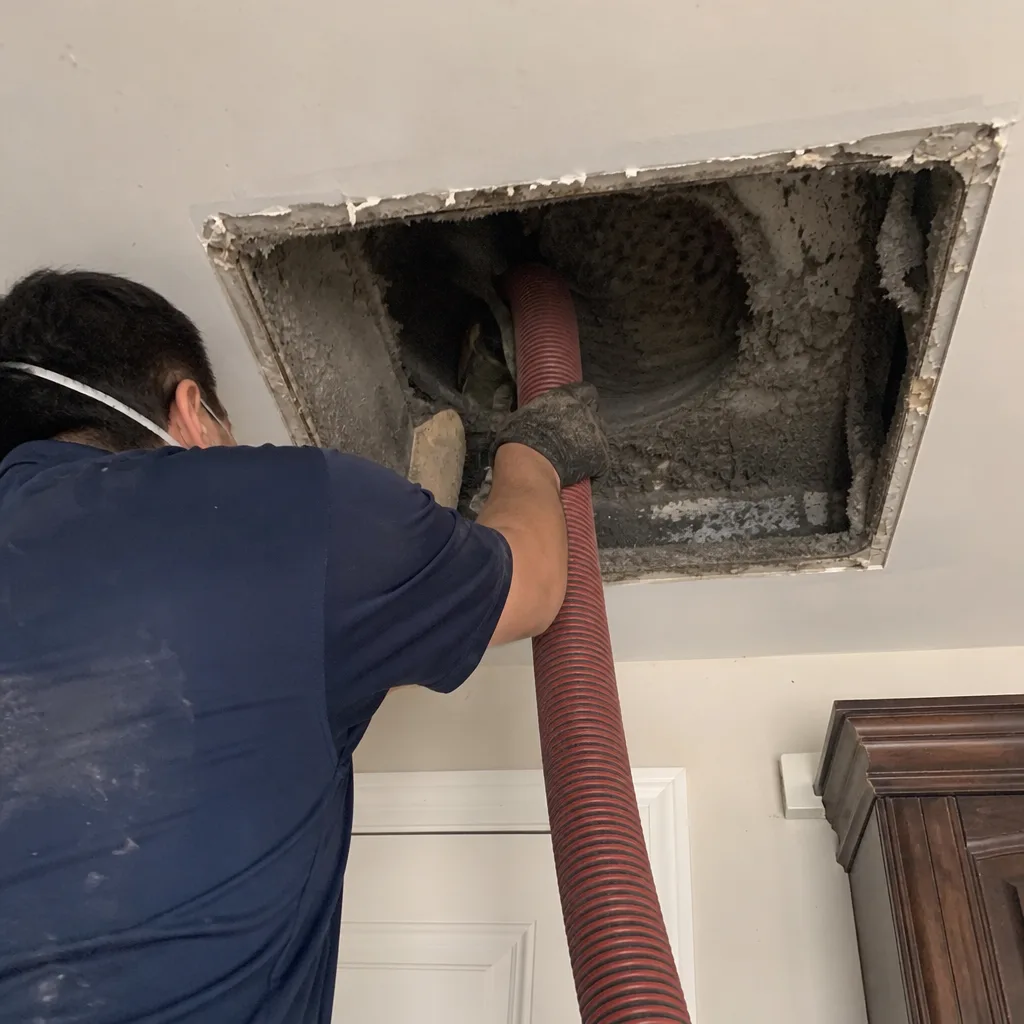
A credible duct cleaning ends with evidence you can look at. Not a photo of a dusty filter, not a verbal “you wouldn’t believe what we pulled out,” but a documented before-and-after of your own system. If a company finishes the job without offering you one, that’s a signal.
Here’s what a proper report includes, and what each piece tells you:
- Camera footage from inside the ducts, before and after. Look for footage from the same location in the same branch, so the comparison is honest. A “before” shot from the dirtiest return and an “after” shot from the cleanest supply line proves nothing.
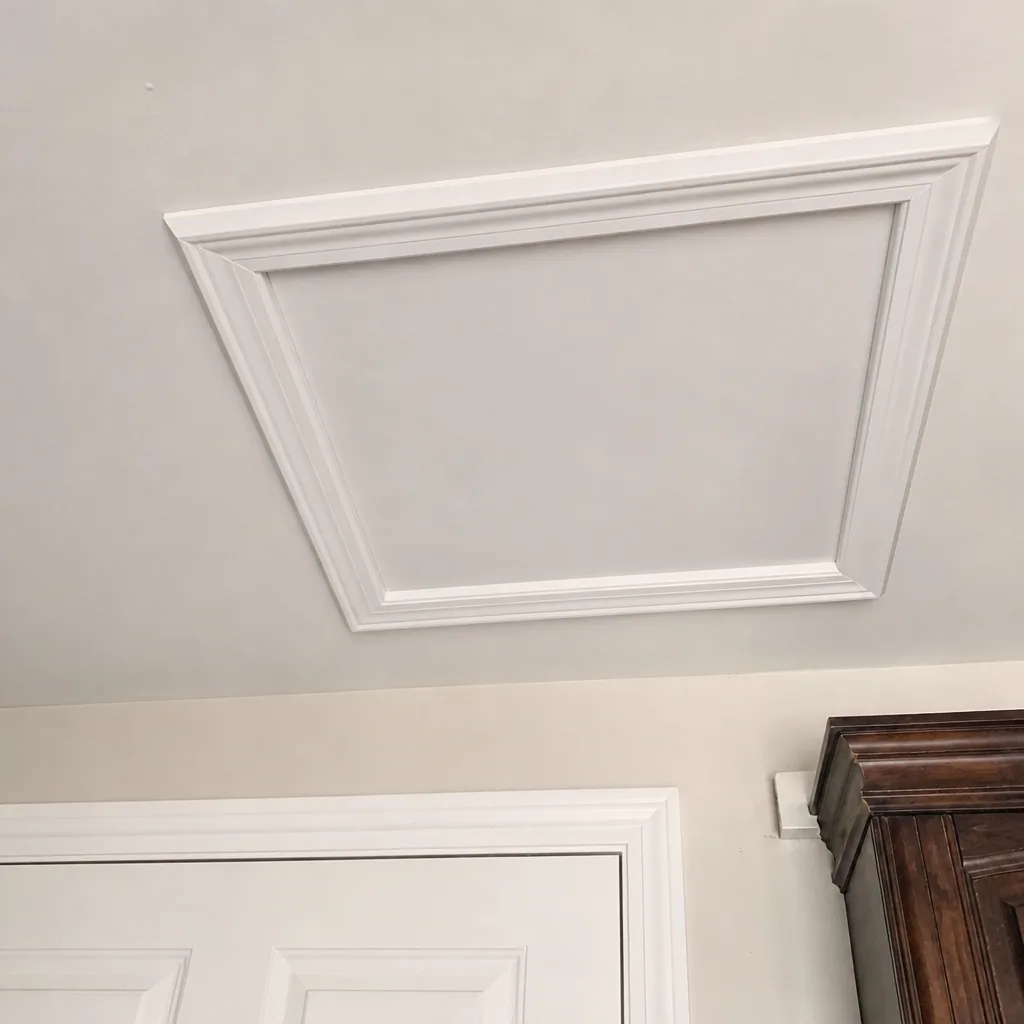
- Photographs of every access point cut and sealed. A real cleaning requires cutting access holes. A real report shows where they were cut and how they were sealed afterward. If there’s no record of sealing, the holes may still be open.
- Airflow readings (CFM) taken at the vents before and after. This is the measurable outcome. If the numbers haven’t changed and sealing wasn’t part of the scope, ask why. A system that was badly restricted before cleaning should show improvement; one that was sealed should show a different pattern across the vents.
- Photos of the collected debris. A sealed collection bag photographed before it goes in the truck is the simplest proof that debris actually left the system.
- A written scope summary. How many branches, how many returns, how many access points, whether sealing was performed. This is the document that tells you whether the job quoted is the job done.
Any single one of these on its own is weak. Together they give you a verifiable record of what happened inside your walls. We provide before-and-after photos of the customer’s own ducts as standard practice, and we welcome the customer watching the camera feed during the inspection.
Dryer Vents: The Safety Side of the Same Job
A dryer vent is not a smaller version of an air duct. It carries hot, moist, lint-laden air out of the house, and lint is what house fires burn. The U.S. Fire Administration attributes thousands of home fires a year to dryers, and the leading cause is lint accumulation that blocks airflow and overheats the dryer. In Lake Highlands, where homes sit close together and many vent runs go up through the roof, a clogged vent is a genuine safety concern that most duct-cleaning companies treat as a cheap add-on.
We treat dryer vent cleaning as its own fire-safety service. That means:
- Running a rotating brush the full length of the vent, not just the first few feet
- Pulling the vent line apart at elbow joints to clear lint that’s packed into the turns
- Checking the exterior termination for a stuck flapper or a screen that’s clogged
- Verifying airflow after cleaning, so you know the dryer can actually breathe
If you’ve noticed your dryer taking longer to dry a load, or the outside vent flapper no longer opens fully when the dryer runs, those are the two most common early signals. Neither one means “wait and see.” Both mean the vent needs to be cleaned. Dryer vent cleaning is a scheduled job, not an emergency call, but it shouldn’t sit on a to-do list for years.
How Often Your Ducts Really Need Cleaning
Most Lake Highlands homes don’t need duct cleaning on a fixed timetable. The honest answer is that the interval depends on the home, the household, and what’s happened to the system since the last cleaning. The generic “every three to five years” advice you see everywhere isn’t wrong, but it’s not a rule. It’s an average.
Clean your ducts when one or more of these is true:
- You’ve just finished a remodel or renovation, and drywall dust has been pulled into the returns
- A new pet, or a new baby, has changed the dust load in the house
- Someone in the household has developed allergy or asthma symptoms that get better away from home
- You’re seeing visible dust streaks around supply registers, or the registers themselves are coated
- The house has had a moisture problem, and there’s a musty smell when the system runs
- It’s been a decade or more since any duct cleaning was done, and the returns look like they’ve never been touched
- You’re moving into a resale home and want to know what’s in the system before you settle in
For most Lake Highlands homes with no unusual conditions, a cleaning every five to seven years is a reasonable rhythm. Homes with pets, recent remodels, or allergy-sensitive occupants tend toward the shorter end. A home with none of those factors can go longer. The best guide is what you see at the registers and how the house feels, not the calendar.
Common Mistakes to Avoid
- Buying on the per-vent price. A per-vent quote tells you what the crew will touch, not what the job requires. Insist on a whole-system price, and treat any quote that starts low and grows on site as a warning sign.
- Accepting a job without containment. A cleaning that lets dust escape into the living space during the work is worse than no cleaning at all. A real crew brings negative-air containment to every job. If they don’t, send them back to the truck.
- Skipping the post-service walkthrough. If the technician finishes and leaves without showing you camera footage, airflow readings, and photos of their own sealing work, you have no way of knowing what actually happened. Ask for the report before you pay.
- Cleaning the ducts but leaving the air handler alone. The air handler and the coil area collect dust too, and a clean duct system pulling air through a dirty air handler isn’t clean. HVAC cleaning belongs in the same visit as duct cleaning, not a separate job years later.
- Assuming cleaning and sealing are the same service. Cleaning removes what’s there. Sealing keeps new contamination out. A cleaning-only job in a home with leaky joints is money that has to be spent twice. Sealing is where the efficiency and air quality gains hold.
- Ignoring the dryer vent because the ducts got cleaned. The dryer vent is a separate run with its own fire risk. If it hasn’t been cleaned in years, a duct cleaning doesn’t address it. Treat them as two jobs with a shared specialist, not one.
- Waiting for symptoms before scheduling an inspection. Allergy and asthma symptoms show up after the debris has been circulating for a while. A visual inspection and camera check are cheap; a season of wheezing is not.
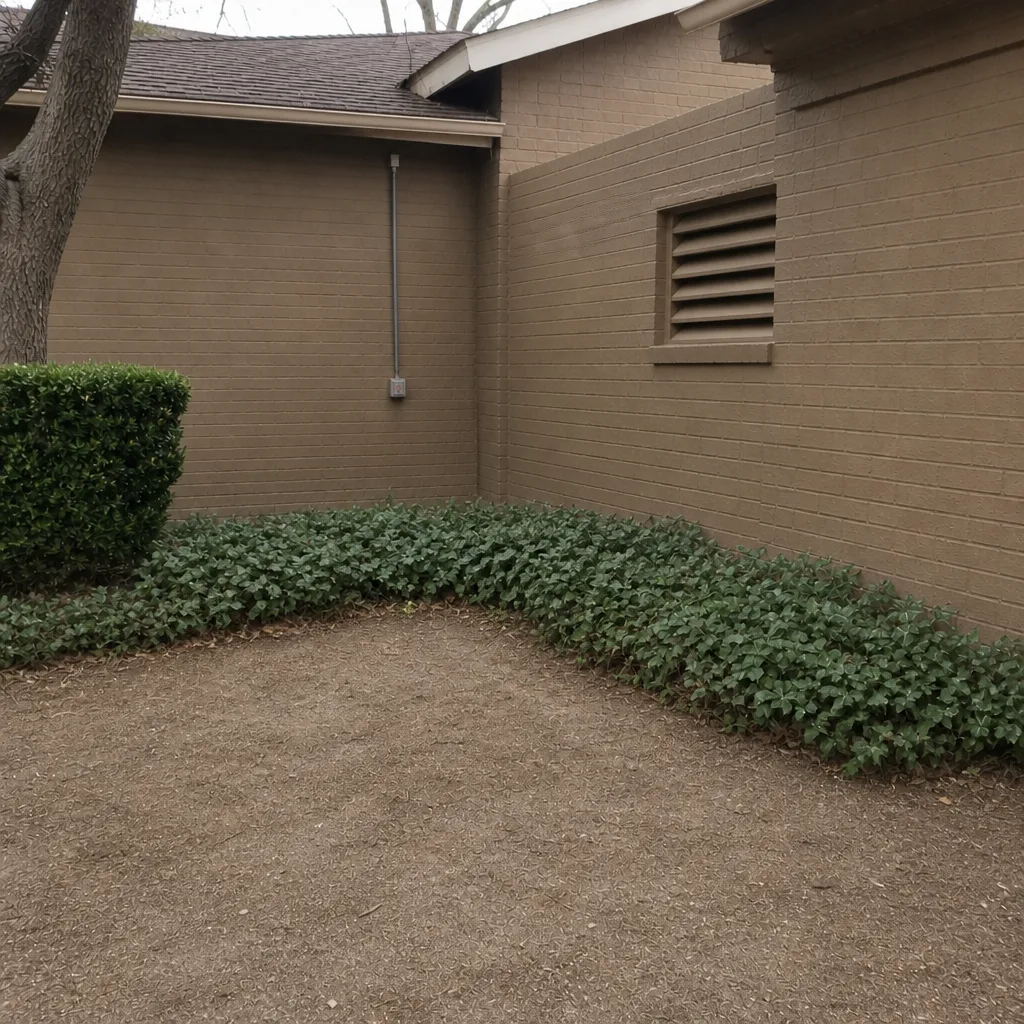
See the difference
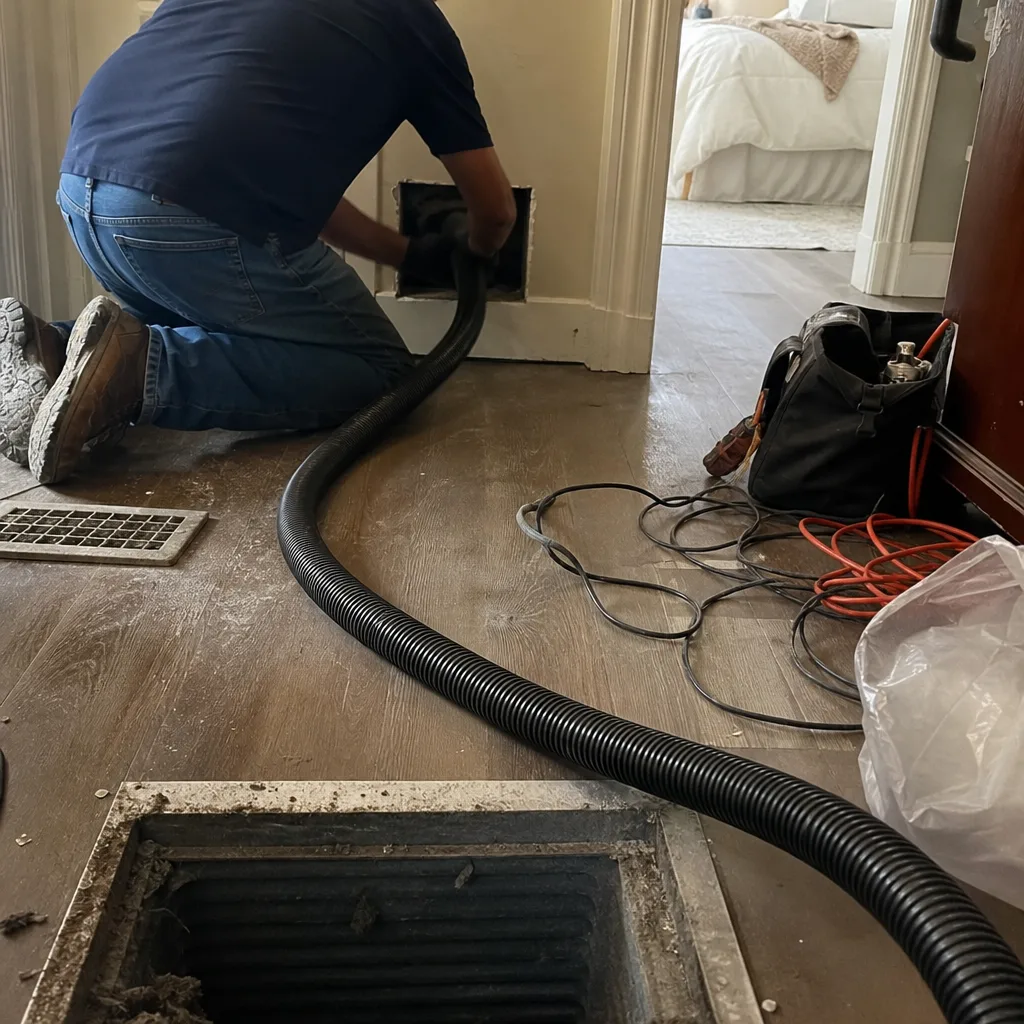 Before
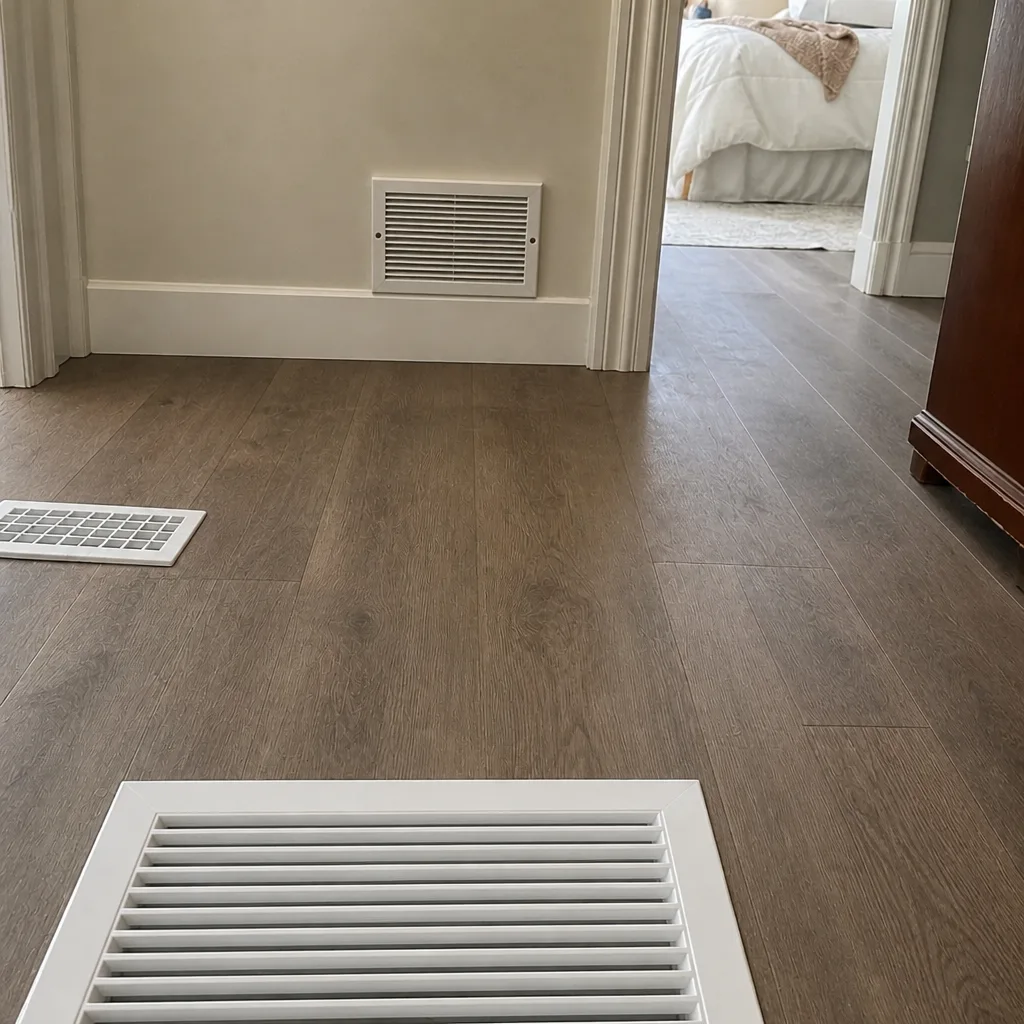 After
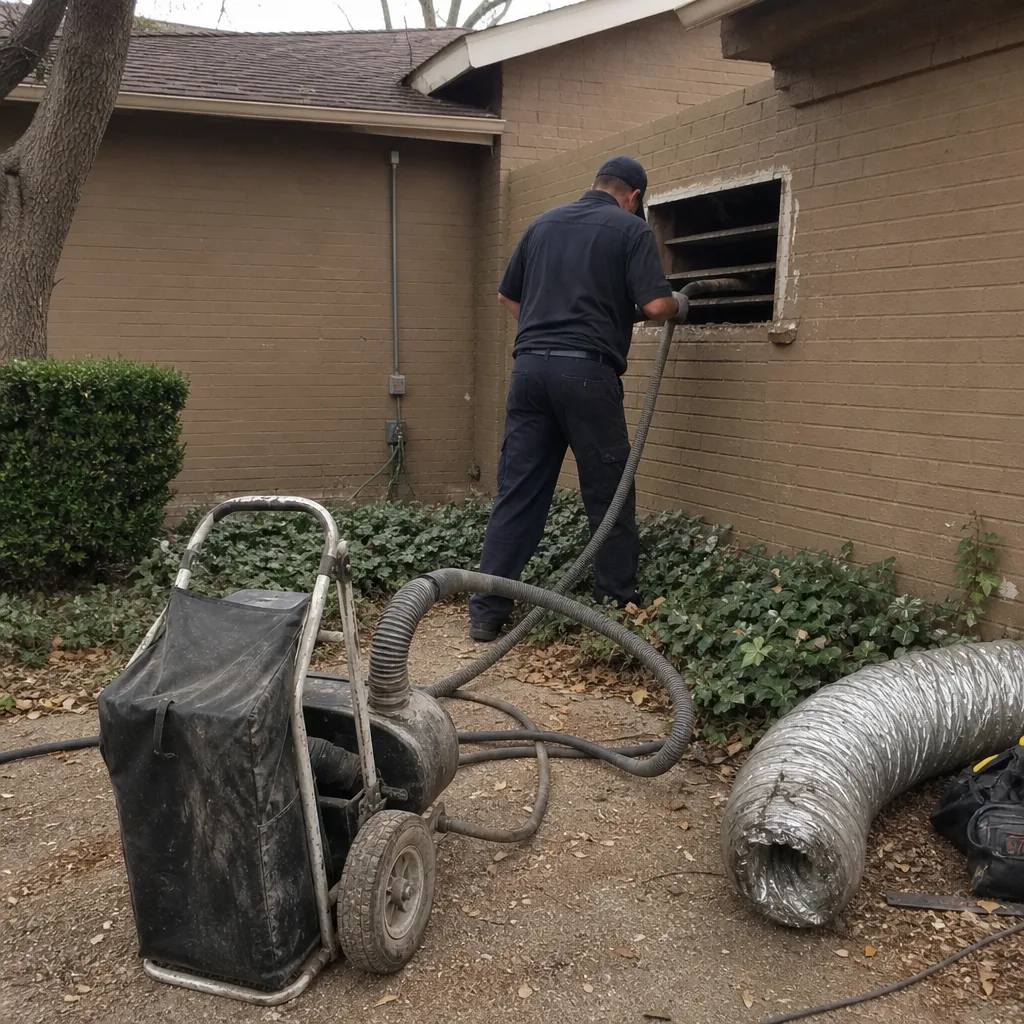 Before
 After
 Before
 After
When to Call a Professional
Some duct-related problems are obvious enough to handle with a shop vacuum and a filter change. Most are not. Call a professional when you notice a musty or dusty smell every time the air conditioning runs, when visible dust accumulates on the supply registers faster than normal, or when someone in the household is reacting to the air in a way that clears up when they’re away from home. Call when you’ve just finished a remodel and drywall dust has been pulled into the returns. Call before the next cooling season if the system has never been cleaned and the house is more than a decade old. And call for the dryer vent well before you notice the dryer taking twice as long on a load. Air Duct Cleaning Lake Highlands offers free estimates in Lake Highlands – call (833) 509-5459. We answer 24/7. Fast dispatch from 7am to 7pm, Sunday through Friday.
Frequently Asked Questions
Air duct cleaning in Lake Highlands typically costs $350 to $700 for a full single-family system, with larger homes and light commercial spaces running higher. The price is set by the number of branches, returns, and access points, and the written estimate is the final price. Call (833) 509-5459 for an exact quote – estimates are free.
Low quotes are usually built around a per-vent price that covers only the easily accessible ducts, not the full system. Once the crew is on site, the price often grows as they find “additional” work. The honest comparison is the whole-system price agreed before work starts. Ask any company for a flat price per system in writing. Call (833) 509-5459 if you’d like a whole-system quote with no per-vent math.
Ask for camera footage from inside your own ducts before and after the cleaning, airflow readings at the vents, and photos of every access point cut and sealed. If a company can’t provide those, the cleaning is unverified. We treat before-and-after photos of your own system as standard, not a special request. Call (833) 509-5459 to schedule.
Most homes with no unusual conditions can go five to seven years between cleanings. Homes with pets, recent remodels, or allergy-sensitive occupants usually need it more often. The interval isn’t a fixed rule; watch the registers and how the house feels. Call (833) 509-5459 for a free inspection if you’re not sure where your home falls.
Cleaning removes the debris that’s already in the system. Repair and sealing close the leaks at joints and connections that let new debris in. Cleaning without sealing is a temporary fix; sealing extends how long the cleaning lasts and improves airflow. Call (833) 509-5459 to have both assessed in the same visit.
No. The dryer vent is a separate run with its own fire risk, and it needs its own dedicated cleaning with a rotating brush run the full length of the vent. Treat it as a scheduled service on its own timeline. Call (833) 509-5459 to book both in the same week.
The Bottom Line
A real air duct cleaning in Lake Highlands reaches every branch and return in the system, uses professional-grade equipment like Rotobrush or Nikro mechanical cleaning heads under Abatement Technologies negative-air containment, and ends with evidence you can review: camera footage, airflow readings, and photos of sealed access points. Anything short of that is a vacuum-and-leave job, and it will be back on your list within a season. Cleaning without a post-service integrity check leaves the leaks that let new contamination in. We treat cleaning, repair, sealing, and air quality treatment as one service for that reason. If you take one thing from this guide, take this: ask for the whole-system price in writing before anyone opens a truck.
Ready to know what’s actually inside your ducts? We give a flat price per system, agree it before work starts, and show you the before-and-after of your own system. For air duct cleaning in Lake Highlands, Air Duct Cleaning Lake Highlands covers the full system, from intake to output, including duct repair and sealing. Call (833) 509-5459 for a free estimate. We answer 24/7. Fast dispatch from 7am to 7pm, Sunday through Friday.
Written by the team at Air Duct Cleaning Lake Highlands.