
Last updated November 23, 2026
 Whole-home duct cleaning
 Dryer vent cleaning
 Camera inspection
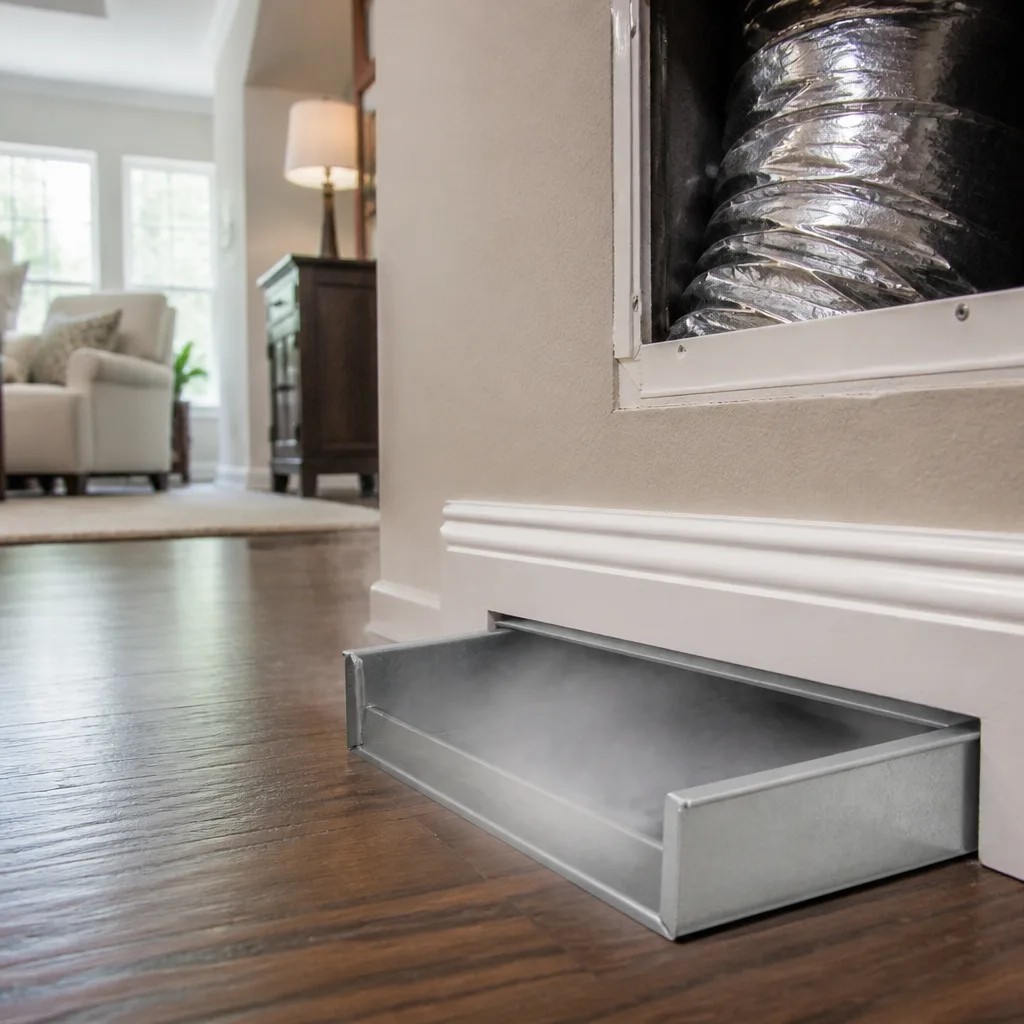 Sanitizing & deodorizing
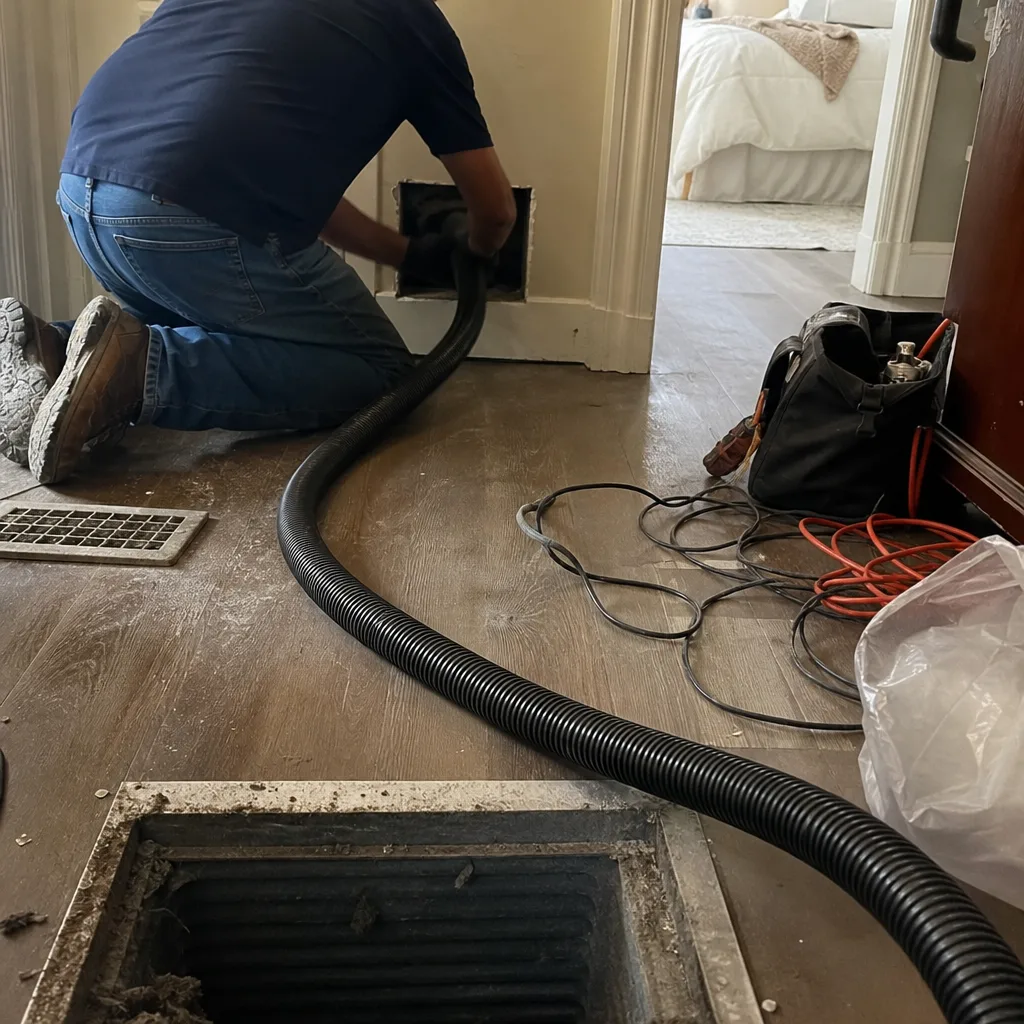
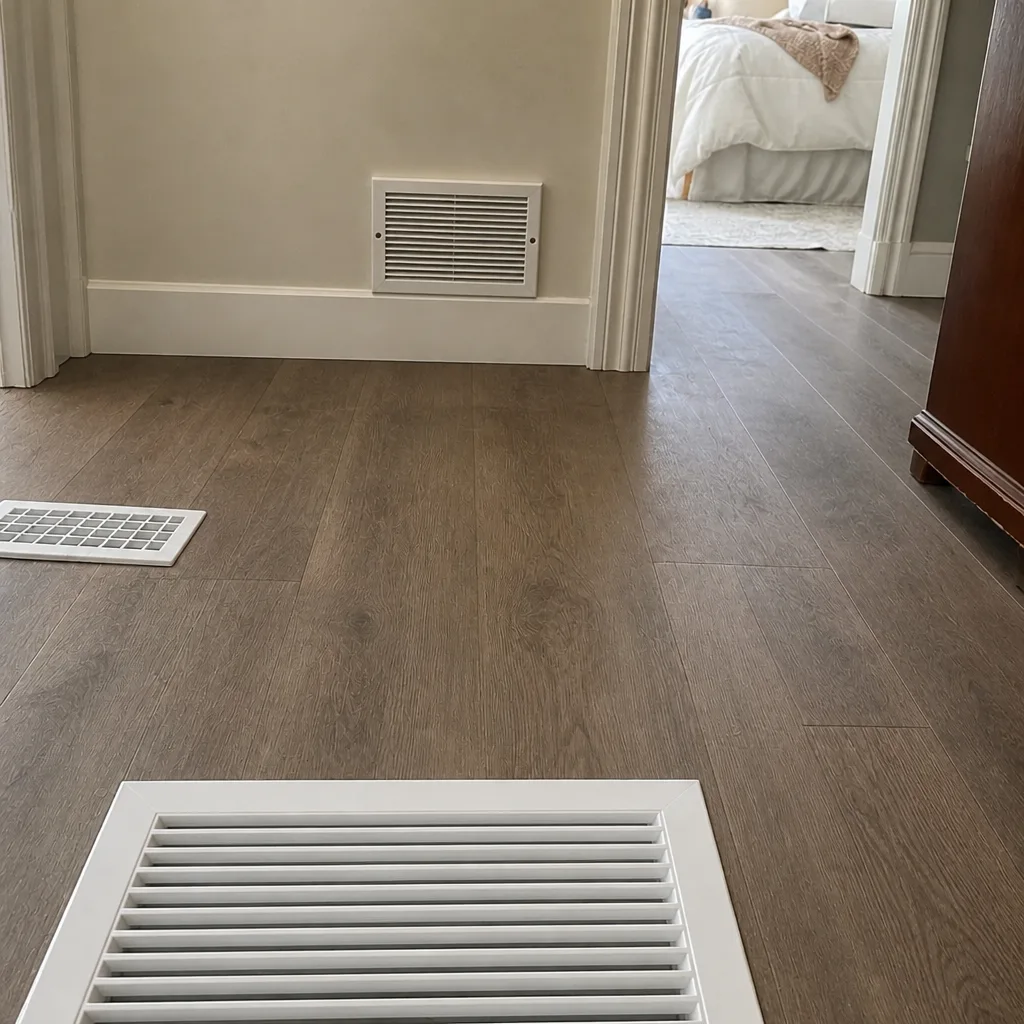
Whole-system duct and dryer vent check with before-and-after photos - you see exactly what came out of your vents
That "$99 whole-house special" is a bait ad - the real number appears once they are in your hallway, or the "clean" is a shop-vac at the register. We photograph the inside of your ducts before and after instead.
Seasonal Air Duct Cleaning Care for Lake Highlands: Year-Round Homeowner’s Guide
The worst time to discover your ducts are coated in mold-ready moisture is when you flip on the heat in October. That’s exactly when most Lake Highlands homeowners find out. The musty smell that shows up with the first warm-air cycle isn’t a coincidence, and it isn’t something a plug-in air freshener will fix. It’s the smell of a duct system that spent the humid summer collecting condensation and the spring collecting pollen, and now it’s baking all of it into the air you breathe. This guide breaks down how Lake Highlands’ four distinct indoor air quality seasons actually work, what each one does to your ducts, and how to build a care calendar around real North Texas conditions instead of generic national advice.
Quick Answer
Air duct cleaning in Lake Highlands should follow a four-season cycle, not a once-a-year checkbox. Spring (March through May) is the highest pollen-loading period of the year and the best time to clean before AC season, summer is when over-cooled air creates moisture conditions inside ducts, fall is when the first furnace run mobilizes settled dust into living spaces, and winter is when dry, static-charged air pulls particulate onto duct surfaces. Most homeowners here do best with a full cleaning in early spring, a mid-summer moisture check, a pre-heat inspection in early fall, and a filter-and-seal review by December.
Styles & brands we work with
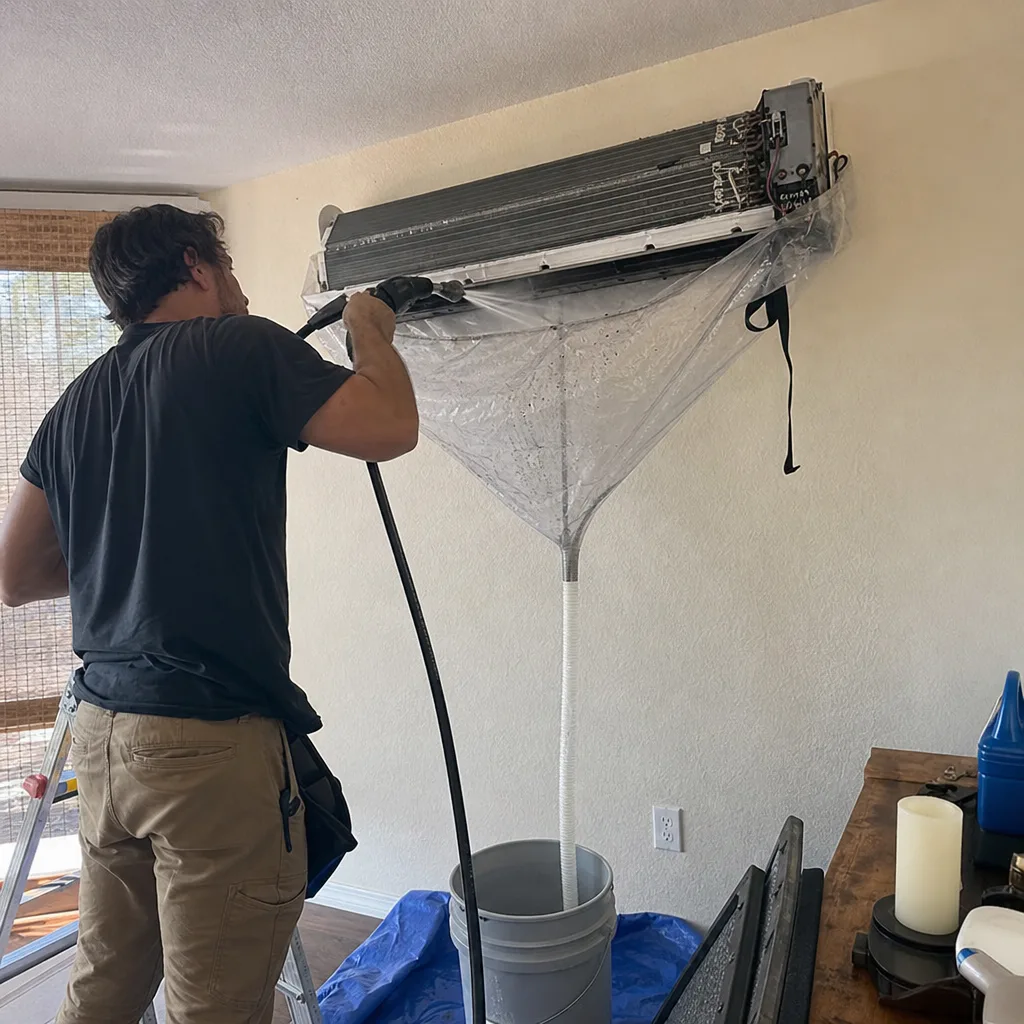
- Whole-home duct cleaning
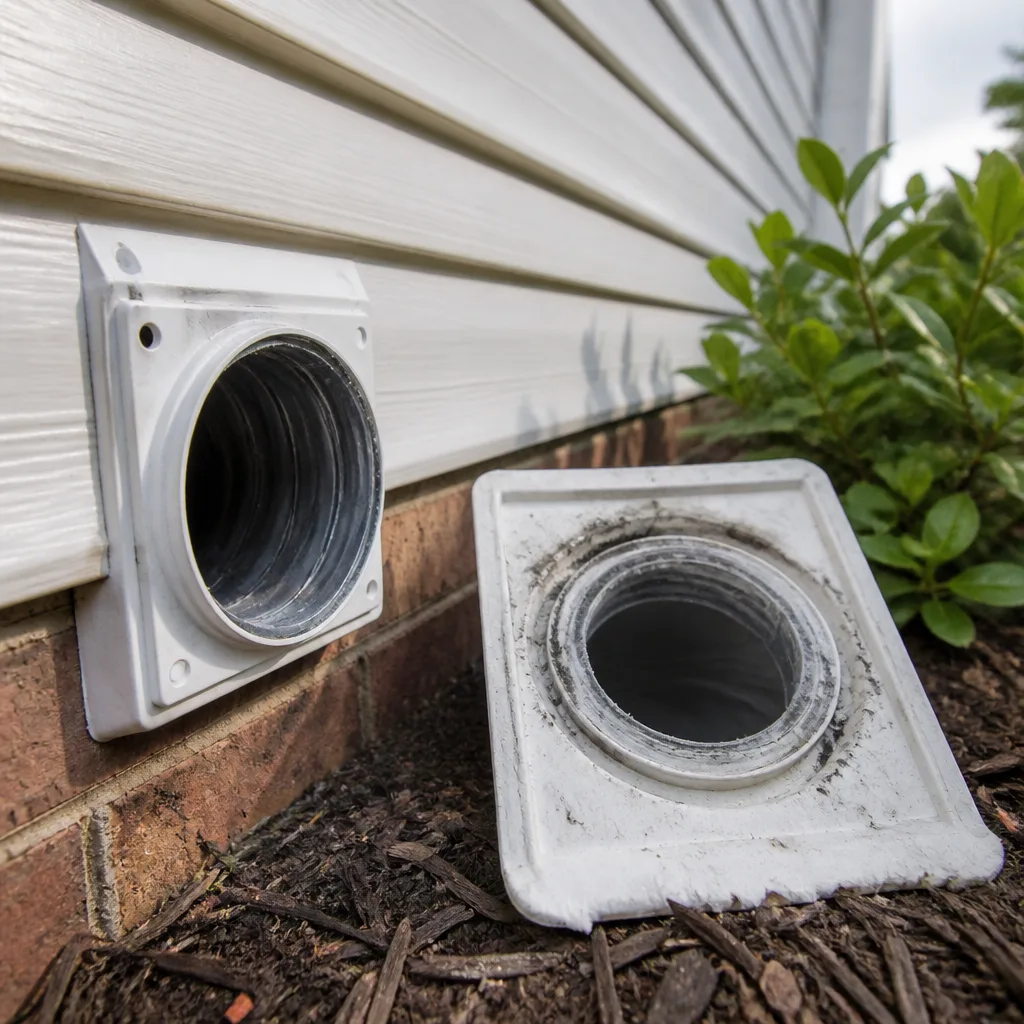
- Dryer vent cleaning
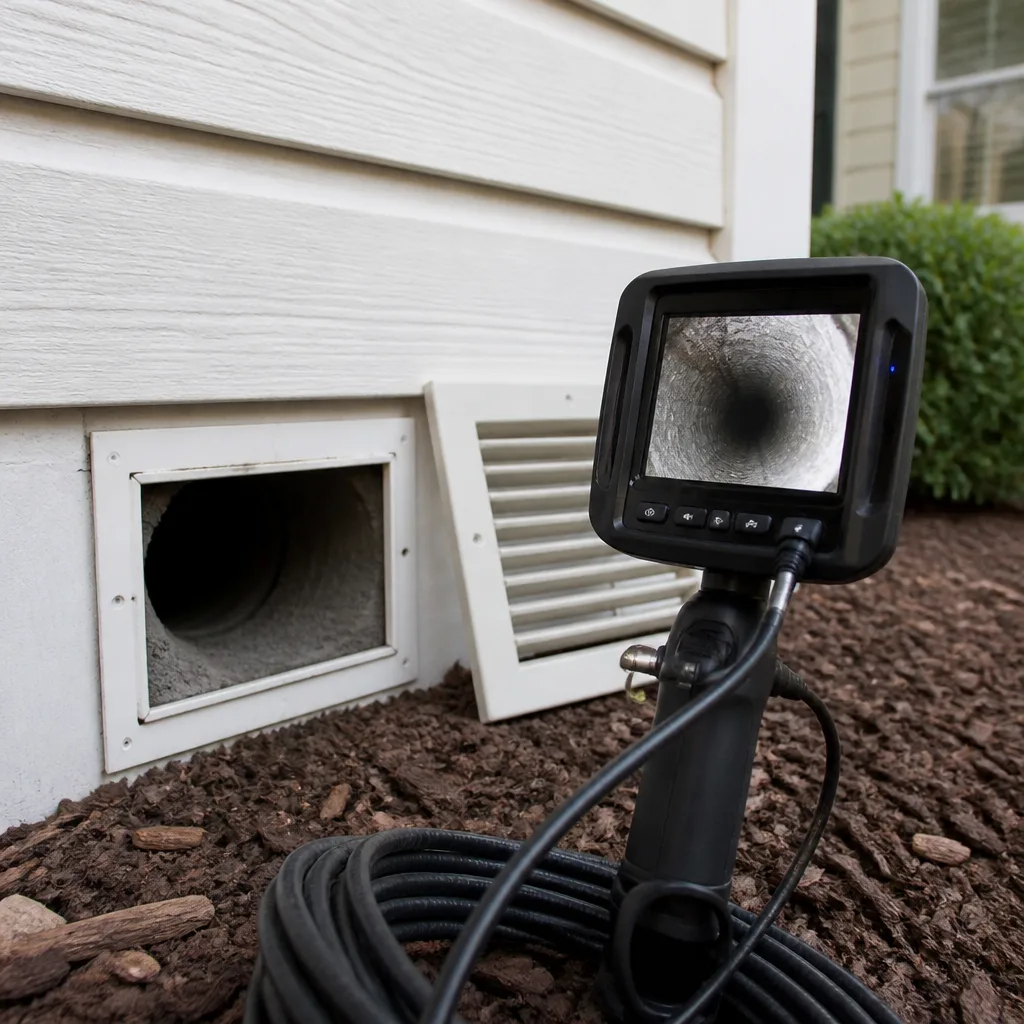
- Camera inspection
- Sanitizing & deodorizing
Table of Contents
- Spring in Lake Highlands: Pollen Season and Filter Bypass
- Summer: Condensation Inside Ducts and Mold-Risk Conditions
- Fall: The First-Heat Phenomenon
- Winter: Dry Air, Static Charge, and Sealed Systems
- Building a 12-Month Care Calendar for Lake Highlands
- What Real Duct Cleaning Actually Involves
- Why Cleaning Alone Doesn’t Fix a Leaky Duct System
- Common Mistakes to Avoid
- When to Call a Professional
- Frequently Asked Questions
Spring in Lake Highlands: Pollen Season and Filter Bypass
Spring is the heaviest pollen-loading period of the year in Lake Highlands, and it’s also when most duct systems quietly fail at the one job that matters most in March, April, and May: keeping that pollen out of the air you breathe. The reason is filter bypass. Your HVAC filter is sized to catch particulate, but it only works if every cubic foot of return air actually passes through the filter media. Gaps around the filter frame, undersized filter slots, and duct connections that have loosened over years of thermal cycling all let unfiltered air sneak past the filter and dump directly into the supply plenum. In a Lake Highlands home with a mature tree canopy, that bypass air carries oak, cedar, and grass pollen straight into the system.
What we typically find in our experience when we inspect a system in early spring is a filter that looks fine on the visible side while the duct surfaces downstream are coated in fine yellow-green dust. The filter did its job on the air it saw. It just didn’t see all the air. This is where professional-grade equipment matters: a Rotobrush or Nikro mechanical cleaning gets contact on the duct walls, not just the airflow, and a negative-air containment unit from Abatement Technologies keeps the dislodged debris from migrating into your living space while it’s being removed.
Here’s what spring care should look like in a Lake Highlands home:
- Inspect the filter slot and frame for gaps before the AC season starts. A filter that rattles in the frame is a filter that’s bypassing.
- Schedule a full air duct cleaning in March or early April, before the system switches over to cooling and the ducts become the supply line for pollen that settled over winter.
- Check return-air grilles in bedrooms and hallways for visible dust loading. Heavy grille dust in spring usually means duct surface loading behind it.
- Confirm your filter’s MERV rating matches your system’s design. Higher isn’t automatically better if the blower wasn’t designed for the added resistance.
- Look at the condensate drain pan for standing water. Spring humidity arriving after a dry winter can reveal a pan that isn’t draining.
Lake Highlands sits under a heavy tree canopy in many neighborhoods, and that canopy is a pollen source for weeks longer than most national duct-cleaning guides account for. If you only clean once a year and you schedule it in fall, your ducts spend all of spring acting as a pollen reservoir. Clean in spring and the whole cooling season starts from a cleaner baseline.
Summer: Condensation Inside Ducts and Mold-Risk Conditions
Summer in Lake Highlands regularly pushes above 100°F outdoors, and that creates a specific problem most homeowners never consider: moisture inside the duct system itself. Here’s the mechanism. Your supply ducts carry air that’s been cooled to roughly 55°F. The attic those ducts run through can hit 140°F or more. The insulation on the duct exterior keeps the cold air cold, but any place where the insulation is compressed, torn, missing at a joint, or separated from the duct wall creates a thermal bridge. Moist North Texas air condenses on that cold spot. Add dust as a food source and you have everything mold needs: moisture, food, and warmth at the outer layers.
What you’ll notice at first is a musty smell when the system runs, particularly in bedrooms and closets where ducts run through unconditioned space. What you won’t notice is what’s growing on the interior duct surfaces if the system has been pulling humid air through a filter bypass all spring. This is when sanitizing becomes more than a marketing add-on. Professional sanitizing using Aprilaire and Honeywell air quality products targets surface microbial growth rather than just the visible dust, and Guardsman-grade treatment products are part of a proper protective surface treatment protocol.
Summer care tasks that actually move the needle in a Lake Highlands home:
- Inspect visible duct runs in attic and garage spaces for condensation, torn insulation, or disconnected joints. Summer is when these fail loudly.
- Watch the condensate line and drain pan for standing water. A slow drain in July is a duct-moisture problem by August.
- Keep indoor humidity in the 40-55% range with the AC running consistently rather than cycling on and off during the hottest hours.
- Check the supply registers for condensation on the grille face during peak heat. That’s a sign the duct is under-insulated at that run.
- Schedule a mid-summer inspection if you smell anything musty when the system starts a cooling cycle.
Summer is also when we see the highest call volume for HVAC cleaning in Lake Highlands, because a dirty evaporator coil combined with a dirty duct system amplifies every symptom: weaker cooling, higher bills, and more moisture. Cleaning one without the other leaves half the problem in place. If the musty smell is coming from the air handler closet, the coil needs attention too, not just the ducts.
Fall: The First-Heat Phenomenon
The first cold snap in Lake Highlands usually arrives in late October or November, and when it does, most homeowners turn the thermostat from cool to heat for the first time in six months. That first furnace run does something predictable and unpleasant: it heats the air moving across months of settled dust inside the ducts, lifts it into the air, and delivers it into every room in the house. What you smell is baked dust. What you may not realize is that the settled dust from spring pollen and summer condensation is exactly the layer the first heat cycle mobilizes.
This is the single most important scheduling insight in this guide. If you’re going to clean your ducts once this year, clean them in spring. If you’re going to clean them twice, the second cleaning belongs in early fall, ahead of the first heat cycle, not after. Cleaning in December means the first six weeks of heating season pulled that summer accumulation through the system.
Here’s how to prepare a Lake Highlands home for the first heat of the season:
- Change the filter in early October, before the first cold snap, so the system starts heating season with clean media.
- Walk the house and smell each supply register on the first heating cycle. A musty smell at a single register usually points to a duct section, not the whole system.
- Check dryer vent lint screens and the exterior vent flap before the season of heavier indoor laundry loads starts.
- Confirm attic duct connections are still sealed after the summer’s attic heat expansion and contraction.
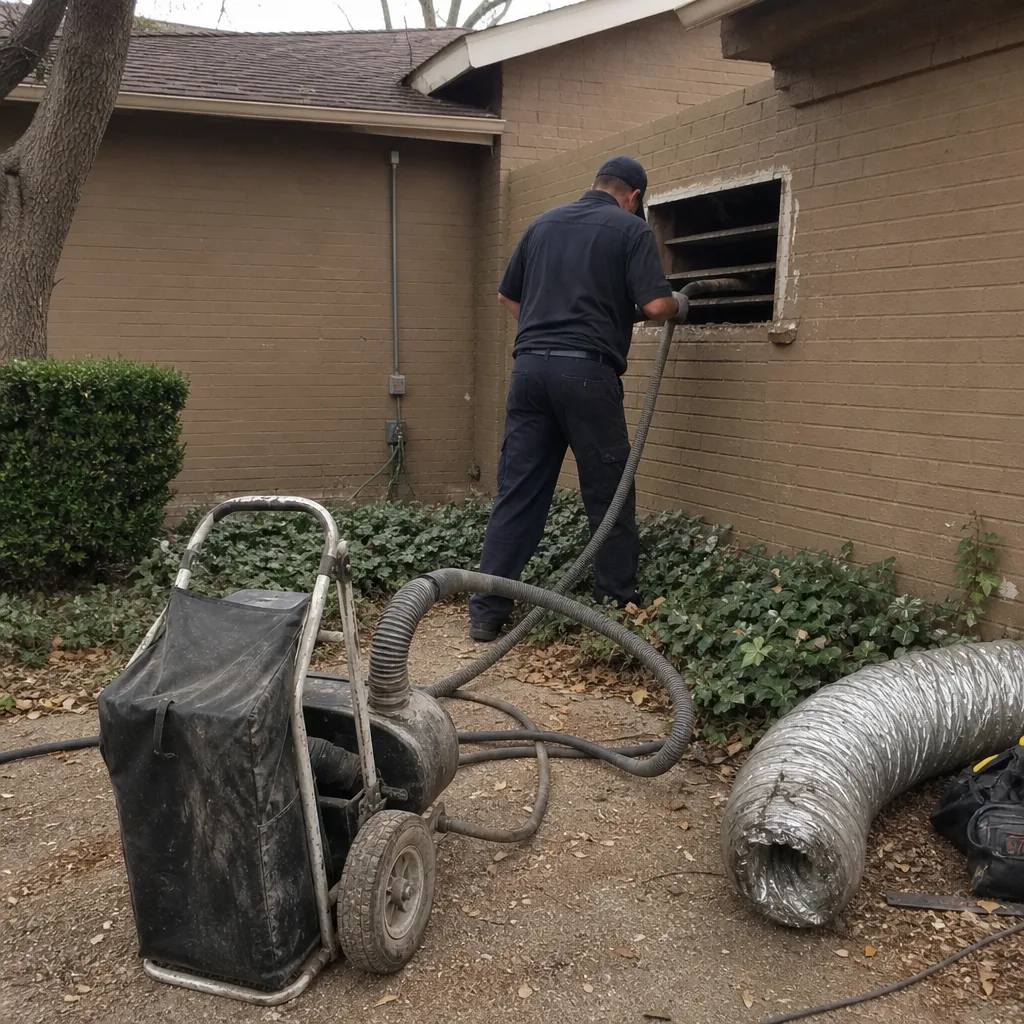
Fall is also the right season to schedule dryer vent cleaning in Lake Highlands. Warmer weather means clothes dry outside; colder weather means the dryer runs more often, and lint accumulates faster in the vent line. Dryer lint is a genuine fire fuel, and vent cleaning is a fire-safety service, not a cosmetic add-on. We treat it that way because the failure mode is a house fire, not a smelly closet.
Winter: Dry Air, Static Charge, and Sealed Systems
Winter in Lake Highlands is mild by national standards, but the heating season still changes the physics inside your ducts. Cold outdoor air holds very little moisture, and every time your furnace cycles on and off, dry air enters the return system and lowers indoor humidity. Dry air is also a static-charge generator. As air moves across duct surfaces, the low moisture content means particulate doesn’t clump and settle the way it does in humid months. Instead, statically charged particles cling to duct walls, register faces, and anything else in the air path.
This is where sealed duct systems earn their keep. A duct system with leaks at joints, plenums, and register boots is pulling dry, particulate-heavy air from attics and crawlspaces every time the system runs. A sealed system pulls its return air from inside the house, where your filter can actually do its job. Duct repair and sealing is a genuinely different service from duct cleaning, and it’s where a lot of cleaning-only operators stop short. Clean ducts are the start; we also repair and seal what the cleaning reveals.
Winter care for a Lake Highlands home looks like this:
- Run a humidistat or a simple humidity gauge. If winter indoor humidity drops below 30%, static charge and particulate cling both rise.
- Inspect filter wear rates. A filter that loads faster in winter than in summer is telling you something: likely a duct leak pulling in attic dust or a system that’s short-cycling.
- Feel for drafts at supply boots. A cold draft at a register is often a gap between the boot and the drywall, which is both an air quality leak and an efficiency leak.
- Check the air handler closet door for loose tape or gaskets. Small gaps there pull unfiltered air into the system.
- Have duct leaks sealed, not just cleaned. A cleaned, leaky system re-contaminates faster than a cleaned, sealed one.
Properly sealed and balanced duct systems perform noticeably better in the dry, high-static condition of winter. When we work with Aprilaire and Honeywell air quality components, part of the point is that the whole system, filtration, humidification, and duct integrity, works together. Sealing alone doesn’t fix filtration. Filtration alone doesn’t fix leaks. Both matter in winter.
Building a 12-Month Care Calendar for Lake Highlands
A Lake Highlands duct care calendar should be built around North Texas weather, not a generic “clean once a year” recommendation from a national franchise. Here’s the calendar we walk homeowners through:
- January-February: seal and inspect. Mid-winter is the right time to review duct leakage and check the air handler closet. Low outdoor humidity makes it easy to spot static-charge dust patterns and identify leaks before spring rain arrives.
- March-April: full cleaning before AC season. Pollen is at its peak. Get duct surfaces cleaned so the cooling season starts clean.
- May: filter review and return-air check. Verify filter slots are sealed and return grilles aren’t loading fast.
- June-August: moisture and HVAC coil inspection. This is when condensation-driven problems surface. It’s also the right window to check the evaporator coil, blower compartment, and drain pan as part of a full HVAC cleaning.
- September: dryer vent cleaning. Lint accumulates faster as indoor laundry loads rise. Schedule dryer vent cleaning as a fire-safety check, not a housekeeping errand.
- October: pre-heat inspection. Filter change and duct inspection ahead of the first heating cycle so the first heat of the season doesn’t mobilize months of settled dust.
- November-December: sealing and sanitizing review. Seal any leaks found in fall inspection, and consider sanitizing if any moisture issues were identified over summer.
This calendar isn’t radical. It’s just honest about what a Lake Highlands climate actually does to a duct system over 12 months. Homes with heavy allergy or asthma occupants often do best on a slightly tighter schedule for cleaning and sanitizing. Light commercial properties in Lake Highlands, small offices and retail spaces with heavier occupancy, usually need the same calendar with the cleaning intervals tightened to account for the higher air-volume turnover.
One practical point on scheduling: seasonal demand in Lake Highlands follows the calendar too, so booking spring cleaning in February and fall inspection in September gives you more scheduling flexibility than booking in the peak month. The work is the same; the timing is easier.
What Real Duct Cleaning Actually Involves
Real duct cleaning is a mechanical process with containment, not a vacuum attachment on the end of a shop vac. In our experience, the difference between professional-grade and consumer-grade work isn’t subtle, and it shows up on the before-and-after photos every homeowner should ask for. Here’s what a proper duct cleaning actually involves:
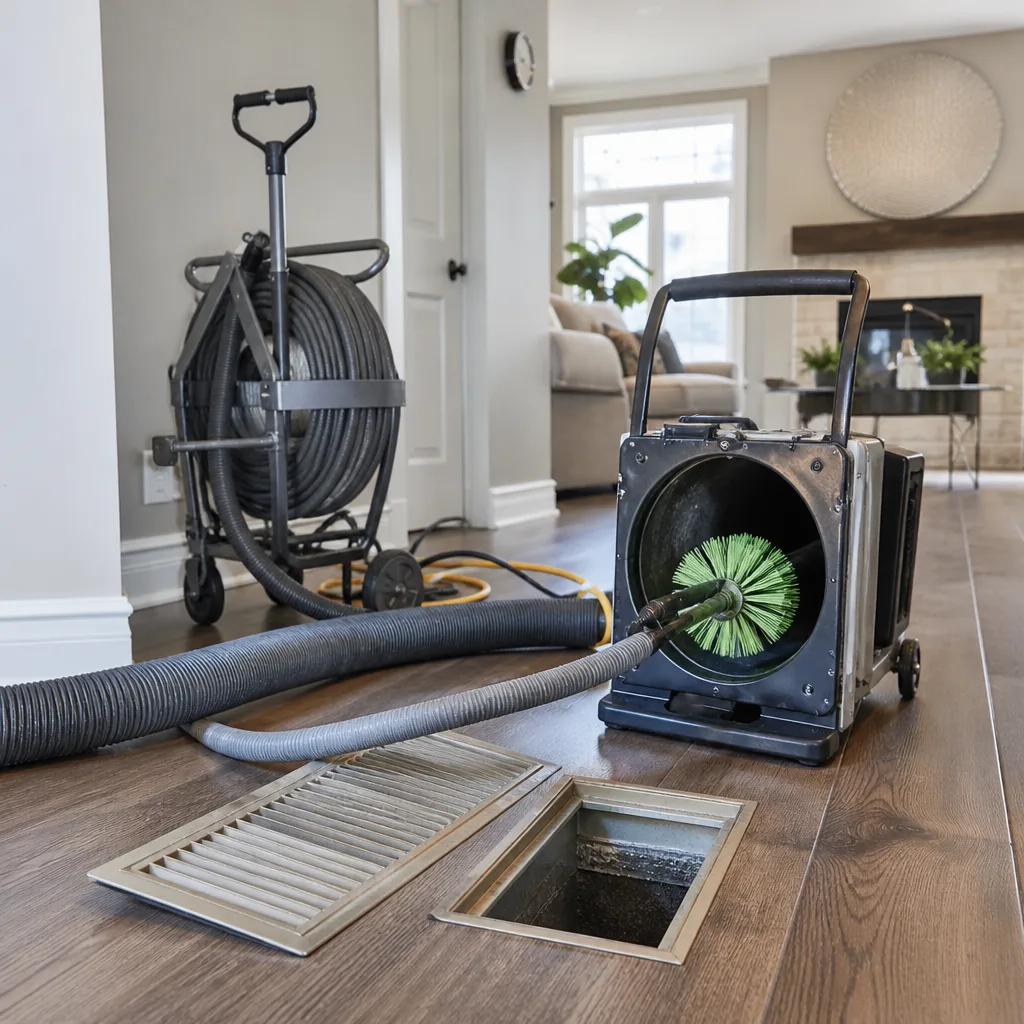
- Negative-air containment. Abatement Technologies air filtration units pull the work zone into negative pressure so dislodged debris goes into the collector, not into your living room. This is standard tooling in professional abatement and remediation work, not consumer equipment.
- Mechanical agitation. Rotobrush and Nikro systems use rotating brush and air-whipping tools to contact the duct walls. A vacuum alone pulls the air out; it doesn’t dislodge what’s stuck to the surface.
- Source-point cleaning at every register and boot. Every supply and return has to be entered, agitated, and cleared. Cleaning the trunk line and skipping the branches is a common corner-cut.
- Air handler component cleaning. Blower wheel, evaporator coil, and drain pan are part of the system. Clean ducts feeding a dirty coil isn’t a completed job.
- Sanitizing and surface treatment. Residual surface treatment with Guardsman-grade products where microbial growth was identified.
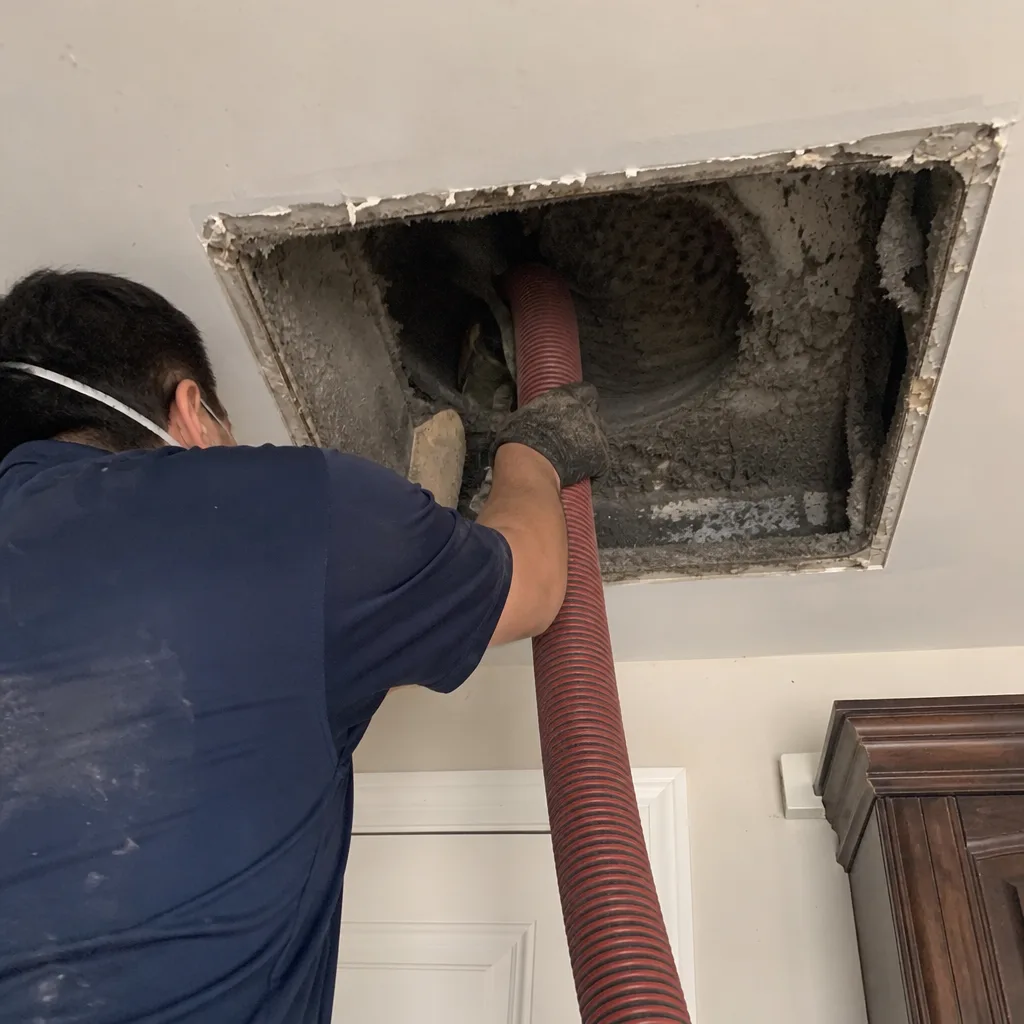
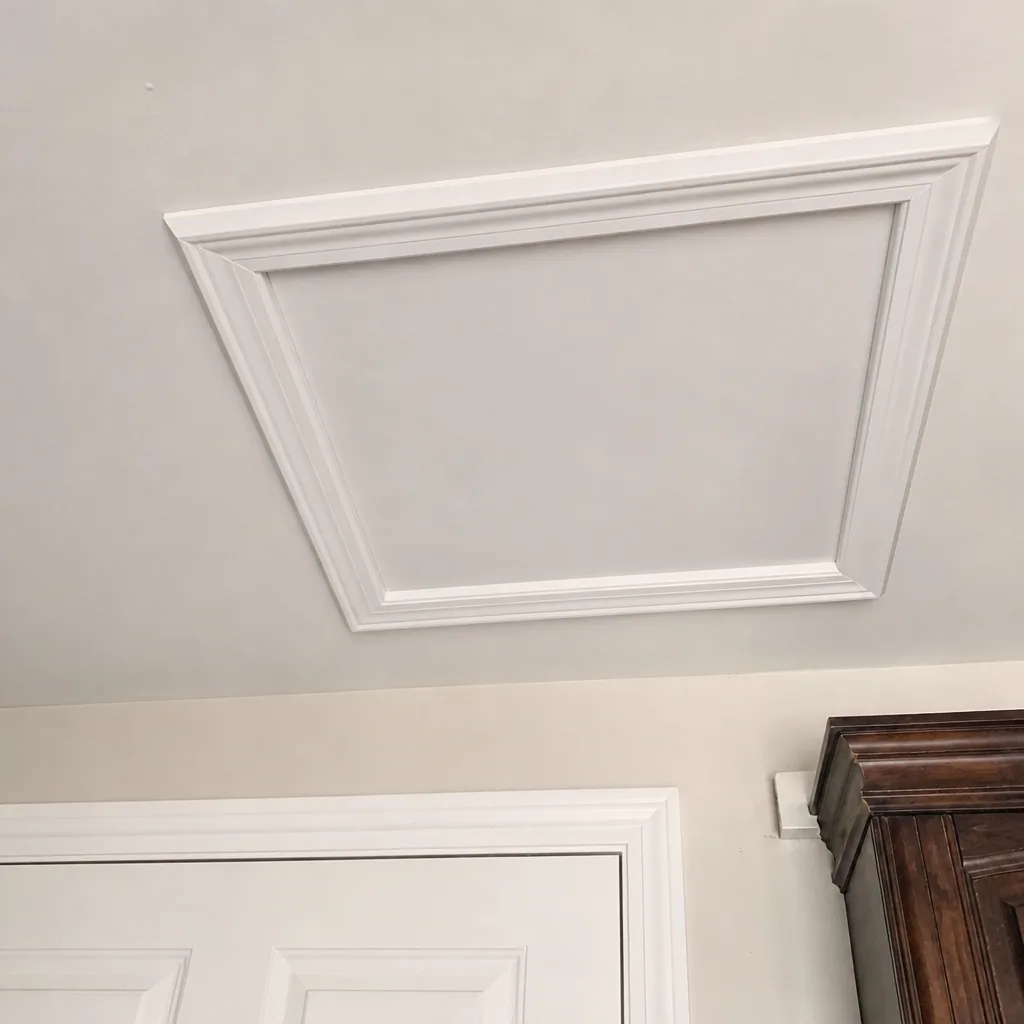
- Before-and-after photos. Every homeowner deserves to see what came out. Ask for the photos; a legitimate operator will have them.
If a quote is dramatically lower than everything else you receive, ask what’s inside the containment and what tools are being used to contact the duct walls. The answers tell you whether the job is a mechanical cleaning or a surface vacuum. Our technicians have up to 8 years of experience running this equipment, and the practical difference between a trained operator and an untrained one is the difference between a system that stays clean through the next spring and one that needs cleaning again in six months.
Why Cleaning Alone Doesn’t Fix a Leaky Duct System
Duct leaks are the most-assigned, least-addressed problem in home duct systems. A cleaning removes what’s currently on the duct walls. It does nothing to stop new debris, conditioned air, and moisture from entering through leaks that were already there. In a Lake Highlands home with ducts running through a hot attic and a mild but humid climate, a leaky system re-contaminates on a schedule that has nothing to do with how well the cleaning was done.
Common leak sites worth inspecting:
- Register boots. The gap between the duct boot and the drywall or floor is a classic leak, and it’s often hidden by the grille.
- Plenum connections. The plenum to air-handler connections take a lot of thermal cycling and often need re-taping and mastic.
- Flex duct joints. The inner liner and outer insulation are separate; when they separate, the duct leaks and the insulation no longer insulates.
- Trunk-to-branch takeoffs. These are common failure points where flex duct was pushed onto a metal trunk without proper sealing.
- Air handler closet penetrations. Where the plenum passes through the closet wall, unfiltered attic or garage air often enters the system.
Duct repair and sealing is a core service for us, not a referral. When we clean, we note what we see, and we fix what needs fixing with the same crew and the same visit-level coordination. For families looking for a single specialist rather than coordinating three trades, that’s the practical advantage: a cleaned, sealed, sanitized system someone can stand behind end to end. If you’re building a seasonal care calendar, sealing belongs in the winter slot, after the fall inspection has identified leaks and before the spring pollen season starts filling them again.
Common Mistakes to Avoid
- Cleaning once a year on autopilot. Lake Highlands has four distinct indoor air quality seasons, and a single September cleaning doesn’t address spring pollen loading or summer condensation. Match the work to the season it’s meant to prevent.
- Assuming a higher-MERV filter solves everything. A high-MERV filter in a system that wasn’t designed for it lowers airflow, and a filter in a leaky slot bypasses anyway. Filter choice and slot integrity matter as much as the rating.
- Skipping the air handler. Clean ducts feeding a dirty evaporator coil leave the system half-treated. HVAC cleaning belongs on the same calendar as duct cleaning.
- Treating dryer vent cleaning as a nice-to-have. Lint is fuel, and vent cleaning is a fire-safety service. Treat it with the same seriousness as a duct cleaning, not a cheap upsell tacked onto the invoice.
- Not asking for before-and-after photos. The single best way to confirm a duct cleaning actually happened is to ask for photos of the interior of your own ducts. Any operator should have them.
- Booking cleaning without addressing leaks. A cleaned, leaky system is going to re-contaminate on the next pollen season. Sealing is what keeps the cleaning durable.
- Following a national calendar instead of a North Texas one. A 100°F-plus summer and a heavy canopy spring create conditions national “clean once a year” advice doesn’t account for. Build a calendar around the actual climate.
When to Call a Professional
Call a professional when you smell musty odors from supply registers, see visible dust loading on return grilles that comes back within weeks of cleaning, notice visible dust trails near register boots, or hear whistling at register faces. Call immediately if your first heating cycle in October produces a strong baked-dust smell, if a family member’s allergy symptoms get worse indoors than out, or if your dryer takes two cycles to dry a load. If your home has been through renovation, water damage, or a recent HVAC replacement, a full-system inspection is worth scheduling before the next season’s demand cycle.
Air Duct Cleaning Lake Highlands offers free estimates in Lake Highlands. Call (833) 509-5459. We answer 24/7. Fast dispatch from 7am to 7pm, Sunday through Friday.
Frequently Asked Questions
For most Lake Highlands homes, a full duct cleaning in early spring plus an inspection in early fall covers the year. Homes with allergy or asthma occupants often do best with spring cleaning plus a fall inspection and sanitizing review. Homes that have had a renovation, water damage, or a recent HVAC replacement should add an inspection right after those events regardless of season.
A musty smell when the AC starts is typically moisture in the system, not just dust. Summer condensation, an undersized or blocked condensate drain, or a filter that’s been bypassing and letting humid air into the ducts can all create the conditions. An inspection that checks coil condition, drain flow, and duct moisture makes the answer clear. Call (833) 509-5459 for an exact quote; estimates are free.
Lower quotes are usually surface vacuums that pull air from the register without contacting the duct walls. A real duct cleaning uses negative-air containment, mechanical agitation tools like Rotobrush or Nikro systems, register-by-register cleaning, and air handler component cleaning. If the quote doesn’t mention containment or mechanical cleaning, ask about it directly – the answer will tell you what you’re actually buying.
Pricing depends on system size, number of registers, whether the air handler is included, and whether duct repair and sealing is needed. We set one flat price per system based on a written estimate agreed before any work starts, not a per-vent price and not a coupon figure that grows on the invoice. Call (833) 509-5459 for an exact quote; estimates are free and no work begins until you’ve agreed to the number.
Yes, and it should be treated as a fire-safety service rather than a housekeeping errand. Lint accumulates in vent lines year-round and builds faster in the cooler months when indoor laundry loads rise. A clogged dryer vent line restricts airflow and creates fuel-loading conditions in the vent run itself. It belongs on the same seasonal calendar as duct cleaning.
Ask for before-and-after photos of the interior of your own duct system, not a generic brochure. Any legitimate operator working with the right equipment will have them, and they’re the most direct way to confirm the mechanical cleaning reached the duct walls. We provide before-and-after photos as a standard part of the job.
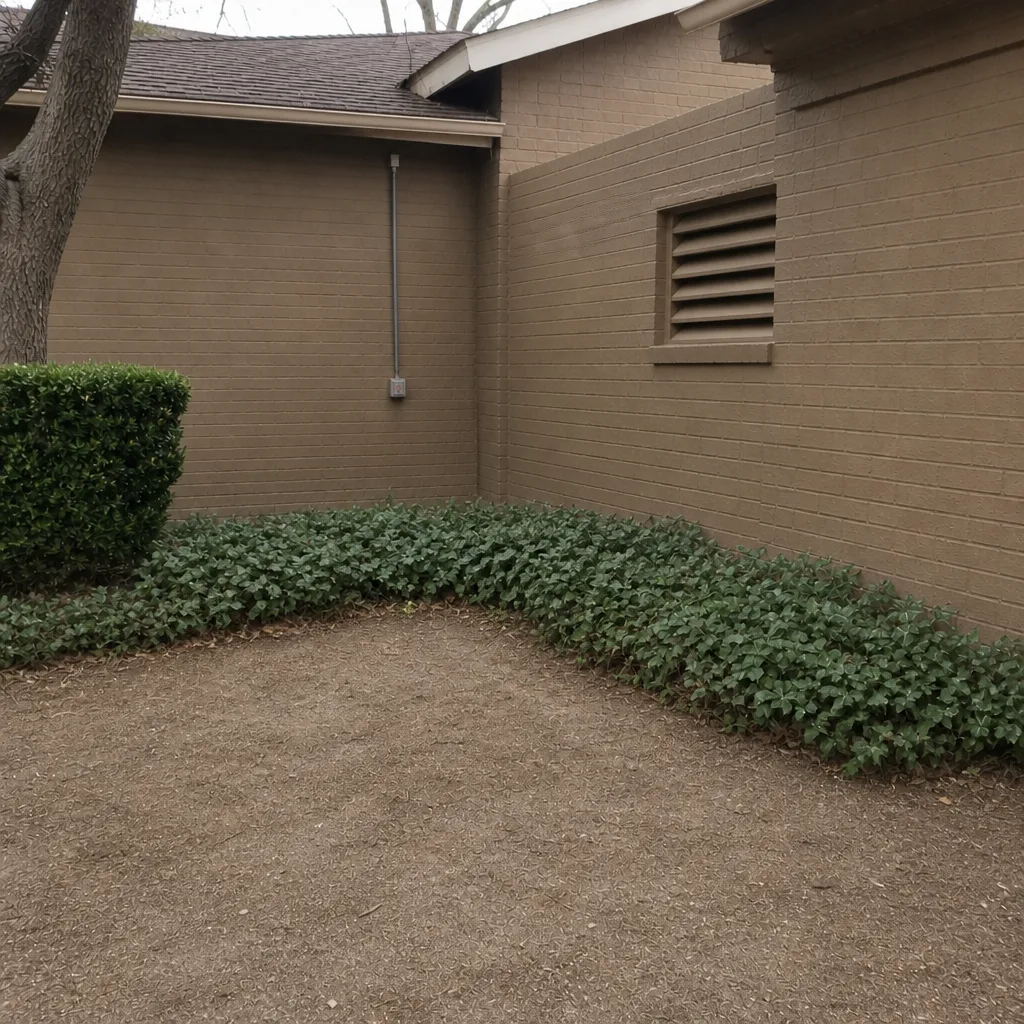
See the difference
 Before
 After
 Before
 After
 Before
 After
The Bottom Line
Lake Highlands doesn’t have one duct season. It has four: spring pollen loading and filter bypass, summer condensation and mold-risk conditions, fall first-heat dust mobilization, and winter static-charge particulate cling in a dry heating season. Cleaning once a year on a national franchise calendar misses three of the four windows. A care calendar built around actual North Texas conditions, with a spring cleaning, a summer moisture inspection, a pre-heat fall inspection, and a winter sealing review, keeps a duct system genuinely clean rather than just recently cleaned. Professional-grade equipment, real repair and sealing scope, and before-and-after photos on file are what separate a real cleaning from a placeholder invoice.
Contact
If you’re ready to build a Lake Highlands duct care calendar around your home’s actual conditions, we can help. One call covers your ducts, vents, HVAC, and air quality – cleaned, sealed, and documented with before-and-after photos. Call (833) 509-5459 for a free estimate. We answer 24/7. Fast dispatch from 7am to 7pm, Sunday through Friday.
Written by the team at Air Duct Cleaning Lake Highlands.