
Last updated November 23, 2026
 Whole-home duct cleaning
 Dryer vent cleaning
 Camera inspection
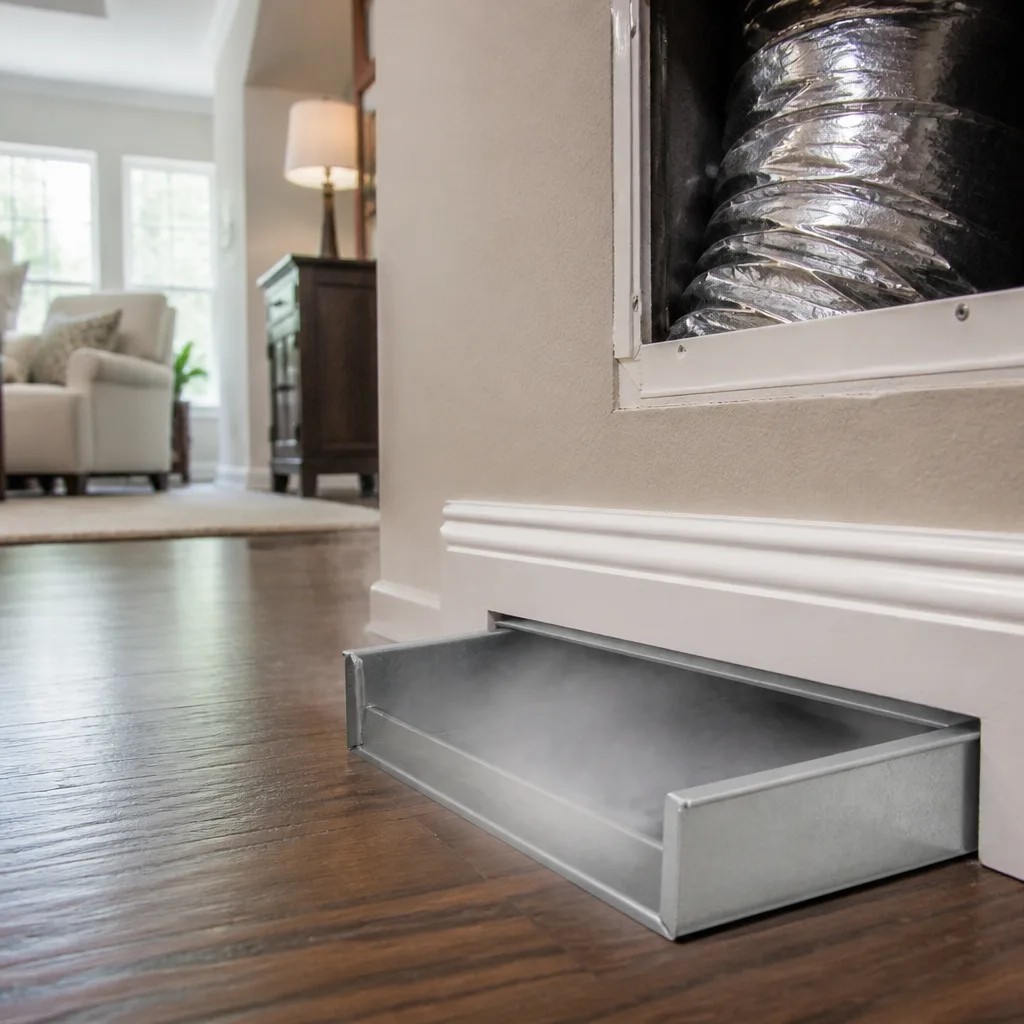 Sanitizing & deodorizing
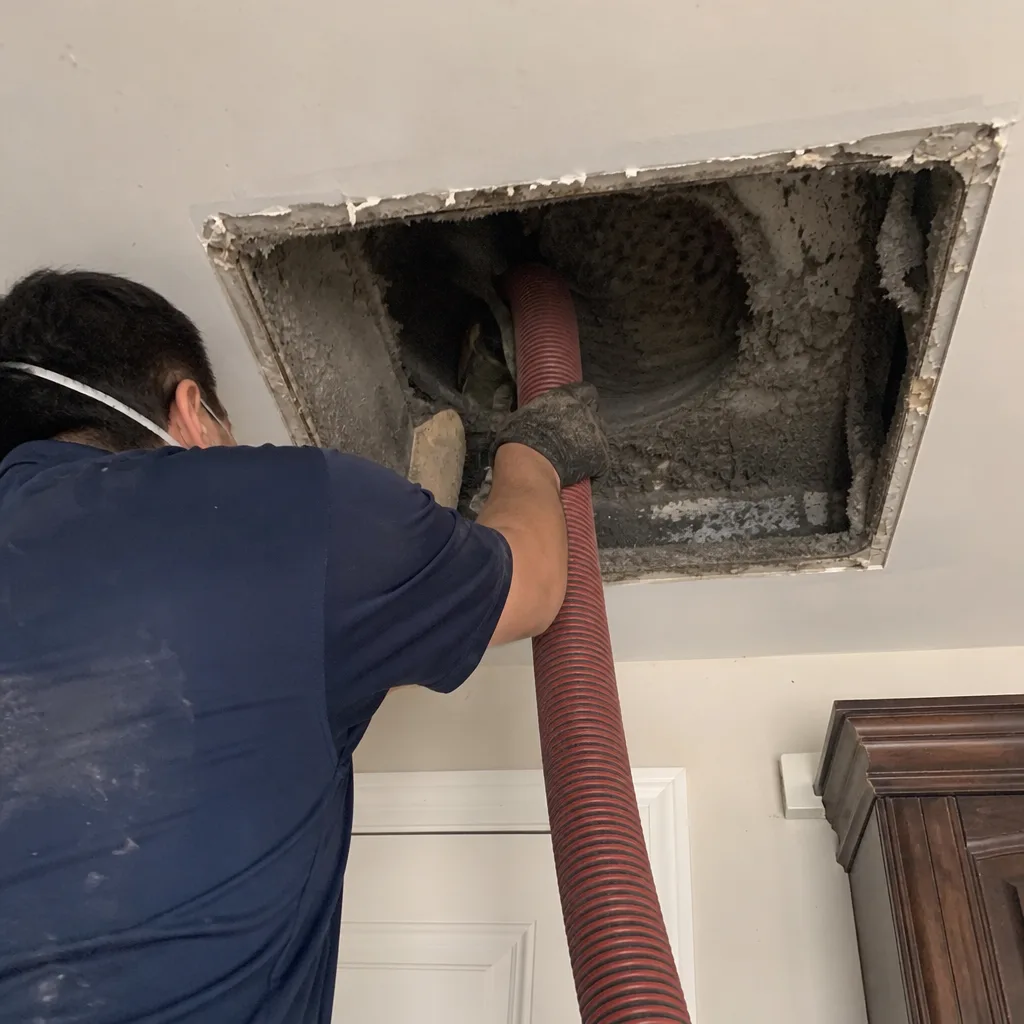
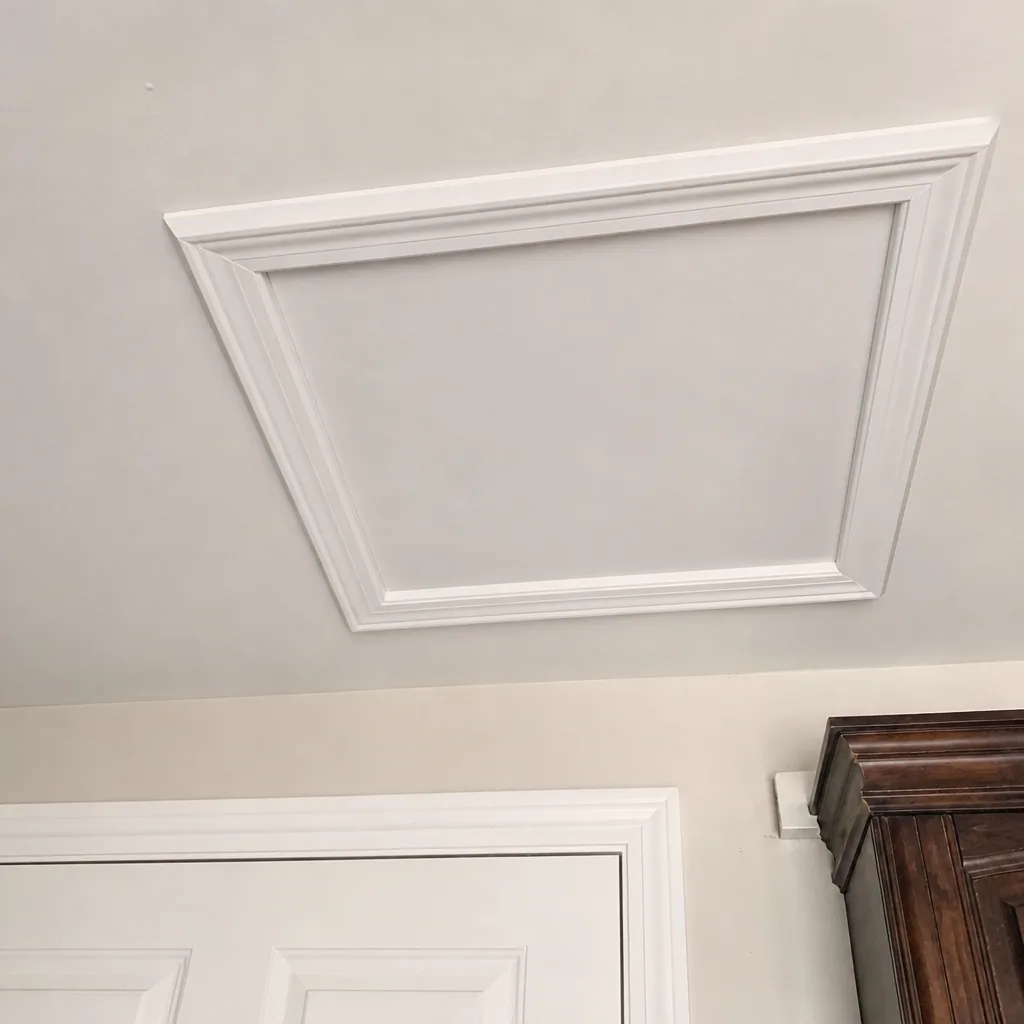
Whole-system duct and dryer vent check with before-and-after photos - you see exactly what came out of your vents
That "$99 whole-house special" is a bait ad - the real number appears once they are in your hallway, or the "clean" is a shop-vac at the register. We photograph the inside of your ducts before and after instead.
Air Duct Cleaning Maintenance Checklist for Lake Highlands Homeowners
Most duct maintenance advice you’ll find online was written for a house that runs its air conditioner a few months a year. Lake Highlands doesn’t work that way. Homes here run the AC hard through a long cooling season, and that runtime changes everything about what a sensible maintenance schedule looks like. Filters load faster, flex duct joints work loose sooner, and small leaks that would sit harmless in a milder climate turn into real energy losses. What follows is a task-by-task checklist built around how duct systems actually behave in Lake Highlands, organized by monthly, seasonal, and multi-year intervals, with the checks you can do yourself and the ones that need professional equipment.
Quick Answer
A practical air duct maintenance checklist for Lake Highlands homeowners combines monthly filter checks, seasonal register and airflow inspections, an annual professional duct and HVAC cleaning, and a full duct inspection with repair and sealing every three to five years. Because Lake Highlands homes run the AC far more than the national average, filters and duct joints need attention more often than generic advice suggests.
Styles & brands we work with
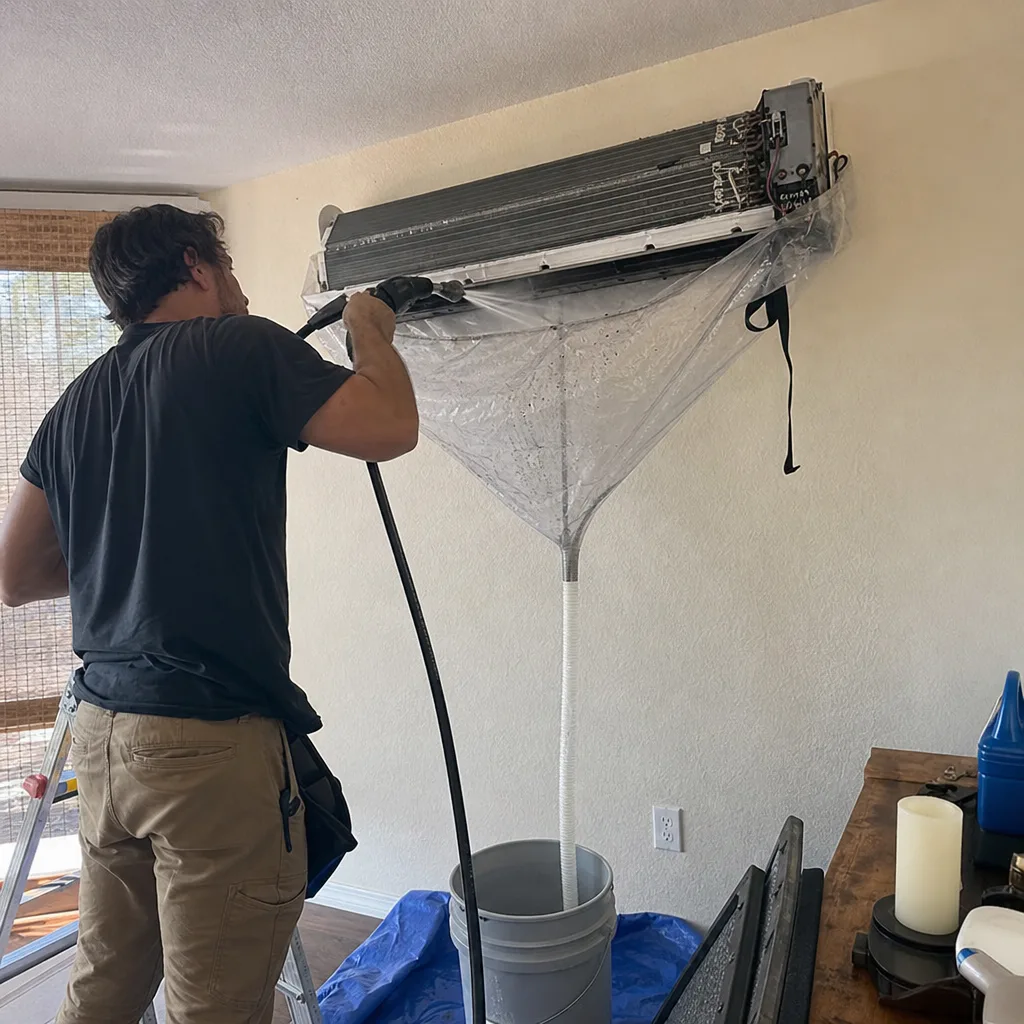
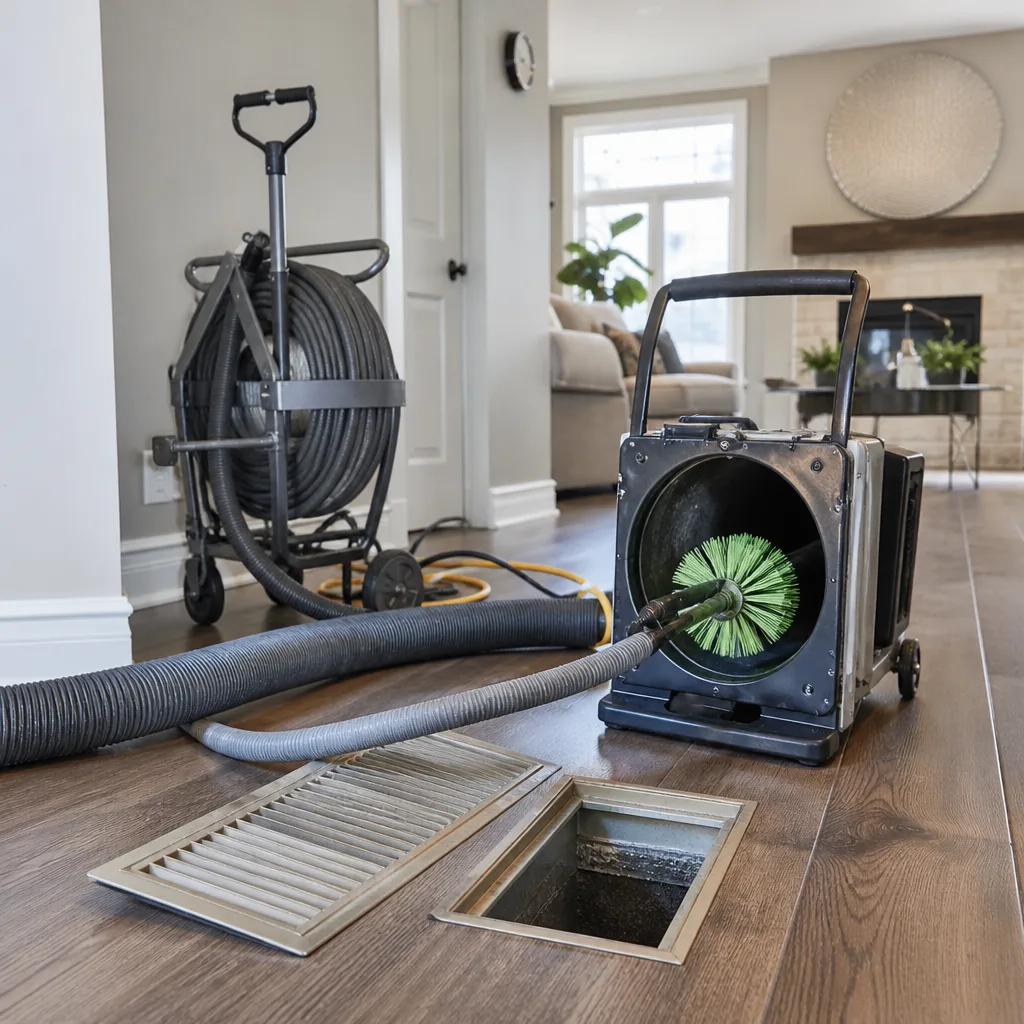
- Whole-home duct cleaning
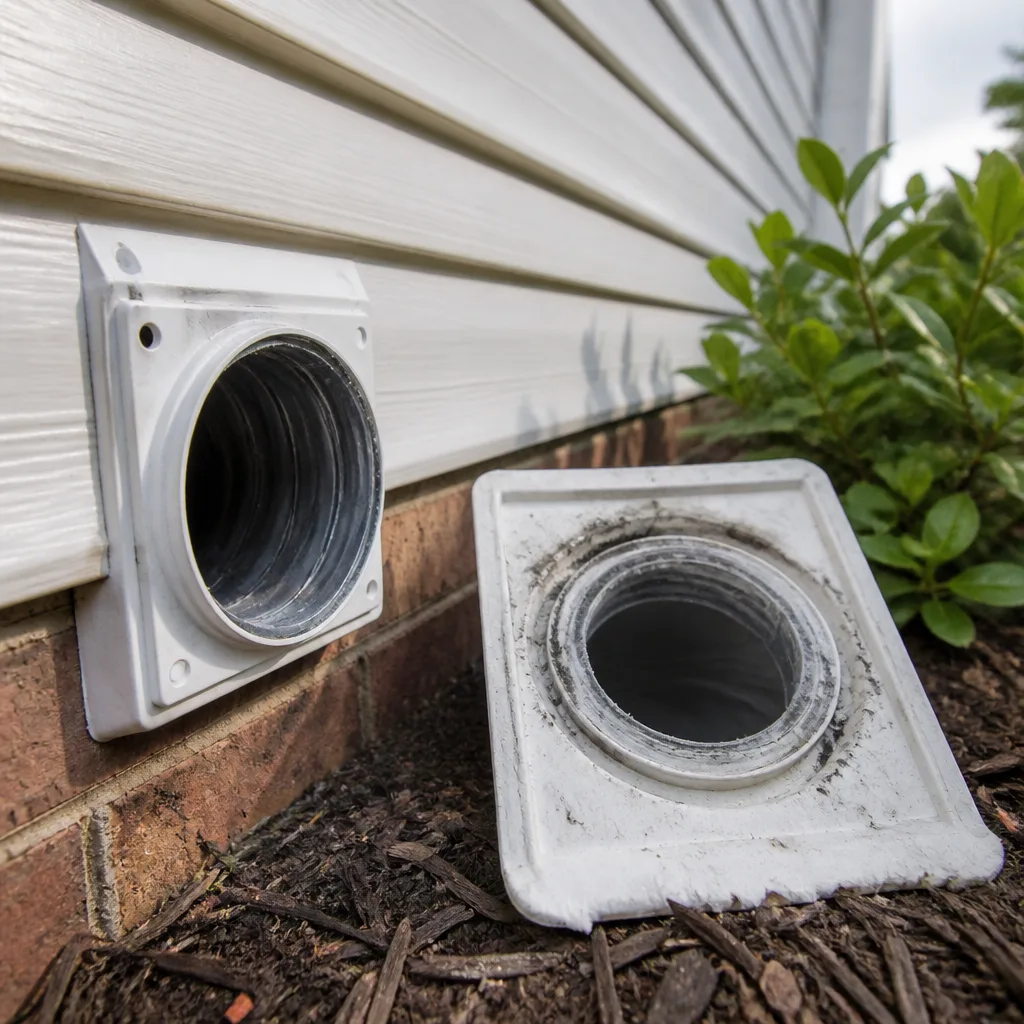
- Dryer vent cleaning
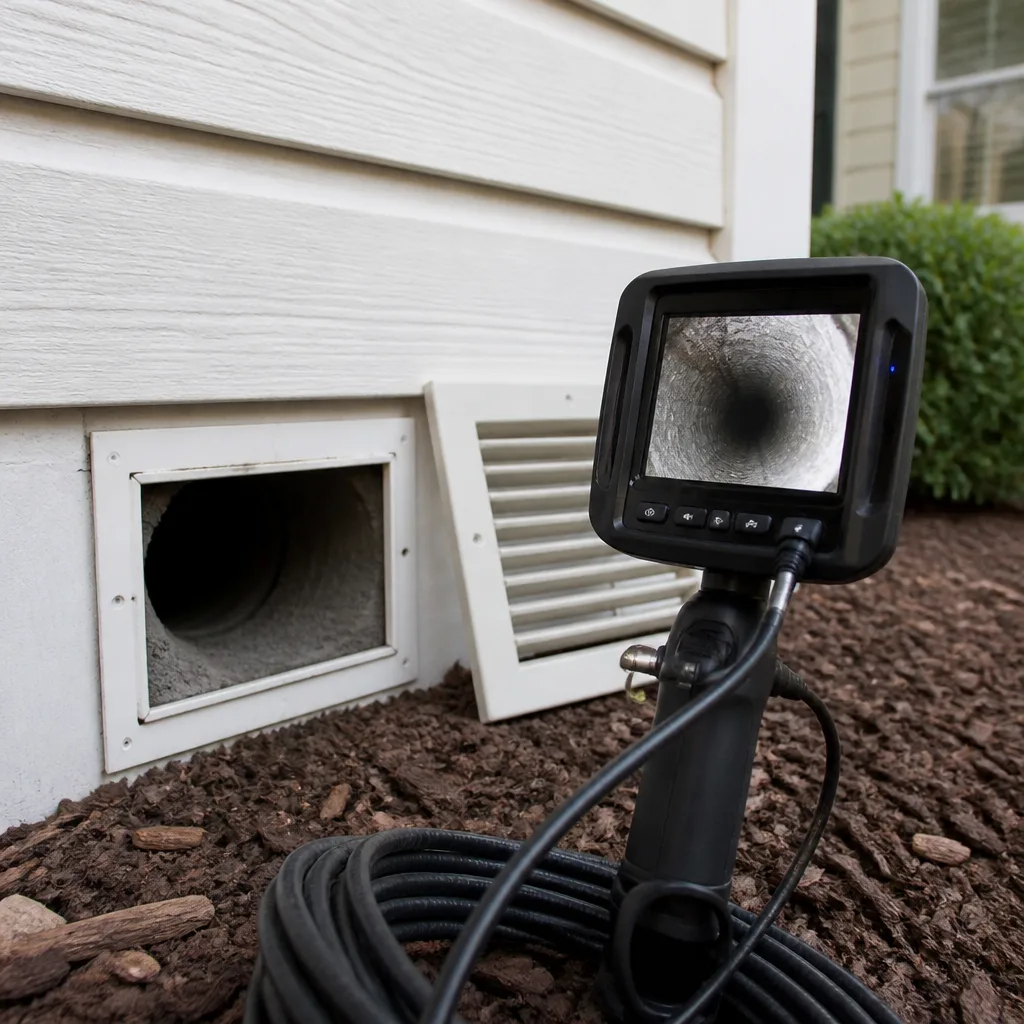
- Camera inspection
- Sanitizing & deodorizing
Table of Contents
- Why Lake Highlands Runtime Changes Your Maintenance Schedule
- The Monthly Checklist
- The Seasonal Checklist
- How to Do a Simple DIY Airflow Check at Your Registers
- What to Inspect Around Flex Duct Connections After an HVAC Service Call
- Signs Your Duct Sanitizing Has Worn Off
- The Three-to-Five-Year Checklist: Cleaning, Repair, and Sealing
- How to Log Your Duct History for Resale Documentation
Why Lake Highlands Runtime Changes Your Maintenance Schedule
Lake Highlands sits in a part of Texas where the cooling season stretches long and the system rarely gets a real break. That matters because duct maintenance is really a function of runtime. Every hour the blower moves air, it also moves dust, pulls at seams, and cycles the flex duct through small pressure changes. A house that runs its system a few hundred hours a year and a Lake Highlands house that runs it far more are not doing the same amount of wear.
Three things follow from that:
- Filters load faster. A filter that a milder-climate guide says to check every three months deserves a monthly look here during peak cooling.
- Joints work loose sooner. Flex duct connections and taped seams see constant pressure cycling. Loose joints mean conditioned air escaping into the attic instead of reaching your rooms.
- Moisture has more time to build. A cooling coil that runs constantly stays wet, and any duct with a poor connection near the air handler can pull that moisture into the airstream.
Older Lake Highlands housing stock adds another layer. Many homes here were built decades ago, and their original duct layouts have often been modified, extended, or patched as systems were replaced. Those patch points are where problems start. When we assess a duct system in Lake Highlands, the first thing we look at is not the visible dust but the condition of the joints and the quality of the connections at the air handler.
None of this means you need to be cleaning ducts constantly. It means the schedule below is calibrated to real local conditions rather than a national average. For a deeper look at how professional cleaning fits into the picture, the overview at Air Duct Cleaning Lake Highlands is a good starting point.
The Monthly Checklist
These are the tasks that take a few minutes and catch problems early. Do them once a month during the cooling season, and every other month in the milder stretches.
- Check the filter, don’t just replace it. Hold it up to a light. If you can’t see light through it, it’s loaded. A clogged filter strains the blower and reduces airflow to every register in the house. Write the date on the filter frame with a marker so you always know how long it’s been in.
- Walk the registers and feel the airflow. With the system running, put your hand at each supply register. You’re looking for rough consistency. A register that’s noticeably weaker than the others is a signal worth chasing.
- Listen at the air handler. A whistling or rushing sound near the unit can indicate a loose connection or a duct that’s come apart at a joint. That’s a call-us item, not a wait-and-see item.
- Look for dust streaks at the register grilles. Dark streaks around the edges of a grille mean air is bypassing the seal and carrying dust with it. It’s a small fix that prevents a bigger dust problem downstream.
- Sniff the return. A musty smell at a return grille is the earliest sign of moisture or biological growth inside the duct. It’s worth noting on your log and addressing before it spreads.
None of these require tools or training. They’re the checks that let you catch a problem while it’s still cheap to fix. Monthly attention is the difference between a duct system that stays tight and one that quietly loses efficiency for a year before anyone notices.
The Seasonal Checklist
Twice a year, before the heavy cooling season and again as it winds down, spend an hour on the deeper checks. This is also the right time to schedule any professional work you’ve been putting off, so it’s done before the system is running hard.
Before the Cooling Season
- Replace the filter with a fresh one and note the date.
- Remove and wash supply and return grilles, then check the seal around each one.
- Inspect accessible duct runs in the attic or crawl space for sagging, disconnected sections, or crushed flex duct.
- Clear any furniture or rugs blocking return grilles. A blocked return starves the whole system.
- Book professional HVAC cleaning if it’s due. The coil and blower are part of the same air path as your ducts, and cleaning one without the other leaves contaminants to cycle back through. Our HVAC cleaning service covers that side of the system.
As the Cooling Season Ends
- Check the filter again and note its condition in your log.
- Look for condensation or damp spots around the air handler and any duct connections near it.
- Run the dryer and check the exterior vent flap opens freely. Dryer vents are a separate fire-safety concern and deserve their own attention. dryer vent cleaning is a service we treat as safety work rather than a seasonal add-on.
- Note any rooms that felt harder to cool than the rest. Uneven cooling is one of the clearest early signs of duct leakage.
Two seasonal passes a year, timed to the local cooling cycle, catches most duct problems while they’re still small. It’s a modest amount of work that pays back in comfort and lower runtimes.
How to Do a Simple DIY Airflow Check at Your Registers
You don’t need a flow hood to spot early duct leakage. A quick, consistent hand test at each register will tell you whether the system is moving air evenly, and uneven airflow is often the first symptom of a leak you can’t see.
- Turn the system on and let it run for a few minutes so airflow stabilizes.
- Hold your hand flat against each supply register in the same position at each one. You’re not measuring, you’re comparing.
- Rank the registers in your head from strongest to weakest. Every house has some variation, but a big gap is meaningful.
- Check the returns too. A return that’s pulling weakly means the system is starved on the intake side, which shows up as reduced airflow everywhere.
- Write down what you find and do the same check in a month. A register that’s getting weaker over time is a strong signal of a developing leak or a duct that’s partially disconnected.
Here’s what makes this check worth doing in Lake Highlands specifically. Duct leaks don’t just reduce comfort; they pull unconditioned attic air into the system. In a long, hot cooling season, that means the system runs longer to hit the thermostat, and your energy bill climbs for a reason you can’t see. A register that used to blow hard and now doesn’t is your earliest, cheapest warning.
If you find a clear outlier, note which room it serves and check the accessible duct run feeding that room. If the duct looks intact but the airflow is still weak, that’s when professional inspection and air duct cleaning along with a leak assessment is the right next step.
What to Inspect Around Flex Duct Connections After an HVAC Service Call
Most duct problems we’re called to assess in Lake Highlands trace back to a connection, not the duct itself. And the single most common time for a connection to fail is right after an HVAC service call, when a technician has been working around the air handler and the ductwork that feeds it.
It’s rarely anyone’s fault in a dramatic sense. A technician moves a duct to reach a component, reconnects it quickly, and the connection that was tight before is now a little loose. Over a few weeks of runtime, that looseness becomes a leak. Knowing what to check after a service visit is one of the most practical habits a homeowner can build.
After any HVAC service call, check these points:
- The connection at the air handler. Look at where the main duct meets the unit. It should be firmly attached with no visible gap or sagging.
- Tape and mastic joints. Tape that’s peeling or mastic that’s cracked at a joint means the seal is failing. Flex duct should be secured with proper mechanical fastening and sealed, not just taped and hoped for.
- Flex duct routing. Flex duct should run as straight and supported as possible. If it’s been left kinked, pinched against a joist, or sagging badly, airflow through that run is compromised.
- Sections that were moved. If the technician had to shift a duct to reach something, that’s the section most likely to have come loose. Give it a close look.
If you find a loose connection, don’t just tape it yourself and move on. Flex duct that’s been pulled loose and re-taped often leaks again. Proper repair means re-securing the connection and sealing it correctly, which is part of the duct repair and sealing work we do, not something a roll of hardware-store tape solves for good. This is where cleaning and repair belong together: cleaning reveals the problem, and sealing fixes it.
Signs Your Duct Sanitizing Has Worn Off
Sanitizing a duct system isn’t a permanent treatment. It reduces biological growth on surfaces inside the duct, and over time, in a system that runs as much as a Lake Highlands system does, that protection fades and growth conditions can return. Knowing the signs saves you from assuming your ducts are still in the condition they were after the last treatment.
Watch for these indicators:
- A musty or earthy smell that returns at the registers, especially in the first minutes after the system starts. That’s the classic sign that biological growth conditions have re-established.
- Visible dark spotting on the inside of a register boot or on the return grille. You can see the first few inches; what’s visible is a fair hint at what’s further in.
- Increased allergy symptoms in the household that track with the cooling season. This is a soft signal, but if it lines up with a fading treatment, it’s worth acting on.
- Moisture or condensation near the air handler that wasn’t there before. Damp conditions are what allow growth to return, so it’s a sign to look at the whole system.
A well-run sanitizing service uses products that are actually designed for duct interiors. We work with Aprilaire and Honeywell air quality components and use Guardsman-grade treatment products as part of our sanitizing and surface-treatment protocols. That’s the difference between a treatment that’s engineered to hold and a quick spray that fades in a season.
Sanitizing also works best as part of a complete clean. Applying a treatment over a dirty duct is wasted effort. The right order is a thorough mechanical cleaning with professional equipment, then a sanitizing treatment on a clean surface, then repair and sealing to keep the system tight so it stays clean. Our HVAC cleaning and air quality work follows that sequence, which is why we don’t treat sanitizing as a standalone add-on.
The Three-to-Five-Year Checklist: Cleaning, Repair, and Sealing
Every three to five years, depending on how hard the system runs and what your inspection notes show, Lake Highlands homes benefit from a full professional pass on the duct system. This is not a filter change or a light vacuum. It’s a clean, inspect, repair, and seal cycle that catches what routine maintenance can’t.
- Full mechanical cleaning of the duct system. Professional equipment does what a household vacuum can’t. We use Rotobrush and Nikro systems for mechanical cleaning and Abatement Technologies negative-air units to contain dust during the work, the same class of equipment used in professional remediation.
- A condition inspection of the whole system. Cleaning is when problems become visible. Loose joints, crushed flex duct, contamination, and compromised connections all show up once the system is opened and cleaned.
- Repair and sealing of what the inspection found. This is where cleaning pays off. Sealing leaks and repairing damaged ductwork is what actually stops the energy loss and the dust infiltration. Cleaning alone, without repair, leaves the problem in place. We do both as a single service.
- Sanitizing treatment on the clean system. A treatment on a clean, sealed system holds far longer than one applied to a leaky, dirty duct.
- Documentation. Note the date, what was done, and what was found. This is your record for the next cycle and for resale.
For a walkthrough of what a professional clean involves from start to finish, the service page for air duct cleaning covers the process. The key point is that in a Lake Highlands home running its system hard, three to five years is a realistic interval for a full clean-and-repair pass, not a marketing upsell. It’s the interval at which a system that’s been maintained well will still have accumulated enough to warrant it.
How to Log Your Duct History for Resale Documentation
A duct log isn’t a bureaucratic exercise. In the Lake Highlands real estate market, buyers and their inspectors are more aware than ever of duct and air quality conditions, and a clear maintenance record is a real document that shows the system was cared for. It’s also simply useful: you’ll never again have to guess when the last cleaning was.
Here’s what worth logging: the date of each filter change, the date and scope of each professional cleaning or inspection, any repair or sealing work with the area it addressed, and the date of each sanitizing treatment. Note which rooms had airflow problems and whether the problem was resolved. A simple notebook or a shared note on your phone is enough. The value is in consistency, not format.
When we do repair and sealing work in a Lake Highlands home, we document what was found and what was done, and that documentation is part of the service. It tells a future buyer or inspector exactly what condition the system is in and what’s been addressed. Clean, maintained, documented ductwork is a quiet asset at resale. Neglected ductwork is a line item a buyer’s inspector will flag.
Common Mistakes to Avoid
- Replacing filters on a schedule instead of on condition. In Lake Highlands, the cooling season runs long and filters load faster than a national schedule assumes. Check them monthly and replace on what you see, not what the calendar says.
- Assuming a register that blows weaker is normal. Some variation is fine, but a register that’s noticeably weaker than the rest and getting worse over time is a duct leak or a disconnected run. It rarely fixes itself.
- Skipping a post-service check. The most common time for a flex duct connection to come loose is right after an HVAC service call. A quick look at the air handler connections saves a repair later.
- Treating sanitizing as permanent. A sanitizing treatment fades, and in a system that runs hard, growth conditions can return. If you smell mustiness or see spotting, it’s time for another treatment, not a reason to assume the ducts are still clean.
- Cleaning without repairing. A cleaning followed by nothing, leaving leaks and loose joints in place, misses the main benefit. Seal the system or the dust and energy loss come right back.
- Trusting a household vacuum to clean ducts. A shop vacuum or consumer-grade machine doesn’t have the airflow or containment to clean a duct system properly. Professional equipment, with negative-air containment, is the difference between a clean duct and a stirred-up one.
- Letting the duct log lapse. Unlogged maintenance is unverifiable at resale. A few minutes on a note saves you the guesswork and helps at resale.
When to Call a Professional
Some tasks on this checklist you can do yourself. Others need professional equipment and training, and knowing where the line is matters. Call a professional when you see a register that’s lost airflow and stayed that way, a musty smell at the returns that doesn’t clear, visible duct damage or a loose connection at the air handler, condensation around the ductwork, or a dryer vent that’s slow to dry clothes or that you can’t verify is clear. Those are signs a clean, inspect, repair, and seal pass is needed, not just another filter change. And if it’s been more than a few years since your last full cleaning, that’s the simplest reason of all to book one.
Air Duct Cleaning Lake Highlands offers free estimates in Lake Highlands. Call (833) 509-5459. We answer 24/7. Fast dispatch from 7am to 7pm, Sunday through Friday. One flat price per system is agreed before work starts, and we bring professional-grade equipment, not consumer shortcuts. Our technicians have up to 8 years of experience, and estimates are free.
See the difference
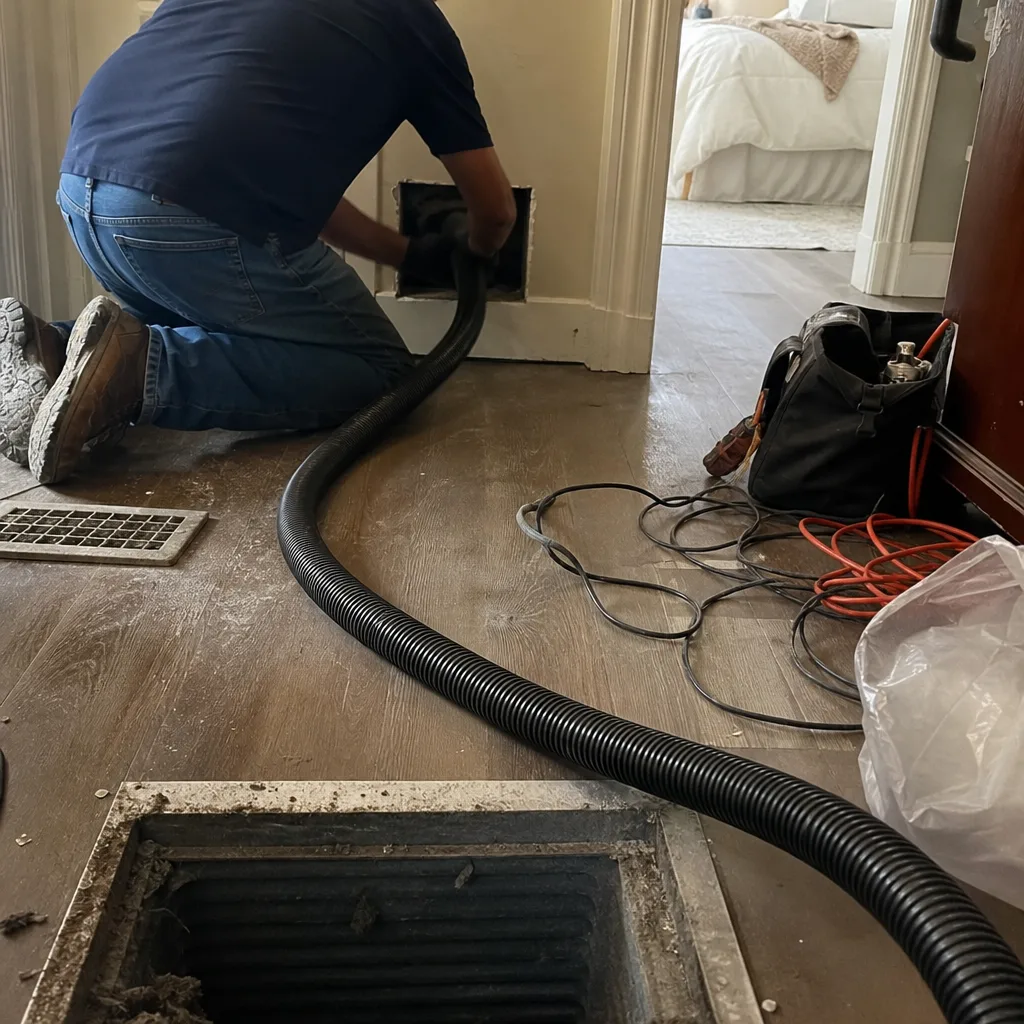 Before
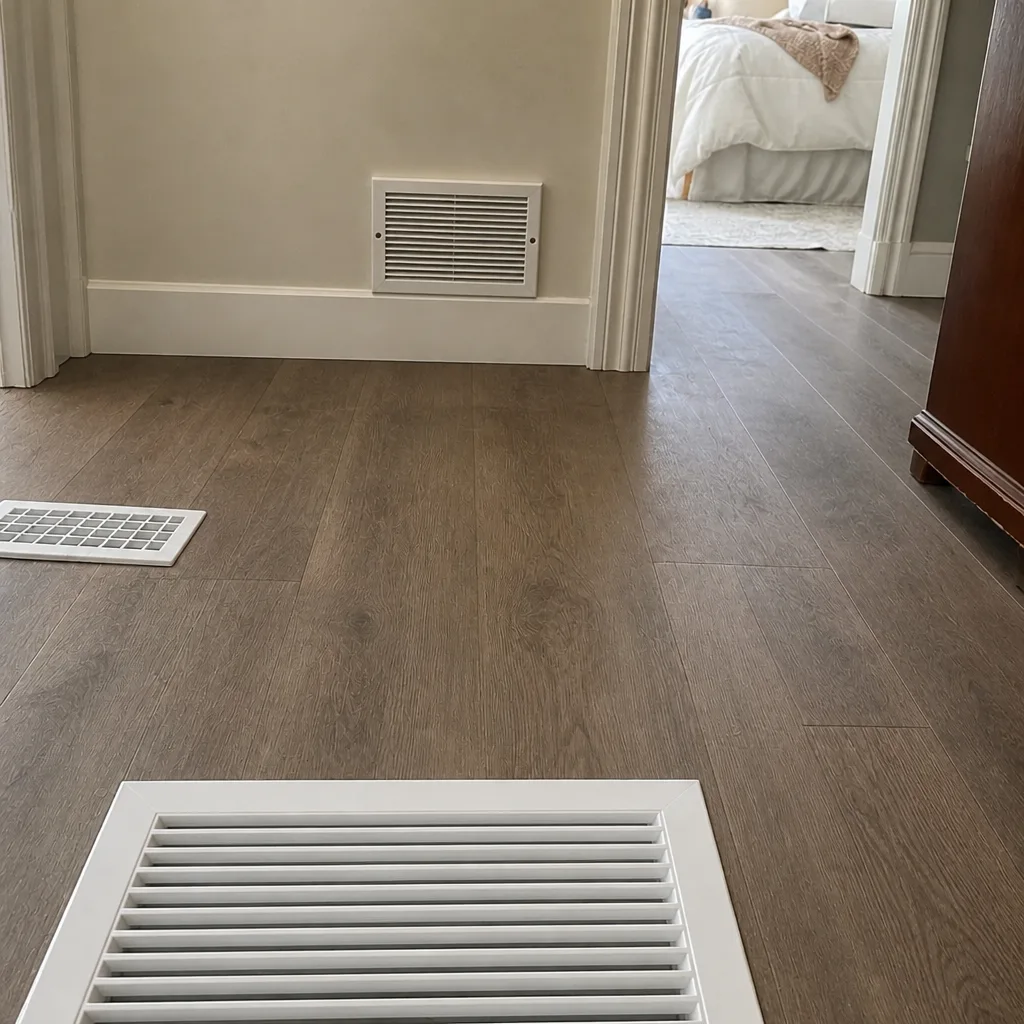 After
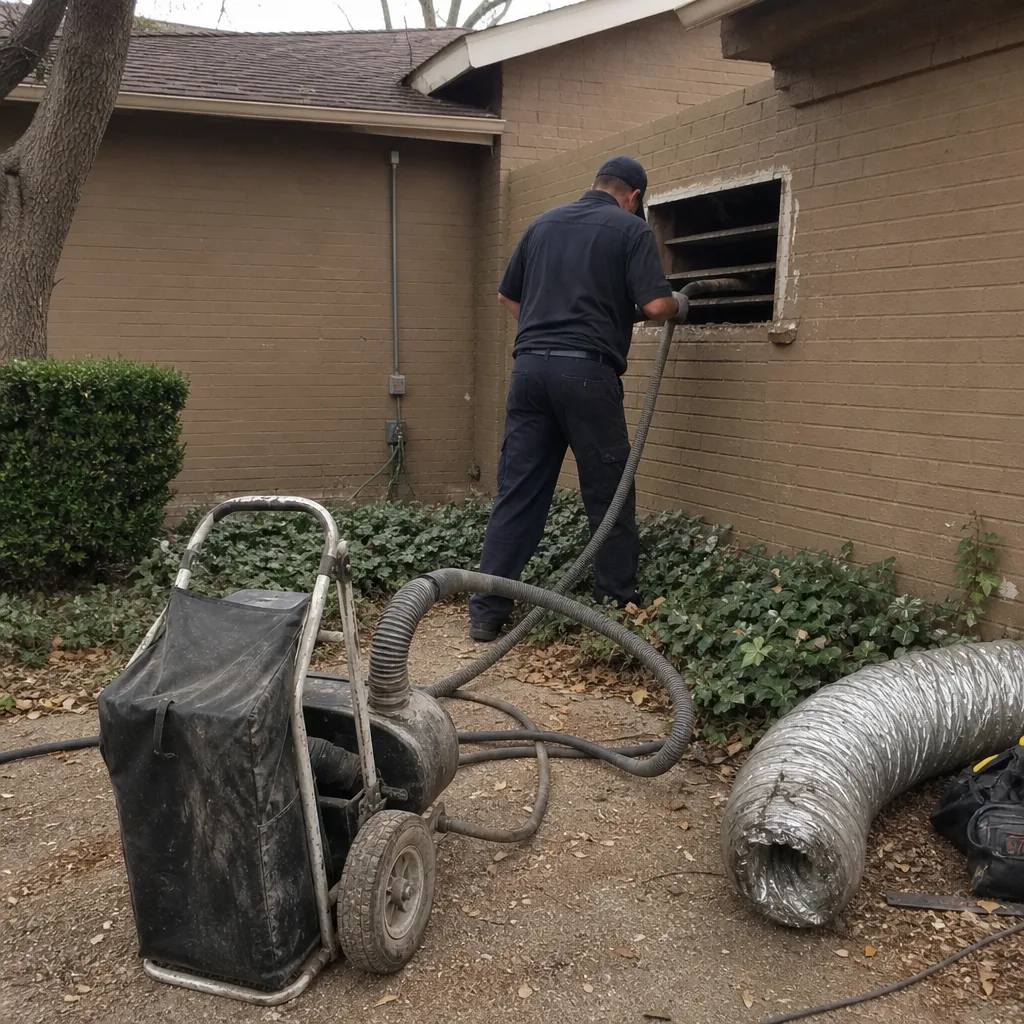 Before
 After
 Before
 After
Frequently Asked Questions
In Lake Highlands, a full professional duct cleaning every three to five years is a realistic interval for a home running its AC hard through a long cooling season. Homes with pets, allergy concerns, recent renovations, or a history of duct leaks may need it sooner. Monthly filter checks and seasonal register inspections fill the gaps between cleanings. Call (833) 509-5459 for a free estimate if you’re unsure where your system stands.
The price is set per job by a written estimate after we see the system, so we don’t quote a per-vent figure. Whole-system pricing depends on the number of runs, the condition of the ductwork, and whether repair or sealing is needed. What we can promise is one flat price per system agreed before work starts, no per-vent surprises, and before-and-after photos of your own ducts. Call (833) 509-5459 for an exact quote.
Cheap quotes usually come from operators using consumer-grade equipment or pricing per vent while doing a partial job. That low number often turns into a much larger invoice once the technician is on site. We use professional-grade equipment from Rotobrush, Nikro, and Abatement Technologies, and we give you one flat price per system before any work begins, with before-and-after photos so you know exactly what was done. Call (833) 509-5459 for an honest, whole-system estimate.
Ask for before-and-after photos of your own ducts, and ask what equipment was used. A legitimate job uses mechanical cleaning with professional equipment and negative-air containment, and the technician should be able to show you the condition before and after. We document what we find and what we do, including any repair or sealing work. A written record supported by photos is the proof that matters.
Yes, if it’s caught early. A loose connection re-secured and properly sealed before it causes a bigger problem is a small repair. The mistake is taping it yourself and assuming it will hold, when the right fix is re-securing the connection and sealing it correctly. The best habit is a quick post-service check at the air handler and any duct that was moved. If you find one loose, call (833) 509-5459. We answer 24/7. A call outside dispatch hours is booked into the next opening, Sunday through Friday, 7am to 7pm.
Yes. Sanitizing a duct system reduces biological growth on the duct surfaces, and that protection fades over time, especially in a system running as much as a Lake Highlands system does. A returning musty smell, visible spotting, or moisture near the air handler all suggest growth conditions have come back. The right approach is a fresh clean followed by a sanitizing treatment on a clean system, and repair and sealing to keep it tight so it stays clean. Call (833) 509-5459 for a free estimate.
The Bottom Line
The right duct maintenance schedule for a Lake Highlands home is a function of runtime, not a generic calendar. Check filters monthly and replace on what you actually see. Do a seasonal register and airflow pass twice a year and a quick post-service check at your duct connections. Book a full professional clean, inspect, repair, and seal every three to five years, and keep a log of it all. Clean ducts are the start, but repairing and sealing what the cleaning reveals is what actually delivers cleaner air, steadier comfort, and lower runtimes. One call covers your ducts, vents, and air quality. Our technicians have up to 8 years of experience. Call (833) 509-5459 for a free estimate, and we’ll tell you exactly where your system stands.
Written by the team at Air Duct Cleaning Lake Highlands.