
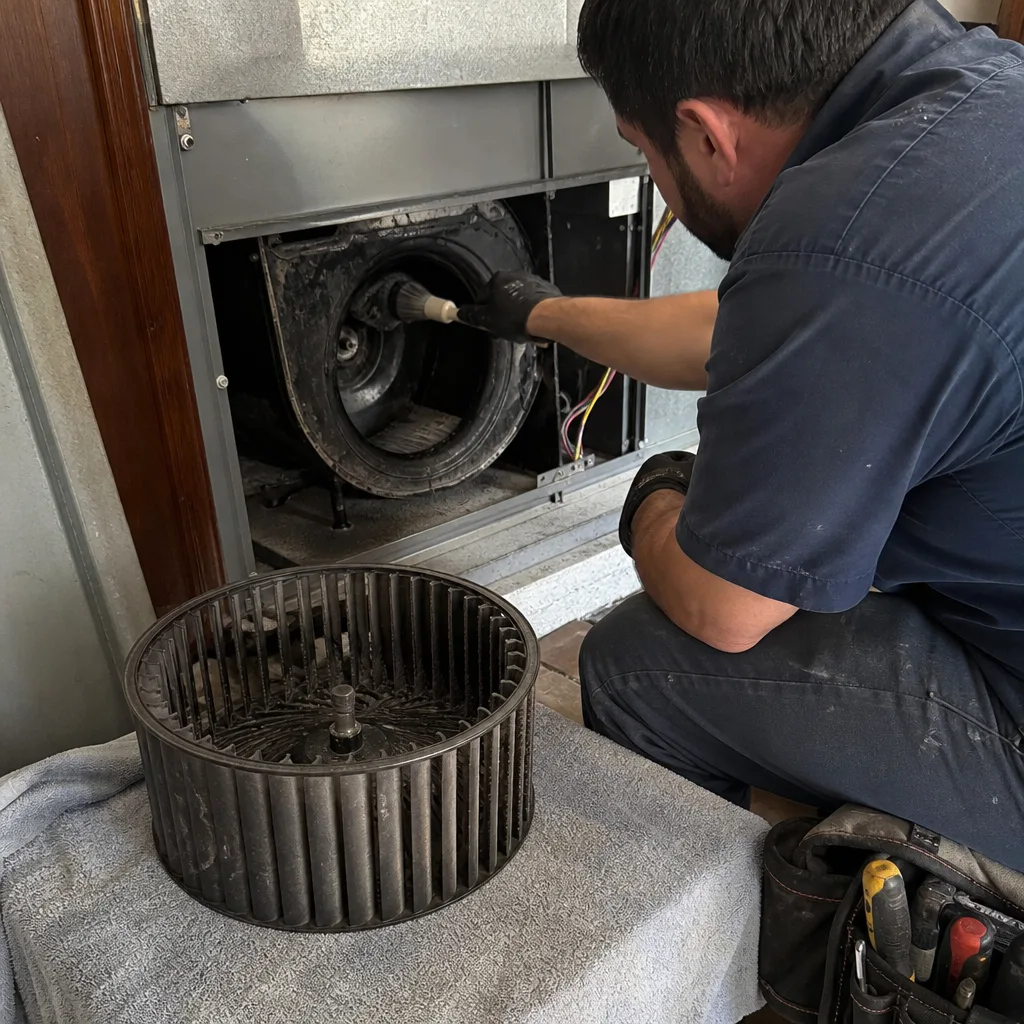
Last updated November 23, 2026
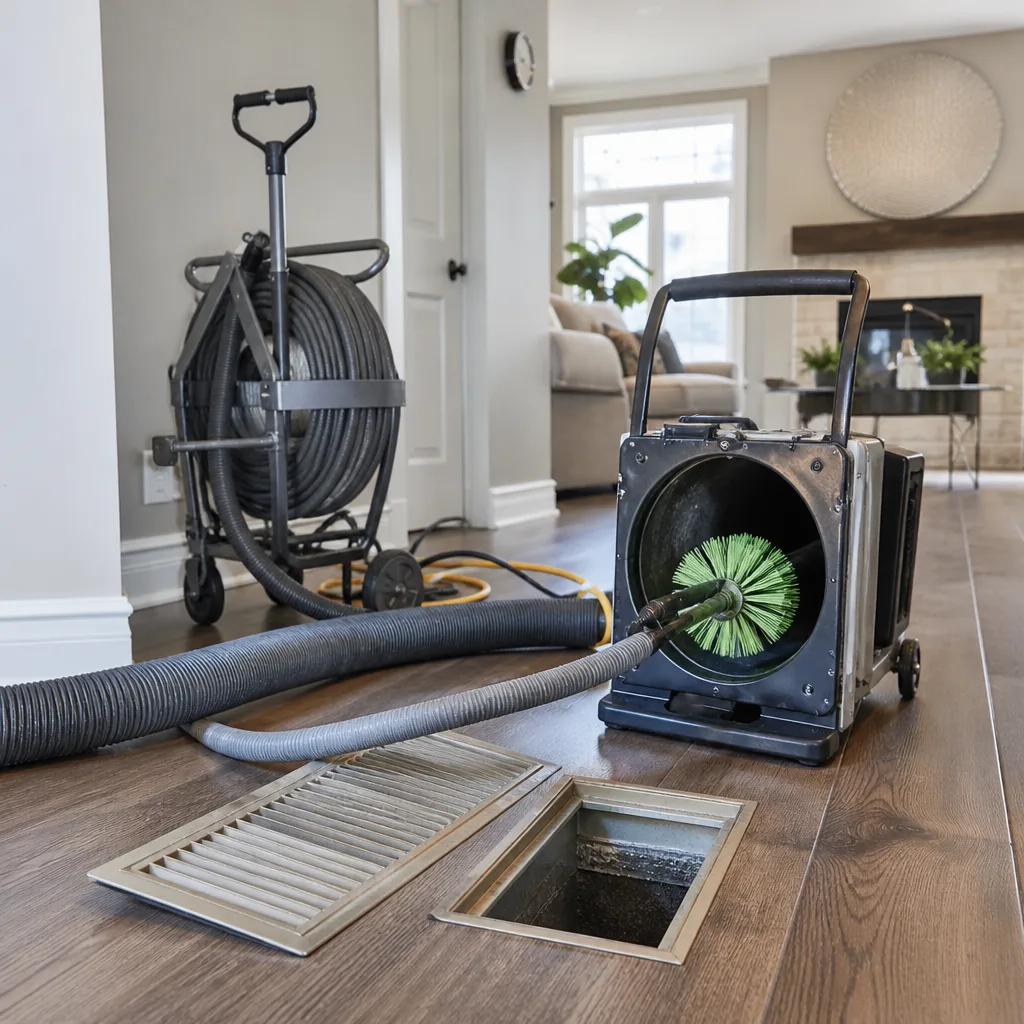 Whole-home duct cleaning
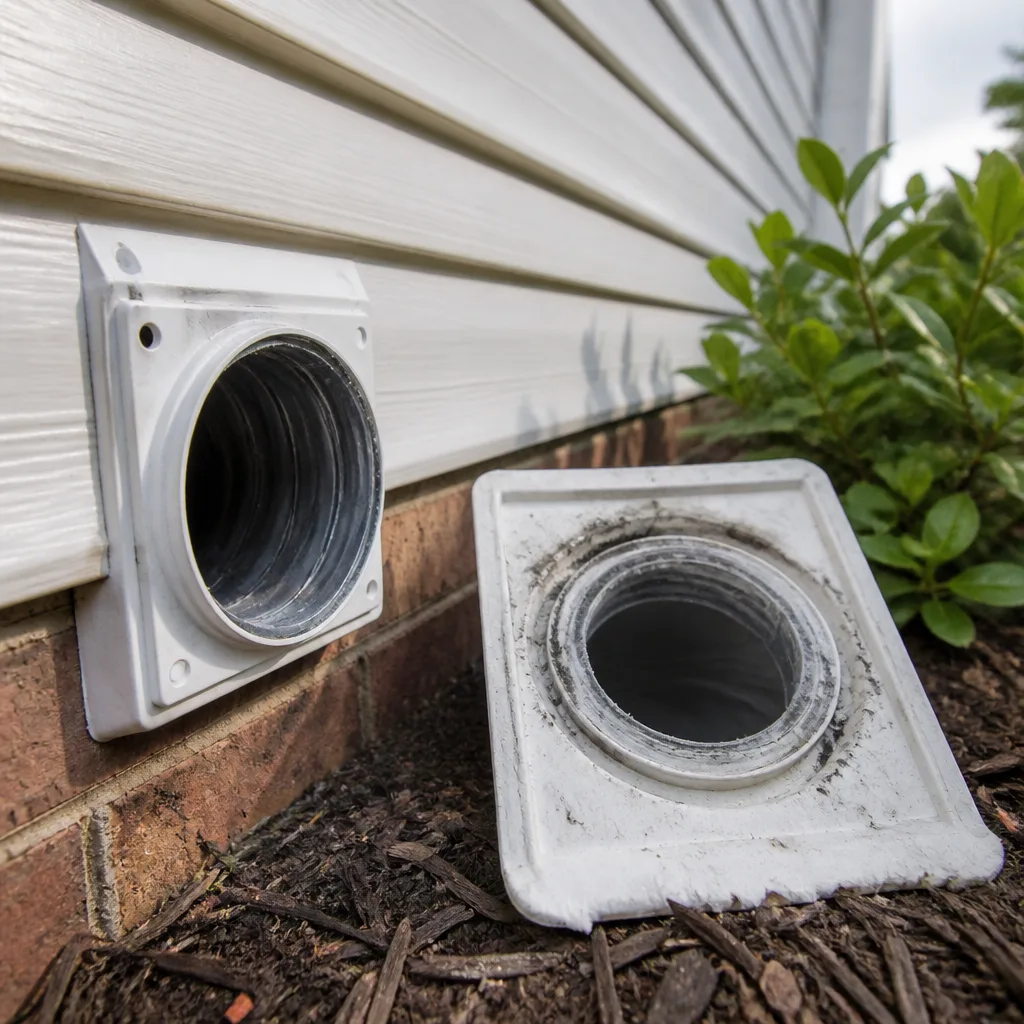 Dryer vent cleaning
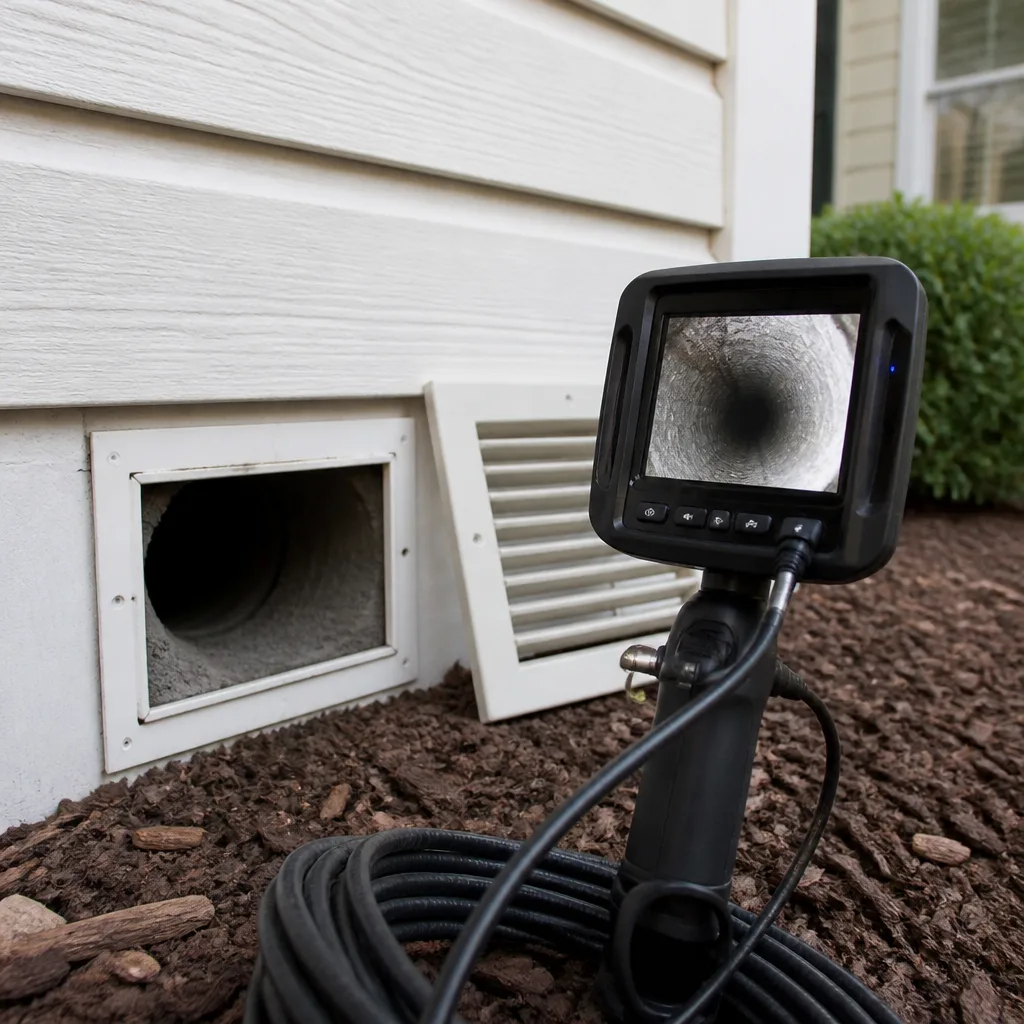 Camera inspection
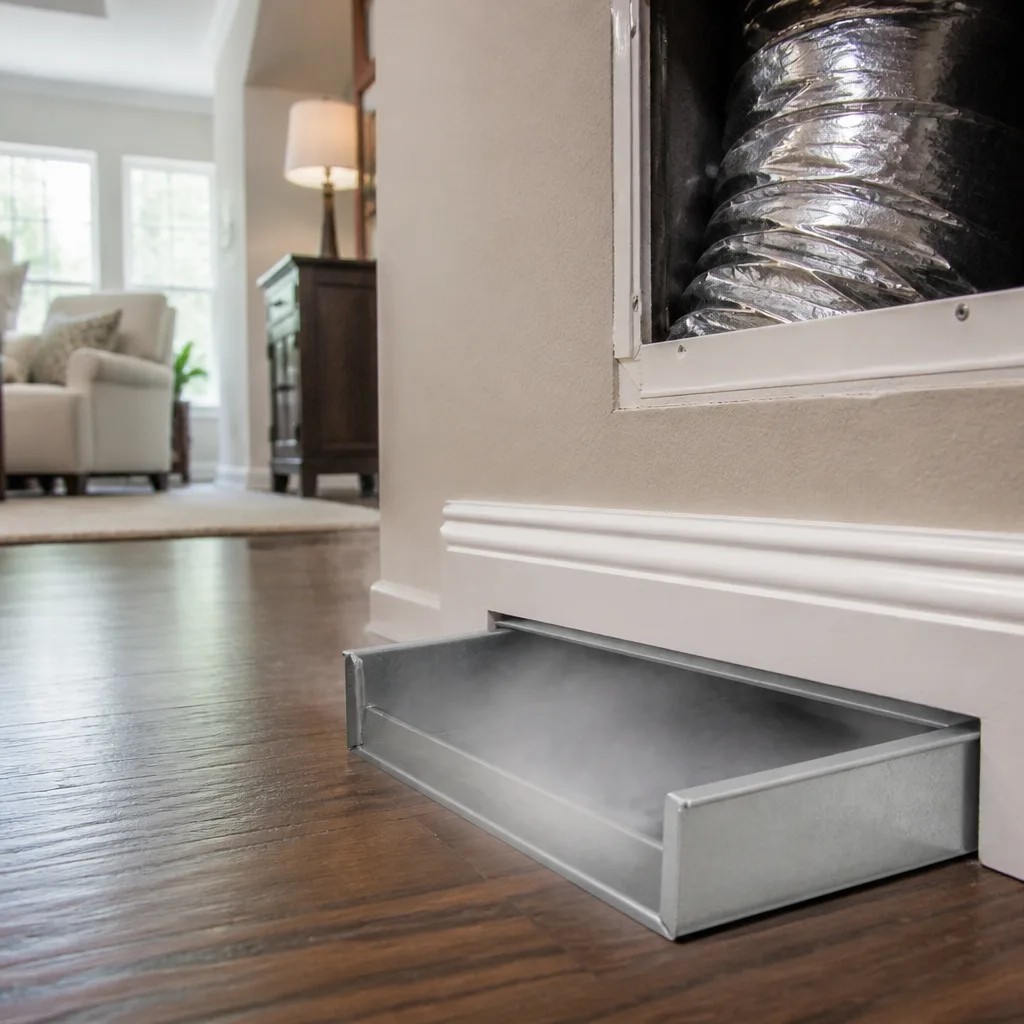 Sanitizing & deodorizing
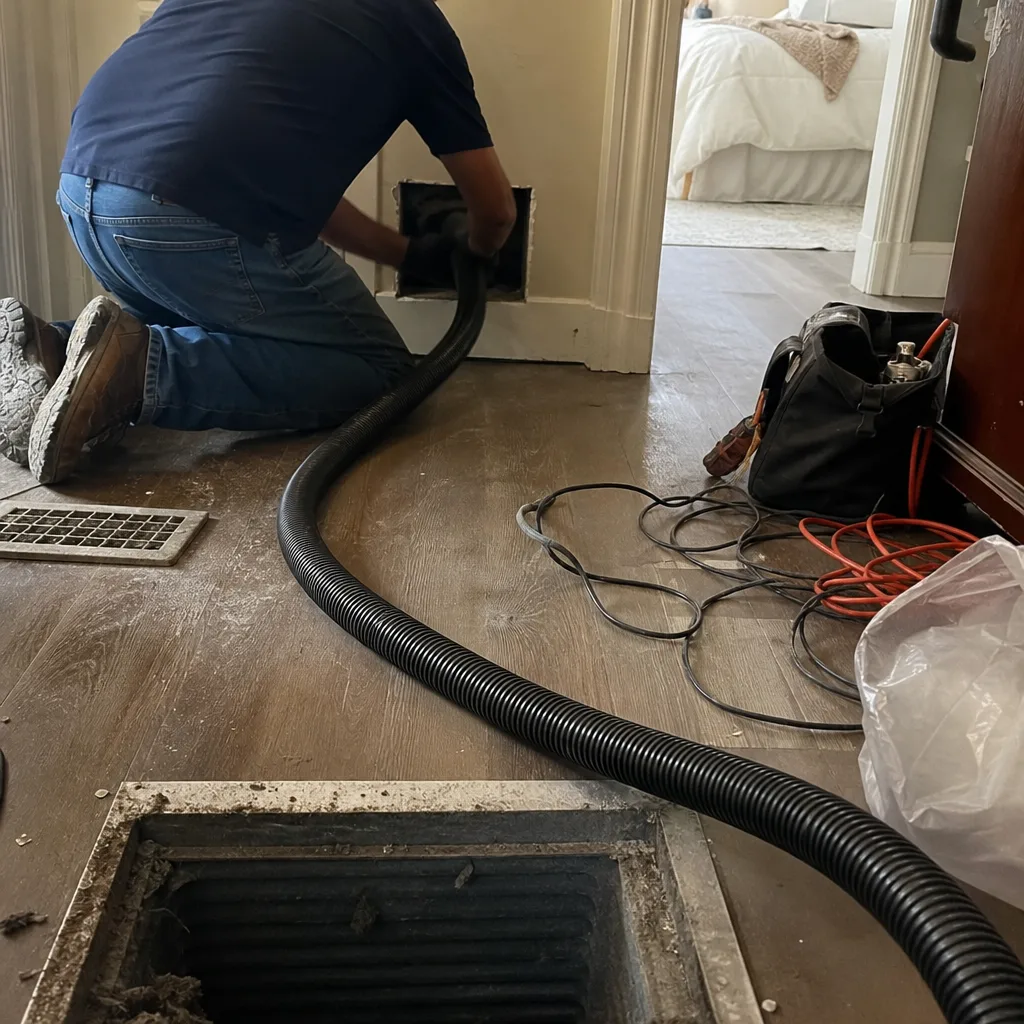
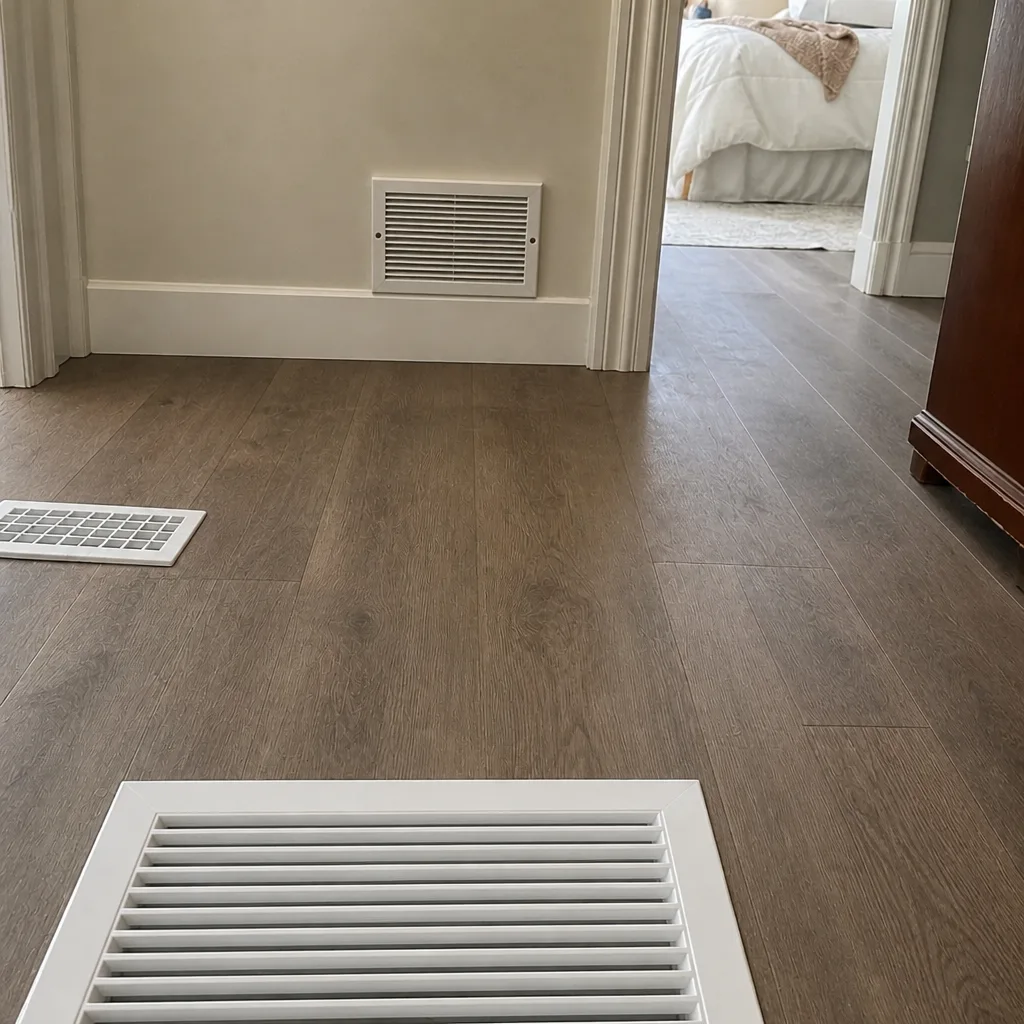
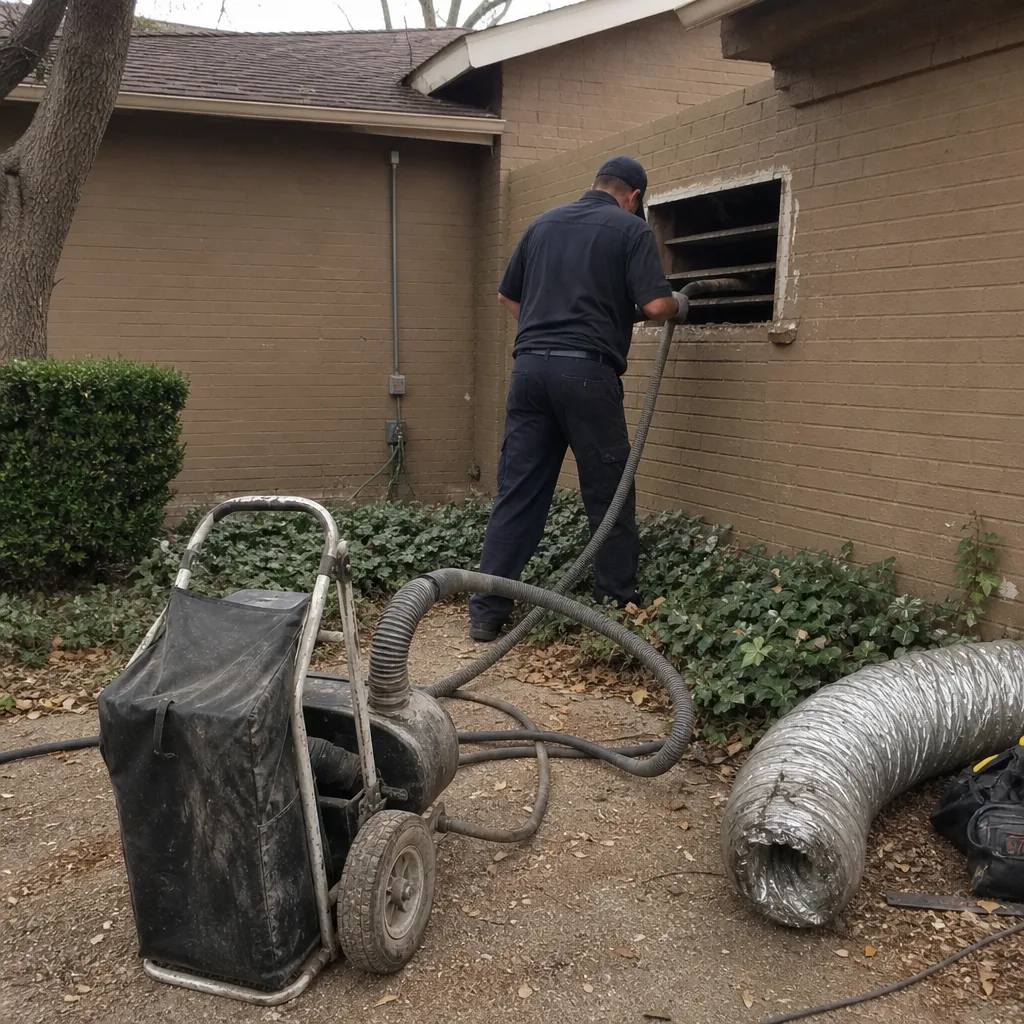
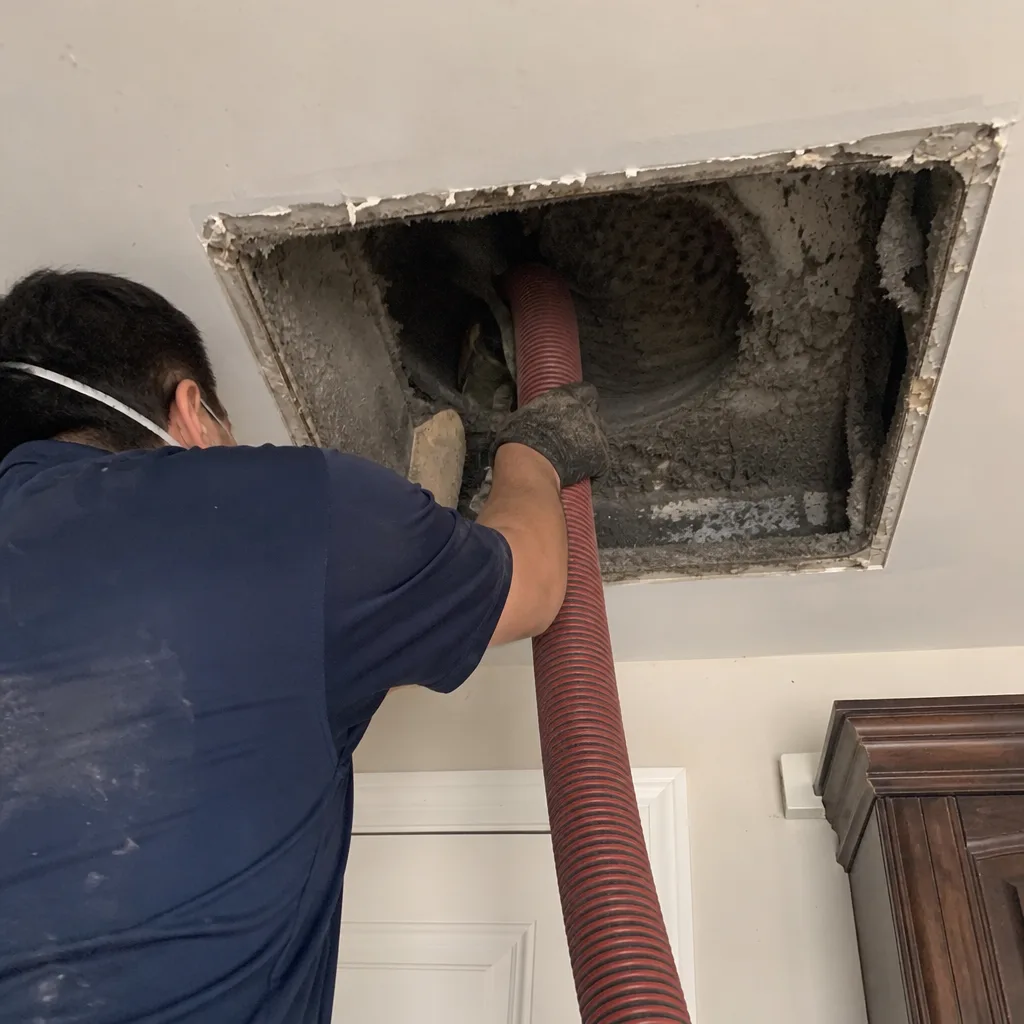
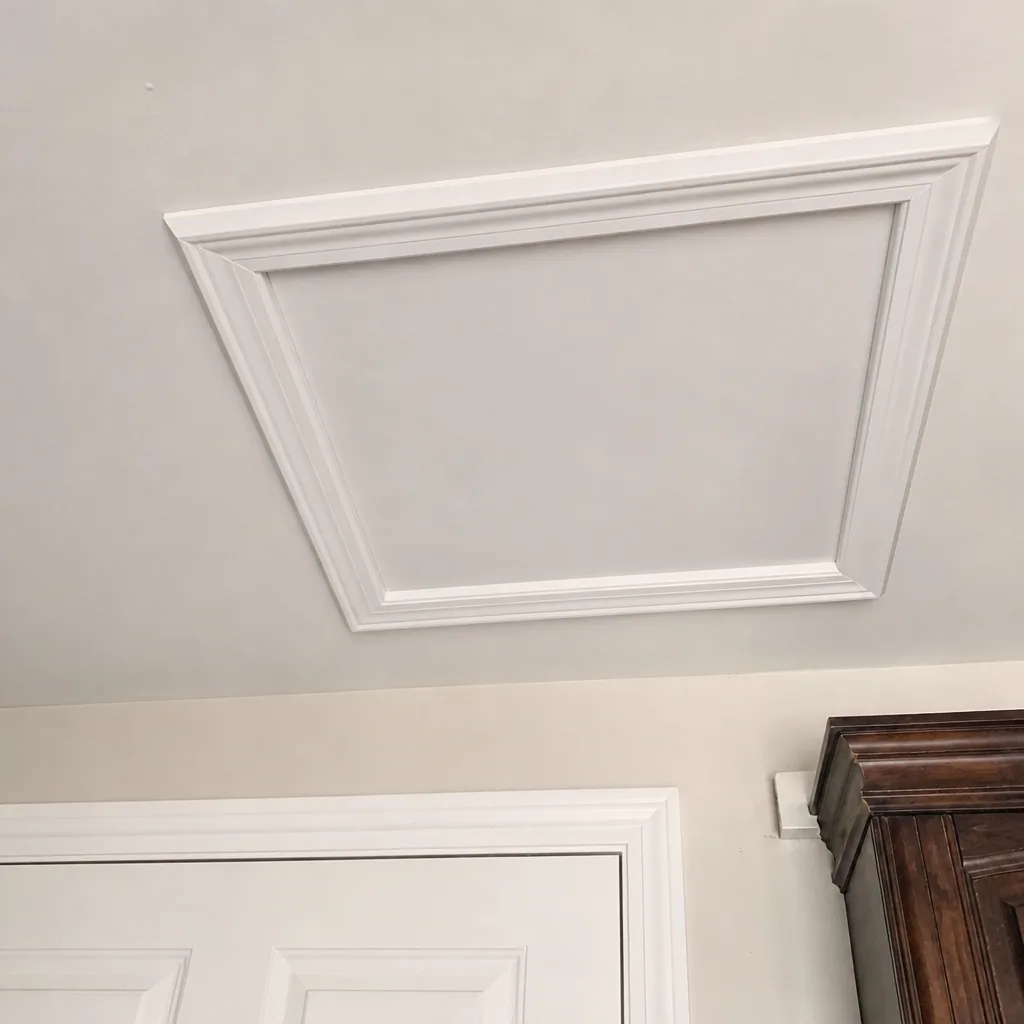
Whole-system duct and dryer vent check with before-and-after photos - you see exactly what came out of your vents
That "$99 whole-house special" is a bait ad - the real number appears once they are in your hallway, or the "clean" is a shop-vac at the register. We photograph the inside of your ducts before and after instead.
Air Duct Cleaning Permits, Codes & Inspections in Lake Highlands, TX: What You Need to Know
Here’s the part most homeowners miss: cleaning the inside of your ducts is not a permitted activity in Texas. Repairing, reconnecting, or re-routing them usually is. That single distinction trips people up more than almost anything else in this trade. A technician pulls a length of disconnected flex duct out of the attic, reconnects it, and the homeowner assumes it’s just part of the cleaning. It isn’t. It’s mechanical work on a mechanical system, and in Dallas County that work falls under a different set of rules than a vacuum running through your supply registers. This guide walks through where cleaning ends and repair begins, when a permit is triggered, how sealing methods fit the code, what HOA rules in Lake Highlands neighborhoods typically require, and why an unpermitted modification can complicate a home sale here. We’ll also cover how to check that whoever you hire is working inside their legal scope.
Quick Answer
Air duct cleaning in Lake Highlands does not require a permit. Duct repair, reconnection, re-routing, or replacement is mechanical work under Texas municipal mechanical codes and may require a permit from the local building authority, with inspection afterward. Duct sealing with mastic or approved tape generally falls within the repair scope; aerosol-based sealing systems vary by jurisdiction and often need additional documentation. The exact trigger depends on your city’s building department, so confirm the scope before work starts.
Styles & brands we work with
- Whole-home duct cleaning
- Dryer vent cleaning
- Camera inspection
- Sanitizing & deodorizing
Table of Contents
- Where duct cleaning ends and duct repair begins
- When does Dallas County require a permit?
- Duct sealing and code: mastic, tape, and aerosol systems
- What Lake Highlands HOA rules typically say
- Unpermitted work and the Lake Highlands real estate market
- How to verify a contractor’s legal scope of work
- What a duct inspection actually looks like
- How the North Texas climate affects your duct system
Where Duct Cleaning Ends and Duct Repair Begins
In Texas, duct cleaning is treated as maintenance. Repair is treated as a mechanical modification. That distinction is the threshold. Cleaning involves mechanical agitation, negative-air capture, and removal of debris from inside existing ductwork – the ducts come out of the job in the same shape they went in, just cleaner. Repair involves altering the system: reconnecting separated joints, replacing crushed flex runs, re-routing supply trunks, replacing damaged boots or register boxes.
The line matters because the people who perform the work are different. A duct cleaning company can legally clean your system without a mechanical contractor license. The moment they cut, reconnect, or modify that system, they’re operating under mechanical contractor rules. And under Texas municipal codes as adopted through the International Mechanical Code framework, permitted mechanical work generally requires a licensed contractor to pull the permit.
In our experience in Lake Highlands, the discovery that triggers this is usually one of three things:
- A run of flex duct in the attic that’s come loose at a wye or collar joint
- Crushed or torn duct insulation exposing the interior liner
- A duct run that was never properly sealed and has pulled apart at a taped joint
Those aren’t cleaning problems. They’re repair problems. Cleaning the ducts doesn’t fix a disconnected run – it just makes the debris in it lighter. That’s why we treat air duct cleaning in Lake Highlands and duct repair as two distinct services, priced separately, explained separately, with the repair scope agreed before anyone touches anything. If a crew offers to “fix it while they’re in there” without explaining what the fix is or whether it triggers a permit, that’s the moment to ask questions.
When Does Dallas County Require a Permit for Duct Work?
Dallas County permits are pulled at the city level, and each city’s building department sets its own threshold. That’s the frustrating part for homeowners – Lake Highlands sits largely within the City of Dallas, but a portion of the neighborhood extends into the City of Richardson and the City of Garland, and each has slightly different permit language for residential mechanical work.
What triggers a permit almost everywhere in this area:
- Replacing ductwork, including a full or partial duct system rebuild
- Re-routing supply or return trunk lines
- Adding a new supply run or return register
- Modifying the portion of the system connected to the air handler
- Repairs that change the configuration of the duct system rather than restore it
What typically does not trigger a permit:
- Cleaning, sanitizing, or mechanical agitation of existing ducts
- Re-sealing existing joints with mastic or approved tape
- Minor repairs that restore the system to its original configuration without altering it
- Duct insulation repair where the duct geometry doesn’t change
The gray zone is reconnection. Reconnecting a separated joint could be read as restoration (no permit) or as mechanical modification (permit). That’s exactly why the responsible answer is: ask the local building department directly, before the work starts, with the specific scope in hand. A written scope of work, provided by the contractor, makes that conversation possible. We flag repair-related permit questions up front so a homeowner can make the call themselves rather than have it made for them after the work is done.
Duct Sealing and Code: Mastic, Tape, and Aerosol Systems
Duct sealing is where the code conversation gets more interesting. Not all sealing methods are treated the same way, and it’s a distinction that matters for both permitting and inspection.
Mastic and approved tape
Sealing joints with duct mastic or approved foil tape is generally treated as maintenance and repair. It restores the system’s performance without changing its configuration. In most North Texas jurisdictions, this doesn’t trigger a permit. It’s also a service we offer as a core part of the work, not a referral – because cleaning alone can’t close a leak that was there the day the system was installed.
Aerosol-based duct sealing
Aerosol sealing systems inject a sealant mist through the duct system to close small leaks from the inside out. The method works, but it’s regulated differently. Depending on the jurisdiction, it may require:
- A permit as a mechanical modification
- Documentation of the sealant product as approved for use in occupied HVAC systems
- Verification of leakage reduction before and after (usually with a duct blaster test)
- Contractor documentation of the sealing method and product data
If a contractor proposes aerosol sealing in Lake Highlands, ask for the permit position in writing and for the product data sheet. A contractor who can’t produce either is guessing at the code. That’s a red flag regardless of how the work looks on paper.
What Lake Highlands HOA Rules Typically Say
Lake Highlands has a wide range of neighborhood associations, and their rules vary from light-touch to fairly detailed. The ones that matter for duct work and HVAC work usually fall into a few categories.
Exterior access and equipment placement
If a contractor needs exterior access to the attic through a roof vent, a gable vent, or the exterior air handler closet, some HOAs require advance notice or a written work authorization. This is more common in townhome communities and in some of the older established subdivisions where exterior sightlines are considered part of the neighborhood character.
Shared systems in townhomes and attached homes
In attached homes, part of a duct system can serve more than one unit – typically a return trunk shared through an attic space. Modifying anything on a shared system usually requires the HOA board’s written approval, and often requires coordinating with the neighboring unit. This is where an innocent-looking “just reconnecting a run” becomes a shared-asset question rather than a private one. Ask the HOA for the mechanical system diagram before any repair is scheduled.
Noise, timing, and vendor restrictions
Some Lake Highlands HOAs restrict contractor work hours, require vendors to be registered with the association, or require notice to neighbors before exterior equipment runs. We tell customers to check their HOA’s rules before scheduling a full-day cleaning – not because the work is disruptive, but because getting a notice violation for a duct cleaning is an avoidable frustration.
Documentation for resale
Many HOAs maintain a resale certificate and a file of prior work authorizations. If you’re selling, pulling that file before listing can identify whether prior owner duct work was done with HOA approval – a question the buyer’s agent will eventually ask.
Unpermitted Work and the Lake Highlands Real Estate Market
Here’s where the code conversation gets expensive: home inspections. Lake Highlands is a busy real estate market, and buyers here are increasingly thorough. A buyer’s inspector who spots disconnected flex duct, crushed runs, or a duct system that doesn’t match the original configuration will flag it – and the flag can either slow the sale or kill it outright.
The specific complications we see:
- Disclosure obligations. In Texas, a seller generally has a duty to disclose known defects. If a prior owner installed duct work without a permit and the current owner knows, the question of whether to disclose becomes a legal question, not a technical one.
- Inspection contingency. A buyer’s inspector flags unpermitted duct modifications. The buyer requests documentation of the permitting. There isn’t any. The deal stalls while the seller tries to reconstruct the history.
- Appraisal and insurance questions. Unpermitted work on mechanical systems occasionally raises questions at appraisal or with a new homeowner’s insurance carrier.
- Correction cost. If the duct work must be brought into compliance, that’s a repair scope – not a cleaning scope – and it’s priced accordingly.
The cleanest prevention is documentation. When we perform HVAC cleaning in a Lake Highlands home, we photograph the duct system before and after and note any observed defects. If a repair is needed, we tell the homeowner in writing and explain the permit position. That record becomes the homeowner’s own documentation, useful when the house eventually goes on the market. A homeowner who can hand a buyer’s inspector a written record of what was cleaned, what was repaired, and what was photographed is in a far better position than one who can’t.
How to Verify a Contractor’s Legal Scope of Work
Air duct cleaning and mechanical contracting are separate compliance categories in Texas. A company that’s legally set up to clean ducts isn’t automatically set up to repair them, and vice versa. Verifying scope is a straightforward process if you know what to ask for.
- Ask for the scope in writing. Before work starts, you should have a written scope that lists exactly what’s being cleaned, what’s being repaired, and what’s not in scope. Verbal scope is where disputes start.
- Ask which license or registration covers the repair work. Cleaning may not require a mechanical license. Repair generally does. Ask for the license number that covers the repair scope and confirm it against the state or local licensing database.
- Ask who pulls the permit. If repair work triggers a permit, the contractor on record as the responsible party should pull it. If they say “you don’t need one,” ask them to put that in writing, along with the code section they’re relying on.
- Ask for proof of insurance. General liability insurance covering work on your property. Confirm the certificate is current and names the correct legal entity.
- Ask what happens if a repair is found mid-job. The clean answer is: work stops, you get a written scope and price for the repair, and you decide whether to proceed. The bad answer is: “We’ll just fix it, don’t worry about it.”
Our position is that every one of those questions should be answerable before the technician arrives. Our technicians have up to 8 years of experience and are trained to identify repair issues as observed conditions, not as surprise upsells. The vetted local professional we connect you with is licensed and insured as their state requires; ask to see the documentation.
What a Duct Inspection Actually Looks Like
A duct inspection is not a guy with a flashlight poking his head into the attic for two minutes. A proper inspection – whether it’s a pre-purchase inspection, a post-repair inspection, or an inspection triggered by a permit – involves several distinct steps.
- Source documentation review. Original construction drawings, prior permits, and any HOA work authorizations if available. This tells the inspector what the system is supposed to look like.
- Access assessment. Where can the system be accessed, and does the access comply with the mechanical code for the jurisdiction? (Some jurisdictions require minimum access panels or attic walkways.)
- Visual inspection of accessible ductwork. With proper containment in place, the inspector will review accessible ducts for disconnection, crushing, torn liner, moisture intrusion, and pest evidence.
- Static pressure and airflow measurement. Poor airflow is often a configuration problem, not a cleaning problem. This measurement tells the inspector which it is.
- Photographic documentation. Before-and-after photos of accessible areas and any defects found.
- Written findings. The inspector’s written report, which the homeowner keeps.
For our part, we perform cleaning with professional-grade equipment – Rotobrush and Nikro mechanical cleaning systems, with Abatement Technologies negative-air units running containment during the work. That’s the same equipment used in professional remediation work, and it lets us generate documented photos of the system rather than a verbal “looks fine to me.” If you’re buying in Lake Highlands and want your own read on the duct system before the inspection contingency expires, that documentation is worth having. You can find the full scope of what we handle under air duct cleaning.
How the North Texas Climate Affects Your Duct System
Lake Highlands summers are long and hot, and that has a specific effect on duct systems. A duct system that runs eight months of the year at high load will degrade faster than one that runs four. Two climate-driven failure patterns dominate in this area.
Attic heat and flex duct
Most Lake Highlands homes have a significant portion of their duct system running through the attic. Attic temperatures in summer can be extreme, and flex duct insulation degrades under sustained heat exposure. When the outer jacket weakens, the inner liner becomes vulnerable to crushing, tearing, and moisture intrusion from condensation. That’s not a cleaning issue – it’s a repair issue, and it’s why we treat duct repair and sealing as a core part of the work rather than a referral.
Humidity and biological growth
North Texas humidity is hard on any duct system that has even a small leak. Where warm, humid attic air infiltrates a cooled duct, condensation forms on surfaces inside the duct. Where moisture sits, biological growth can develop. Air quality and sanitizing work here is aimed at what’s actually present in the system, targeting allergens, mold spores, and bacteria rather than just visible debris. We work with Aprilaire and Honeywell air quality components because those are the brands HVAC professionals specify for filtration and humidity control, and because the solution to a humidity problem isn’t always more cleaning – sometimes it’s better filtration and a way to manage moisture at the source.
Dryer vent fire risk
The climate angle for dryer vents is different but connected. A dryer vent in a Lake Highlands home accumulates lint faster than many homeowners realize, and lint accumulation is a fire hazard. We treat dryer vent cleaning as a fire-safety service, not a cheap add-on. If your cleaning visit doesn’t include a proper look at the dryer vent, ask why. Full detail on scope is on our dryer vent cleaning page.
Common Mistakes to Avoid
- Assuming duct cleaning always includes duct repair. It doesn’t. Cleaning restores the interior cleanliness of the system; it doesn’t reconnect, re-route, or replace anything. If a contractor offers to “clean and fix” in a single line item, ask them to break out what’s actually being repaired and whether it triggers a permit.
- Skipping the permit question because the contractor says you don’t need one. The building department is the authority on this, not the contractor. A written scope plus a phone call to the city’s permit office settles it. In our experience, five minutes on the phone is worth it.
- Letting an HOA-shared duct system get modified without written board approval. In Lake Highlands townhomes, this can become a neighbor dispute fast. Ask the HOA for the mechanical system diagram before repair work is scheduled.
- Not keeping the documentation. Cleaning receipts, repair scope, photo records – keep them all. When you sell, a buyer’s inspector and a title company will care about the paper trail. A stack of paperwork is worth more than a verbal memory.
- Confusing aerosol duct sealing with mastic sealing. They’re regulated differently. If a contractor proposes aerosol sealing in Lake Highlands, ask for the product data sheet and the permit position in writing. If they can’t produce them, look elsewhere.
- Calling a general handyman for duct repair. Duct repair under Texas mechanical codes typically requires a licensed contractor. A handyman who reconnects a flex run without a license creates an exposure that can come back to you at inspection or sale.
- Ignoring a small leak because it “doesn’t seem to affect anything.” Small leaks compound. They pull conditioned air into the attic and humidity into the duct. Two problems, both growing. Better to document and address early.
See the difference
 Before
 After
 Before
 After
 Before
 After
When to Call a Professional
Some jobs belong to a trained professional, full stop. High-tension spring assemblies on garage doors, live electrical panels, gas lines, and roof work are the obvious ones, and duct work straddles similar ground. Attic duct systems often run near or through electrical and gas equipment, and the containment requirement for a proper cleaning job is not something a homeowner can replicate with a shop vacuum.
Here are the situations where we’d recommend calling a professional rather than attempting it yourself:
- You notice crushed, torn, or disconnected flex duct during routine home maintenance
- You see visible biological growth inside a register or on duct surfaces
- Airflow to a room or floor has dropped significantly and the cause isn’t obvious
- The dryer is taking longer than usual to dry a load, or the exterior vent flap isn’t opening fully
- You’re preparing to sell and want a documented duct condition report for the buyer’s inspection
Air Duct Cleaning Lake Highlands offers free estimates in Lake Highlands. Call (833) 509-5459. We answer 24/7. Fast dispatch from 7am to 7pm, Sunday through Friday.
Frequently Asked Questions
No. Air duct cleaning itself does not require a permit in Lake Highlands or the surrounding Dallas County jurisdictions. The permit question only arises when the work moves from cleaning to repair, reconnection, or modification of the duct system. Call (833) 509-5459 for a free estimate – we’ll scope the work and explain the permit position for anything beyond cleaning.
Whole-system air duct cleaning in Lake Highlands typically runs in the $450 to $950 range for a typical single-family home, depending on system size, accessibility, and whether repair or sealing is included. The written estimate sets the exact price. We quote one flat price per system, agreed before work starts. Call (833) 509-5459 for an exact quote – estimates are free.
Cheap quotes usually mean per-vent pricing, a few minutes of vacuuming at visible registers, or a coupon price that expands once the technician is on site. Duct cleaning done properly involves containment, mechanical agitation through the full run, and documentation – that’s a scheduled job, not a 30-minute stop. We quote one flat price per system, agreed up front, with before-and-after photos of your ducts. Call (833) 509-5459 to get a real scope and price.
Photos. Before-and-after images of the accessible duct interiors, taken with proper containment running so the work is visible. A reputable company will show you the inside of the system as found and as left. We provide that documentation as part of every cleaning. Call (833) 509-5459 if you want to see what the process looks like.
Often cleaning alone is not enough. Cleaning removes debris; it doesn’t close leaks that were there before the cleaning and are still there after. If the ducts leak, conditioned air escapes into the attic and humidity enters the duct. Sealing with mastic or approved tape addresses the leak – and because we handle repair and sealing as a core service, you don’t need a second contractor. Call (833) 509-5459 to talk through whether sealing makes sense for your system.
It depends on the system and the household, but for most Lake Highlands homes with standard filtration, every three to five years is reasonable. Homes with pets, allergy-sensitive occupants, recent renovation, or visible dust issues may benefit from more frequent service. The right answer comes from looking at your system, not from a schedule. Call (833) 509-5459 for a free estimate and an honest read on whether cleaning is due.
The Bottom Line
Air duct cleaning in Lake Highlands does not require a permit. Duct repair, reconnection, and modification generally does – and that distinction is the one that matters. Mastic-based sealing is typically treated as repair and generally doesn’t trigger a permit; aerosol-based sealing is regulated differently and often needs additional documentation. HOA rules in Lake Highlands neighborhoods – especially in shared-system townhomes – may require prior written approval before any mechanical work. Unpermitted duct modifications can complicate or kill a sale in this market, which is why photographic documentation and a written scope matter more here than most homeowners realize. Verify contractor scope, ask the permit question, keep the paperwork.
Whether you’re preparing for a sale, dealing with a room that doesn’t get airflow, or just want an honest read on the state of your duct system, we’re set up to help. We use professional-grade Rotobrush, Nikro, and Abatement Technologies equipment on every job, and we handle cleaning, sealing, and repair rather than handing off one piece and walking away from the rest. Call (833) 509-5459 for a free estimate. We answer 24/7. Fast dispatch from 7am to 7pm, Sunday through Friday.
Written by the team at Air Duct Cleaning Lake Highlands.